


Computational electrochemistry: aqueous one-electron oxidation potentials for substituted anilines
Literature Information
Publication Date
2000-03-02
DOI
10.1039/A909076B
Impact Factor
3.676
Authors
Paul Winget, Eric J. Weber, Christopher J. Cramer, Donald G. Truhlar
View Original
Abstract
Semiempirical molecular orbital theory and density functional theory are used to compute one-electron oxidation potentials for aniline and a set of 21 mono- and di-substituted anilines in aqueous solution. Linear relationships between theoretical predictions and experiment are constructed and provide mean unsigned errors as low as 0.02 V over a training set of 13 anilines; the error rises to 0.09 V over a test set of eight additional anilines. A good correlation is also found between oxidation potential and a simple computed property, namely the energy of the highest occupied molecular orbital for neutral anilines in aqueous solution. For the particular case of the substituted anilines, a strong correlation between oxidation potential and pKa is found, and a still stronger correlation between oxidation potential and physical organic descriptors for aromatic substituents is also found, albeit over a reduced data set.
Recommended Journals

Science

Journal of Medicinal Chemistry

Russian Chemical Reviews

Pharmacological Reviews

Pure and Applied Chemistry

Journal of Organometallic Chemistry

Proceedings of the National Academy of Sciences of the United States of America

Organic Preparations and Procedures International

Fibre Chemistry

Israel Journal of Chemistry
Related Literature
The detailed characterization of electrochemically switchable molecular assemblies on silicon electrodes
Simone Ciampi, Michael James, Moinul H. Choudhury, Nadim A. Darwish, J. Justin Gooding
2013-05-02
Paper
DOI: 10.1039/C3CP50355K
Hydrogenolysis of ethylene glycol to methanol over modified RANEY® catalysts
Cheng-Tar Wu, Jin Qu, Joseph Elliott, Kai Man Kerry Yu, Shik Chi Edman Tsang
2013-04-24
Communication
DOI: 10.1039/C3CP51619A
Charge transport study of high mobility polymer thin-film transistors based on thiophene substituted diketopyrrolopyrrolecopolymers
Tae-Jun Ha, Prashant Sonar, Ananth Dodabalapur
2013-04-11
Paper
DOI: 10.1039/C3CP51478A
First-principles study of O2activation on ligand-protected Au32 clusters
Shengping Yu, Qun Zeng, Zhaoyang Lou, Mingli Yang, Deyin Wu
2013-04-16
Paper
DOI: 10.1039/C3CP50354B
Vibrational self-consistent field calculations for spectroscopy of biological molecules: new algorithmic developments and applications
Tapta Kanchan Roy
2013-04-10
Perspective
DOI: 10.1039/C3CP50739D
Electron spin resonance studies of trityl OX063 at a concentration optimal for DNP
Lloyd Lumata, Zoltan Kovacs, Johan van Tol, Lu Yu, Likai Song
2013-05-08
Paper
DOI: 10.1039/C3CP50186H
Electric-double-layer field-effect transistors with ionic liquids
Takuya Fujimoto
2013-04-05
Perspective
DOI: 10.1039/C3CP50755F
Orientation control of liquid crystals using carbon-nanotube–magnetic particle hybrid materials
Hyeon Su Jeong, Sang Cheon Youn, Yun Ho Kim, Hee-Tae Jung
2013-04-24
Communication
DOI: 10.1039/C3CP00052D
Changing the shape of molecular ions: photoisomerization action spectroscopy in the gas phase
B. D. Adamson, N. J. A. Coughlan, R. E. Continetti, E. J. Bieske
2013-05-08
Paper
DOI: 10.1039/C3CP51393A
You might also like
Compound Q&A
How is Ethyl 4-chlorothieno[2,3-b]pyridine-5-carboxylate (CAS: 59713-58-5) typically synthesized?
Ethyl 4-chlorothieno[2,3-b]pyridine-5-carboxylate (CAS: 59713-58-5) can be synth...
59713-58-5Ethyl 4-chlorothieno...
Compound Q&A
What regulatory guidelines apply to 5-Methyl-1H-indole-3-carbaldehyde (CAS: 52562-50-2)?
5-Methyl-1H-indole-3-carbaldehyde (CAS: 52562-50-2) is subject to various regula...
52562-50-25-Methyl-1H-indole-3...
Compound Q&A
What are the physical and chemical properties of (1,3-Dimethyl-2,4-dioxo-1,2,3,4-tetrahydro-5-pyrimidinyl)boronic acid (CAS: 223418-73-3)?
(1,3-Dimethyl-2,4-dioxo-1,2,3,4-tetrahydro-5-pyrimidinyl)boronic acid is a white...
223418-73-3(1,3-Dimethyl-2,4-di...
Compound Q&A
How should waste containing Sulfocostunolide A (CAS: 1016983-51-9) be handled?
Waste containing Sulfocostunolide A (CAS: 1016983-51-9) should be handled with c...
1016983-51-9Sulfocostunolide A
Compound Q&A
What precautions should be taken when handling Murraxocin (CAS: 88478-44-8)?
When handling Murraxocin (CAS: 88478-44-8), ensure proper personal protective eq...
88478-44-8Murraxocin
Compound Q&A
What are the physical and chemical properties of Formvar (CAS: 63148-64-1)?
Formvar (CAS: 63148-64-1) is an alkyd resin characterized by a high molecular we...
63148-64-1Formvar(R)
Compound Q&A
Is (S)-4-benzyl-2-((benzyloxy)methyl)morpholine (CAS: 205242-66-6) safe?
(S)-4-benzyl-2-((benzyloxy)methyl)morpholine is generally safe when handled with...
205242-66-6(S)-4-benzyl-2-((ben...
Compound Q&A
What industries use Methyl 1-(5-bromo-2-pyrimidinyl)cyclopropanecarboxylate (CAS: 1447607-69-3)?
Methyl 1-(5-bromo-2-pyrimidinyl)cyclopropanecarboxylate (CAS: 1447607-69-3) is p...
1447607-69-3Methyl 1-(5-bromo-2-...
Compound Q&A
Is 2-Methyl-1-phenyl-1-propanamine hydrochloride (CAS: 24290-47-9) safe?
2-Methyl-1-phenyl-1-propanamine hydrochloride (CAS: 24290-47-9) is generally con...
24290-47-92-Methyl-1-phenyl-1-...
Compound Q&A
How is 3-(4-Bromophenyl)-2-methylpropanoic acid (CAS: 66735-01-1) typically synthesized?
3-(4-Bromophenyl)-2-methylpropanoic acid is synthesized through a multi-step pro...
66735-01-13-(4-Bromophenyl)-2-...
Source Journal
Physical Chemistry Chemical Physics

CiteScore:
5.5
Self-citation Rate:
10.3%
Articles per Year:
3036
Physical Chemistry Chemical Physics (PCCP) is an international journal co-owned by 19 physical chemistry and physics societies from around the world. This journal publishes original, cutting-edge research in physical chemistry, chemical physics and biophysical chemistry. To be suitable for publication in PCCP, articles must include significant innovation and/or insight into physical chemistry; this is the most important criterion that reviewers and Editors will judge against when evaluating submissions. The journal has a broad scope and welcomes contributions spanning experiment, theory, computation and data science. Topical coverage includes spectroscopy, dynamics, kinetics, statistical mechanics, thermodynamics, electrochemistry, catalysis, surface science, quantum mechanics, quantum computing and machine learning. Interdisciplinary research areas such as polymers and soft matter, materials, nanoscience, energy, surfaces/interfaces, and biophysical chemistry are welcomed if they demonstrate significant innovation and/or insight into physical chemistry. Joined experimental/theoretical studies are particularly appreciated when complementary and based on up-to-date approaches.
Recommended Compounds
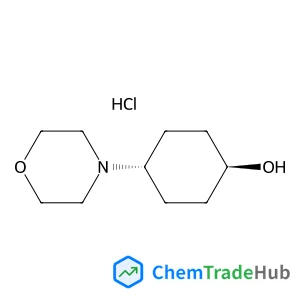
trans-4-(4-Morpholinyl)cyclohexanol hydrochloride (1:1)
CAS Number:
1588441-09-1
Molecular Formula:
C10H20ClNO2
![Imidazo[1,5-a]pyrazine structure](https://static.chemtradehub.com/structs/274/274-49-7-d749.webp "Imidazo[1,5-a]pyrazine structure")
![4-{1-[4-(4,4,5,5-Tetramethyl-1,3,2-dioxaborolan-2-yl)phenyl]cyclopropyl}morpholine structure](https://static.chemtradehub.com/structs/120/1206594-08-2-7afb.webp "4-{1-[4-(4,4,5,5-Tetramethyl-1,3,2-dioxaborolan-2-yl)phenyl]cyclopropyl}morpholine structure")
4-{1-[4-(4,4,5,5-Tetramethyl-1,3,2-dioxaborolan-2-yl)phenyl]cyclopropyl}morpholine
CAS Number:
1206594-08-2
Molecular Formula:
C19H28BNO3
Recommended Suppliers






Disclaimer
This page provides academic journal information for reference and research purposes only. We are not affiliated with any journal publishers and do not handle publication submissions. For publication-related inquiries, please contact the respective journal publishers directly.
If you notice any inaccuracies in the information displayed, please contact us at support@chemtradehub.com. We will promptly review and address your concerns.