












Thermal reduction of ceria nanostructures on rhodium(111) and re-oxidation by CO2
Literature Information
Publication Date
2018-07-03
DOI
10.1039/C8CP01505H
Impact Factor
3.676
Authors
Benjamin Hagman, Uta Hejral, Johan Gustafson
View Original
Abstract
The thermal reduction of cerium oxide nanostructures deposited on a rhodium(111) single crystal surface and the re-oxidation of the structures by exposure to CO2 were investigated. Two samples are compared: a rhodium surface covered to ≈60% by one to two O–Ce–O trilayer high islands and a surface covered to ≈65% by islands of four O–Ce–O trilayer thickness. Two main results stand out: (1) the thin islands reduce at a lower temperature (870–890 K) and very close to Ce2O3, while the thicker islands need higher temperature for reduction and only reduce to about CeO1.63 at a maximum temperature of 920 K. (2) Ceria is re-oxidized by CO2. The rhodium surface promotes the re-oxidation by splitting the CO2 and thus providing atomic oxygen. The process shows a clear temperature dependence. The maximum oxidation state of the oxide reached by re-oxidation with CO2 differs for the two samples, showing that the thinner structures require a higher temperature for re-oxidation with CO2. Adsorbed carbon species, potentially blocking reactive sites, desorb from both samples at the same temperature and cannot be the sole origin for the observed differences. Instead, an intrinsic property of the differently sized CeOx islands must be at the origin of the observed temperature dependence of the re-oxidation by CO2.
Recommended Journals
Related Literature
Ultrafast polaron-pair dynamics in a poly(3-hexylthiophene-2,5-diyl) device influenced by a static electric field: insights into electric-field-related charge loss
Debkumar Rana, Patrice Donfack, Vladislav Jovanov, Veit Wagner, Arnulf Materny
2019-09-11
Paper
DOI: 10.1039/C9CP03736E
Kinetics of pressure-induced nanocrystal superlattice formation
Martin A. Schroer, Verena Markmann, Johannes Möller
2019-09-12
Paper
DOI: 10.1039/C9CP04658E
A DNP-hyperpolarized solid-state water NMR MASER: observation and qualitative analysis
Emmanuelle M. M. Weber, Dennis Kurzbach, Daniel Abergel
2019-09-11
Paper
DOI: 10.1039/C9CP03334C
Suppressing triplet decay in quinoidal singlet fission materials: the role of molecular planarity and rigidity
Guangchao Han, Qian Peng
2020-03-09
Paper
DOI: 10.1039/C9CP06987A
Large scale quantum dynamics investigations on the sensing mechanism of H2O, acetone, NO2 and O3 adsorption on the (MA)2Pb(SCN)2I2 surface
Shijie Zhou, Lei Tong, Yinjie Liao, Juxia Yi, Yao Qi
2019-07-12
Paper
DOI: 10.1039/C9CP02703C
Enhanced electromagnon excitations in Nd-doped BiFeO3 nanoparticles near morphotropic phase boundaries
Yuan Zhang, Yi Zhang, Quan Guo, Dongwen Zhang, Shuaizhi Zheng, Ming Feng, Xiangli Zhong, Congbing Tan, Zhihui Lu, Jinbin Wang, Pengfei Hou, Yichun Zhou, Jianmin Yuan
2019-09-16
Paper
DOI: 10.1039/C9CP04194J
Mechanism of photochromic transformations and photodegradation of an asymmetrical 2,3-diarylcyclopentenone
Artem B. Smolentsev, Ilya M. Magin, Vladimir V. Vyazovkin, Marina V. Parkhats, Anton V. Yadykov, Valerii Z. Shirinian
2020-02-06
Paper
DOI: 10.1039/C9CP05744G
Identification of oxygen diffusion mechanisms in Nd1−xAExBaInO4−x/2 (AE = Ca, Sr, Ba) compounds through molecular dynamics
Chenyi Li, Hichem Dammak, Guilhem Dezanneau
2019-09-04
Paper
DOI: 10.1039/C9CP03048D
You might also like
Compound Q&A
Is 6-(3-Fluorophenyl)picolinic acid (CAS: 887982-40-3) safe?
6-(3-Fluorophenyl)picolinic acid is generally considered safe for laboratory use...
887982-40-36-(3-Fluorophenyl)pi...
Compound Q&A
What industries use (3R)-3-Pyrrolidinol (CAS: 2799-21-5)?
(3R)-3-Pyrrolidinol is used in the pharmaceutical industry as a precursor for dr...
2799-21-5(3R)-3-Pyrrolidinol
Compound Q&A
What precautions should be taken when handling (4R,5R)-4,5-Diethoxycarbonyl-2,2-dimethyldioxolane (CAS: 59779-75-8)?
When handling (4R,5R)-4,5-Diethoxycarbonyl-2,2-dimethyldioxolane (CAS: 59779-75-...
59779-75-8(4R,5R)-4,5-Diethoxy...
Compound Q&A
How is 1-(6-Chloroimidazo[1,2-b]pyridazin-3-yl)ethanone (CAS: 90734-71-7) typically synthesized?
1-(6-Chloroimidazo[1,2-b]pyridazin-3-yl)ethanone is often synthesized via a mult...
90734-71-71-(6-Chloroimidazo[1...
Compound Q&A
What is the market or research trend for N-Ethyl-3,4-dimethylbenzylamine (CAS: 39180-83-1)?
The market for N-Ethyl-3,4-dimethylbenzylamine (CAS: 39180-83-1) remains steady,...
39180-83-1N-Ethyl-3,4-dimethyl...
Compound Q&A
What is Tert-butyl 3-(pyrrolidin-1-yl)azetidine-1-carboxylate (CAS: 1019008-21-9)?
Tert-butyl 3-(pyrrolidin-1-yl)azetidine-1-carboxylate is a chemical compound wit...
1019008-21-9Tert-butyl 3-(pyrrol...
Compound Q&A
What regulatory guidelines apply to 1-Bromo-3-chloro-2,4-dimethoxybenzene (CAS: 1228956-93-1)?
1-Bromo-3-chloro-2,4-dimethoxybenzene (CAS: 1228956-93-1) falls under the classi...
1228956-93-11-Bromo-3-chloro-2,4...
Compound Q&A
Is 8-Bromo-2-methyl-3,4-dihydroisoquinolin-1(2H)-one (CAS: 1368622-07-4) safe?
The safety of 8-Bromo-2-methyl-3,4-dihydroisoquinolin-1(2H)-one (CAS: 1368622-07...
1368622-07-48-Bromo-2-methyl-3,4...
Compound Q&A
Is Benzyl [(3S)-2,6-dioxo-3-piperidinyl]carbamate (CAS: 22785-43-9) safe?
Benzyl [(3S)-2,6-dioxo-3-piperidinyl]carbamate is generally safe when handled wi...
22785-43-9Benzyl [(3S)-2,6-dio...
Compound Q&A
How should 1-{[4-(4,4,5,5-Tetramethyl-1,3,2-dioxaborolan-2-yl)phenyl]sulfonyl}pyrrolidine (CAS: 928657-21-0) be stored?
1-{[4-(4,4,5,5-Tetramethyl-1,3,2-dioxaborolan-2-yl)phenyl]sulfonyl}pyrrolidine s...
928657-21-01-{[4-(4,4,5,5-Tetra...
Source Journal
Physical Chemistry Chemical Physics

CiteScore:
5.5
Self-citation Rate:
10.3%
Articles per Year:
3036
Physical Chemistry Chemical Physics (PCCP) is an international journal co-owned by 19 physical chemistry and physics societies from around the world. This journal publishes original, cutting-edge research in physical chemistry, chemical physics and biophysical chemistry. To be suitable for publication in PCCP, articles must include significant innovation and/or insight into physical chemistry; this is the most important criterion that reviewers and Editors will judge against when evaluating submissions. The journal has a broad scope and welcomes contributions spanning experiment, theory, computation and data science. Topical coverage includes spectroscopy, dynamics, kinetics, statistical mechanics, thermodynamics, electrochemistry, catalysis, surface science, quantum mechanics, quantum computing and machine learning. Interdisciplinary research areas such as polymers and soft matter, materials, nanoscience, energy, surfaces/interfaces, and biophysical chemistry are welcomed if they demonstrate significant innovation and/or insight into physical chemistry. Joined experimental/theoretical studies are particularly appreciated when complementary and based on up-to-date approaches.
Recommended Compounds

trans-2-(2-Methoxyphenyl)-5-oxotetrahydrofuran-3-carboxylic acid
CAS Number:
99226-02-5
Molecular Formula:
C12H12O5
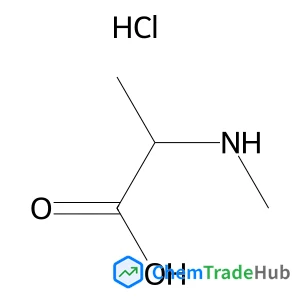
(R)-2-(Methylamino)propanoic acid hydrochloride
CAS Number:
1155878-14-0
Molecular Formula:
C4H10ClNO2
Recommended Suppliers






Disclaimer
This page provides academic journal information for reference and research purposes only. We are not affiliated with any journal publishers and do not handle publication submissions. For publication-related inquiries, please contact the respective journal publishers directly.
If you notice any inaccuracies in the information displayed, please contact us at support@chemtradehub.com. We will promptly review and address your concerns.