












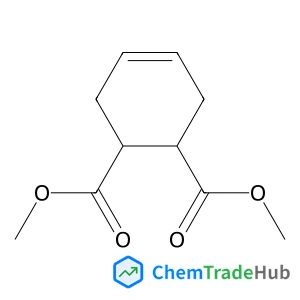
4-Cyclohexene-1,2-dicarboxylic acid, 1,2-dimethyl ester, (1R,2R)-rel-
CAS Number:
17673-68-6
Molecular Formula:
C10H14O4
Haifang Cai, Yufeng Guo, Wanlin Guo
Tribological and structural properties of water monolayers confined at interfaces between graphene and Cu substrates at cryogenic and room temperatures are extensively studied using molecular dynamics simulations and first-principles calculations. The frictions caused by the sliding of graphene sheets and increasing temperature will reduce the interfacial density of water molecules and lead to structural transformations of water monolayers and direct contacts of graphene with the underlying Cu substrates. Such changes in water structures give rise to higher friction forces and shear strengths at the graphene/Cu interfaces. Depending on the water coverage density and temperature, the motions of graphene on monolayer water covered Cu exhibit stick-slip and continuous slipping behaviors. The strong association of friction characteristics with structural transformations of water molecules could be used to unveil interfacial information of graphene on water adsorbed metal surfaces.
Guangchao Han, Qian Peng
DOI: 10.1039/C9CP06987A
Ming-Hsiu Wu, Wan-Jou Chou, Jian-Syun Huang, Darwin Barayang Putungan, Shi-Hsin Lin
DOI: 10.1039/C9CP03893K
DOI: 10.1039/C9CP04364K
J. Philipp Wagner
DOI: 10.1039/C9CP03790J
Shijie Zhou, Lei Tong, Yinjie Liao, Juxia Yi, Yao Qi
DOI: 10.1039/C9CP02703C
Hassan Ghermezcheshme, Hesam Makki, Mohsen Mohseni, Morteza Ebrahimi, Gijsbertus de With
DOI: 10.1039/C9CP03407B
Giuseppe Cassone, Jiri Sponer, Sebastiano Trusso, Franz Saija
DOI: 10.1039/C9CP03101D
Mohsen Yarmohammadi, Kavoos Mirabbaszadeh
DOI: 10.1039/C9CP03655E
6-(3-Fluorophenyl)picolinic acid is generally considered safe for laboratory use...
(3R)-3-Pyrrolidinol is used in the pharmaceutical industry as a precursor for dr...
When handling (4R,5R)-4,5-Diethoxycarbonyl-2,2-dimethyldioxolane (CAS: 59779-75-...
1-(6-Chloroimidazo[1,2-b]pyridazin-3-yl)ethanone is often synthesized via a mult...
The market for N-Ethyl-3,4-dimethylbenzylamine (CAS: 39180-83-1) remains steady,...
Tert-butyl 3-(pyrrolidin-1-yl)azetidine-1-carboxylate is a chemical compound wit...
1-Bromo-3-chloro-2,4-dimethoxybenzene (CAS: 1228956-93-1) falls under the classi...
The safety of 8-Bromo-2-methyl-3,4-dihydroisoquinolin-1(2H)-one (CAS: 1368622-07...
Benzyl [(3S)-2,6-dioxo-3-piperidinyl]carbamate is generally safe when handled wi...
1-{[4-(4,4,5,5-Tetramethyl-1,3,2-dioxaborolan-2-yl)phenyl]sulfonyl}pyrrolidine s...

Physical Chemistry Chemical Physics (PCCP) is an international journal co-owned by 19 physical chemistry and physics societies from around the world. This journal publishes original, cutting-edge research in physical chemistry, chemical physics and biophysical chemistry. To be suitable for publication in PCCP, articles must include significant innovation and/or insight into physical chemistry; this is the most important criterion that reviewers and Editors will judge against when evaluating submissions. The journal has a broad scope and welcomes contributions spanning experiment, theory, computation and data science. Topical coverage includes spectroscopy, dynamics, kinetics, statistical mechanics, thermodynamics, electrochemistry, catalysis, surface science, quantum mechanics, quantum computing and machine learning. Interdisciplinary research areas such as polymers and soft matter, materials, nanoscience, energy, surfaces/interfaces, and biophysical chemistry are welcomed if they demonstrate significant innovation and/or insight into physical chemistry. Joined experimental/theoretical studies are particularly appreciated when complementary and based on up-to-date approaches.

![[4-Chloro-3-(diethylcarbamoyl)phenyl]boronic acid structure](https://static.chemtradehub.com/structs/871/871332-68-2-0e3b.webp "[4-Chloro-3-(diethylcarbamoyl)phenyl]boronic acid structure")





