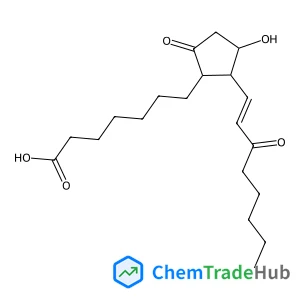
(11alpha,13E)-11-Hydroxy-9,15-dioxoprost-13-en-1-oic acid
CAS Number:
22973-19-9
Molecular Formula:
C20H32O5
A graphical abstract is available for this content
Hassan Ghermezcheshme, Hesam Makki, Mohsen Mohseni, Morteza Ebrahimi, Gijsbertus de With
DOI: 10.1039/C9CP03407B
Karima Bouras, Guy Schmerber, Damien Aureau, Hervé Rinnert, Jean-Luc Rehspringer, Dris Ihiawakrim, Aziz Dinia, Abdelilah Slaoui, Silviu Colis
DOI: 10.1039/C9CP01993F
Zhihui Zhang, Zifeng Xie, Jian Liu, Ye Tian, Yan Zhang, Xing Wei, Tingting Guo, Lei Ni, Jibin Fan, Yijun Weng, Zhengdi Zha, Li Duan
DOI: 10.1039/C9CP06696A
P. S. Rukin, K. G. Komarova, B. Fresch, E. Collini, F. Remacle
DOI: 10.1039/D0CP00223B
Fabian Düll, Manuel Meusel, Florian Späth, Simon Schötz, Udo Bauer, Philipp Bachmann, Johann Steinhauer, Hans-Peter Steinrück, Andreas Bayer, Christian Papp
DOI: 10.1039/C9CP04095A
Lucian Chan, Geoffrey R. Hutchison, Garrett M. Morris
DOI: 10.1039/C9CP06688H
Marco Sauermoser, Signe Kjelstrup, Bruno G. Pollet, Eirik G. Flekkøy
DOI: 10.1039/C9CP05394H
DOI: 10.1039/D0CP00241K
Bai Pan, Xianshang Meng, Yidong Xia, Haiming Lu, Hui Li
DOI: 10.1039/C9CP06989E
6-(3-Fluorophenyl)picolinic acid is generally considered safe for laboratory use...
(3R)-3-Pyrrolidinol is used in the pharmaceutical industry as a precursor for dr...
When handling (4R,5R)-4,5-Diethoxycarbonyl-2,2-dimethyldioxolane (CAS: 59779-75-...
1-(6-Chloroimidazo[1,2-b]pyridazin-3-yl)ethanone is often synthesized via a mult...
The market for N-Ethyl-3,4-dimethylbenzylamine (CAS: 39180-83-1) remains steady,...
Tert-butyl 3-(pyrrolidin-1-yl)azetidine-1-carboxylate is a chemical compound wit...
1-Bromo-3-chloro-2,4-dimethoxybenzene (CAS: 1228956-93-1) falls under the classi...
The safety of 8-Bromo-2-methyl-3,4-dihydroisoquinolin-1(2H)-one (CAS: 1368622-07...
Benzyl [(3S)-2,6-dioxo-3-piperidinyl]carbamate is generally safe when handled wi...
1-{[4-(4,4,5,5-Tetramethyl-1,3,2-dioxaborolan-2-yl)phenyl]sulfonyl}pyrrolidine s...

Physical Chemistry Chemical Physics (PCCP) is an international journal co-owned by 19 physical chemistry and physics societies from around the world. This journal publishes original, cutting-edge research in physical chemistry, chemical physics and biophysical chemistry. To be suitable for publication in PCCP, articles must include significant innovation and/or insight into physical chemistry; this is the most important criterion that reviewers and Editors will judge against when evaluating submissions. The journal has a broad scope and welcomes contributions spanning experiment, theory, computation and data science. Topical coverage includes spectroscopy, dynamics, kinetics, statistical mechanics, thermodynamics, electrochemistry, catalysis, surface science, quantum mechanics, quantum computing and machine learning. Interdisciplinary research areas such as polymers and soft matter, materials, nanoscience, energy, surfaces/interfaces, and biophysical chemistry are welcomed if they demonstrate significant innovation and/or insight into physical chemistry. Joined experimental/theoretical studies are particularly appreciated when complementary and based on up-to-date approaches.
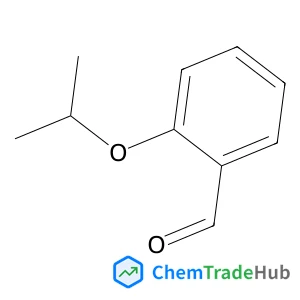
![2-[({[(2-Methyl-2-propanyl)oxy]carbonyl}amino)methyl]isonicotinic acid structure](https://static.chemtradehub.com/structs/473/473924-63-9-973b.webp "2-[({[(2-Methyl-2-propanyl)oxy]carbonyl}amino)methyl]isonicotinic acid structure")