












Linear humidity response of carbon dot-modified molybdenum disulfide
Literature Information
Publication Date
2018-01-04
DOI
10.1039/C7CP07125F
Impact Factor
3.676
Authors
Guili He, Da Huang, Zhi Yang, Yutong Han, Jun Hu, Nantao Hu, Yanjie Su, Zhihua Zhou, Yafei Zhang, Yan Zhang
View Original
Abstract
Molybdenum disulfide (MoS2)-based humidity sensors suffer from low sensitivity and long response time. Herein, this problem has been effectively solved by modifying MoS2 nanosheets using carbon dots (CDs) with abundant functional groups via a convenient and facile hydrothermal method. The mechanism for the enhanced humidity response of CD-modified MoS2 has been proposed through the characterization of physical and chemical properties of the as-prepared composites. The introduction of CDs is expected to enhance the adsorption of water molecules by increasing the specific surface area and surface active sites of the MoS2 nanosheets. Moreover, a three-dimensional conductive network is jointly established by the chemisorbed water molecules, CDs, and MoS2 nanosheets, which ensures continuous transmission of charges in a low humidity environment. As a result, the response performance and the repeatability have been significantly improved in CD–MoS2-based humidity sensors. The response curve shows an excellent linear property in the range of 15–80% RH. This study demonstrates the potential applications of CD-modified two-dimensional nanomaterials with their improved performance towards humidity sensing.
Recommended Journals
Related Literature
Charge compensation weakening ionized impurity scattering and assessing the minority carrier contribution to the Seebeck coefficient in Pb-doped Mg3Sb2 compounds
Qiang Zhang, Jichong Hou, Jianfeng Fan, Shaoping Chen, Wenhao Fan, Hua Zhang, Wenxian Wang, Yucheng Wu, Bingshe Xu
2020-03-11
Paper
DOI: 10.1039/D0CP00266F
Ectoine interaction with DNA: influence on ultraviolet radiation damage
Glen J. Smales, Tihomir Solomun, Heinz Sturm
2020-03-18
Paper
DOI: 10.1039/D0CP00092B
CO2 as an auto-catalyst for the oxidation of CO by a Criegee intermediate (CH2OO)
Amit Kumar, Pradeep Kumar
2020-03-06
Paper
DOI: 10.1039/D0CP00027B
Abnormal scaling of excitons in phosphorene quantum dots
Jun Zhong, Linan Huang, Weidong Sheng
2020-02-10
Paper
DOI: 10.1039/C9CP06146K
Molecular dynamics investigations of oligosaccharides recognized by family 16 and 22 carbohydrate binding modules
Ruihan Wang
2019-09-05
Paper
DOI: 10.1039/C9CP04673A
Enhanced electromagnon excitations in Nd-doped BiFeO3 nanoparticles near morphotropic phase boundaries
Yuan Zhang, Yi Zhang, Quan Guo, Dongwen Zhang, Shuaizhi Zheng, Ming Feng, Xiangli Zhong, Congbing Tan, Zhihui Lu, Jinbin Wang, Pengfei Hou, Yichun Zhou, Jianmin Yuan
2019-09-16
Paper
DOI: 10.1039/C9CP04194J
Novel inorganic aromatic mixed-valent superalkali electride CaN3Ca: an alkaline-earth-based high-sensitivity multi-state nonlinear optical molecular switch
Yin-Feng Wang, Tian Qin, Jia-Min Tang, Yan-Jiao Liu, Miao Xie, Jia Li, Jiangen Huang, Zhi-Ru Li
2020-02-19
Paper
DOI: 10.1039/C9CP06848A
You might also like
Compound Q&A
Is 6-(3-Fluorophenyl)picolinic acid (CAS: 887982-40-3) safe?
6-(3-Fluorophenyl)picolinic acid is generally considered safe for laboratory use...
887982-40-36-(3-Fluorophenyl)pi...
Compound Q&A
What industries use (3R)-3-Pyrrolidinol (CAS: 2799-21-5)?
(3R)-3-Pyrrolidinol is used in the pharmaceutical industry as a precursor for dr...
2799-21-5(3R)-3-Pyrrolidinol
Compound Q&A
What precautions should be taken when handling (4R,5R)-4,5-Diethoxycarbonyl-2,2-dimethyldioxolane (CAS: 59779-75-8)?
When handling (4R,5R)-4,5-Diethoxycarbonyl-2,2-dimethyldioxolane (CAS: 59779-75-...
59779-75-8(4R,5R)-4,5-Diethoxy...
Compound Q&A
How is 1-(6-Chloroimidazo[1,2-b]pyridazin-3-yl)ethanone (CAS: 90734-71-7) typically synthesized?
1-(6-Chloroimidazo[1,2-b]pyridazin-3-yl)ethanone is often synthesized via a mult...
90734-71-71-(6-Chloroimidazo[1...
Compound Q&A
What is the market or research trend for N-Ethyl-3,4-dimethylbenzylamine (CAS: 39180-83-1)?
The market for N-Ethyl-3,4-dimethylbenzylamine (CAS: 39180-83-1) remains steady,...
39180-83-1N-Ethyl-3,4-dimethyl...
Compound Q&A
What is Tert-butyl 3-(pyrrolidin-1-yl)azetidine-1-carboxylate (CAS: 1019008-21-9)?
Tert-butyl 3-(pyrrolidin-1-yl)azetidine-1-carboxylate is a chemical compound wit...
1019008-21-9Tert-butyl 3-(pyrrol...
Compound Q&A
What regulatory guidelines apply to 1-Bromo-3-chloro-2,4-dimethoxybenzene (CAS: 1228956-93-1)?
1-Bromo-3-chloro-2,4-dimethoxybenzene (CAS: 1228956-93-1) falls under the classi...
1228956-93-11-Bromo-3-chloro-2,4...
Compound Q&A
Is 8-Bromo-2-methyl-3,4-dihydroisoquinolin-1(2H)-one (CAS: 1368622-07-4) safe?
The safety of 8-Bromo-2-methyl-3,4-dihydroisoquinolin-1(2H)-one (CAS: 1368622-07...
1368622-07-48-Bromo-2-methyl-3,4...
Compound Q&A
Is Benzyl [(3S)-2,6-dioxo-3-piperidinyl]carbamate (CAS: 22785-43-9) safe?
Benzyl [(3S)-2,6-dioxo-3-piperidinyl]carbamate is generally safe when handled wi...
22785-43-9Benzyl [(3S)-2,6-dio...
Compound Q&A
How should 1-{[4-(4,4,5,5-Tetramethyl-1,3,2-dioxaborolan-2-yl)phenyl]sulfonyl}pyrrolidine (CAS: 928657-21-0) be stored?
1-{[4-(4,4,5,5-Tetramethyl-1,3,2-dioxaborolan-2-yl)phenyl]sulfonyl}pyrrolidine s...
928657-21-01-{[4-(4,4,5,5-Tetra...
Source Journal
Physical Chemistry Chemical Physics

CiteScore:
5.5
Self-citation Rate:
10.3%
Articles per Year:
3036
Physical Chemistry Chemical Physics (PCCP) is an international journal co-owned by 19 physical chemistry and physics societies from around the world. This journal publishes original, cutting-edge research in physical chemistry, chemical physics and biophysical chemistry. To be suitable for publication in PCCP, articles must include significant innovation and/or insight into physical chemistry; this is the most important criterion that reviewers and Editors will judge against when evaluating submissions. The journal has a broad scope and welcomes contributions spanning experiment, theory, computation and data science. Topical coverage includes spectroscopy, dynamics, kinetics, statistical mechanics, thermodynamics, electrochemistry, catalysis, surface science, quantum mechanics, quantum computing and machine learning. Interdisciplinary research areas such as polymers and soft matter, materials, nanoscience, energy, surfaces/interfaces, and biophysical chemistry are welcomed if they demonstrate significant innovation and/or insight into physical chemistry. Joined experimental/theoretical studies are particularly appreciated when complementary and based on up-to-date approaches.
Recommended Compounds

(11alpha,13E)-11-Hydroxy-9,15-dioxoprost-13-en-1-oic acid
CAS Number:
22973-19-9
Molecular Formula:
C20H32O5
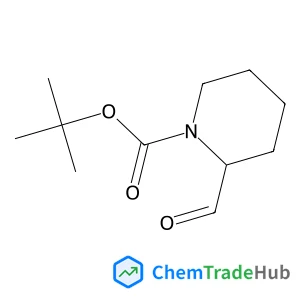
2-Methyl-2-propanyl (2R)-2-formyl-1-piperidinecarboxylate
CAS Number:
134526-69-5
Molecular Formula:
C11H19NO3
Recommended Suppliers






Disclaimer
This page provides academic journal information for reference and research purposes only. We are not affiliated with any journal publishers and do not handle publication submissions. For publication-related inquiries, please contact the respective journal publishers directly.
If you notice any inaccuracies in the information displayed, please contact us at support@chemtradehub.com. We will promptly review and address your concerns.