












Unravelling the mechanisms of interference between overlapping resonances
Literature Information
Publication Date
2018-01-10
DOI
10.1039/C7CP07769F
Impact Factor
3.676
Authors
View Original
Abstract
The enhancement of the resonance lifetime that occurs upon interference of two overlapping resonances excited coherently by two pulses with delayed time has been investigated as a function of the pulse temporal width and the delay time between the pulses. A general law predicting quantitatively the optimal delay time that maximizes the lifetime enhancement of the two resonances has been established in terms of the pulse width and of the lifetimes of both resonances when they are excited isolatedly. The specific form of the law and all the results found can be closely related to the characteristic features of the mechanism of interference between the overlapping resonances, providing a detailed understanding on how the mechanism operates. The proposed law is envisioned as a useful tool to design experimental strategies to control the resonance lifetime.
Related Literature
Mechanism of photochromic transformations and photodegradation of an asymmetrical 2,3-diarylcyclopentenone
Artem B. Smolentsev, Ilya M. Magin, Vladimir V. Vyazovkin, Marina V. Parkhats, Anton V. Yadykov, Valerii Z. Shirinian
2020-02-06
Paper
DOI: 10.1039/C9CP05744G
Nitrogen doping in coexposed (001)–(101) anatase TiO2 surfaces: a DFT study
Giovanni Di Liberto, Sergio Tosoni, Gianfranco Pacchioni
2019-09-10
Paper
DOI: 10.1039/C9CP03930A
Quantitative analysis of the coupling between proton and electron transport in peptide/manganese oxide hybrid films
Misong Ju, Ouk Hyun Cho, Jaehun Lee, Mani Balamurugan, Ki Tae Nam
2020-03-10
Paper
DOI: 10.1039/C9CP05581A
Molecular dynamics investigations of oligosaccharides recognized by family 16 and 22 carbohydrate binding modules
Ruihan Wang
2019-09-05
Paper
DOI: 10.1039/C9CP04673A
Graphyne-anchored single Fe atoms as efficient CO oxidation catalysts as predicted by DFT calculations
Si Wu, Yuan Yuan, Hui Mao, Baotao Kang
2020-02-20
Paper
DOI: 10.1039/D0CP00178C
Using computed infrared intensities for the reduction of vibrational configuration interaction bases
Vincent Le Bris, Marc Odunlami, Didier Bégué, Isabelle Baraille, Olivier Coulaud
2020-03-11
Paper
DOI: 10.1039/D0CP00593B
Germanene/GaGeTe heterostructure: a promising electric-field induced data storage device with high carrier mobility
Liang Zhang, Jin Zhang, Pei-ji Wang, Chang-Wen Zhang
2020-02-04
Paper
DOI: 10.1039/C9CP06445A
A methodical study of quantum phase engineering in topological crystalline insulator SnTe and related alloys
Mohsen Yarmohammadi, Kavoos Mirabbaszadeh
2019-08-16
Paper
DOI: 10.1039/C9CP03655E
Dynamics of propene and propane in ZIF-8 probed by solid-state 2H NMR
Dieter Freude, Alexander G. Stepanov
2020-02-21
Paper
DOI: 10.1039/D0CP00270D
Gradient heterostructure perovskite single crystals enable the improvement of radiative recombination for scintillator application
Wenyi Shao, Yang Li, Xiang Wang, Xiao Ouyang, Jiafa Cai, Chen Li, Zhengyun Wu, Qiang Xu
2020-02-25
Paper
DOI: 10.1039/C9CP06259A
You might also like
Compound Q&A
Is 6-(3-Fluorophenyl)picolinic acid (CAS: 887982-40-3) safe?
6-(3-Fluorophenyl)picolinic acid is generally considered safe for laboratory use...
887982-40-36-(3-Fluorophenyl)pi...
Compound Q&A
What industries use (3R)-3-Pyrrolidinol (CAS: 2799-21-5)?
(3R)-3-Pyrrolidinol is used in the pharmaceutical industry as a precursor for dr...
2799-21-5(3R)-3-Pyrrolidinol
Compound Q&A
What precautions should be taken when handling (4R,5R)-4,5-Diethoxycarbonyl-2,2-dimethyldioxolane (CAS: 59779-75-8)?
When handling (4R,5R)-4,5-Diethoxycarbonyl-2,2-dimethyldioxolane (CAS: 59779-75-...
59779-75-8(4R,5R)-4,5-Diethoxy...
Compound Q&A
How is 1-(6-Chloroimidazo[1,2-b]pyridazin-3-yl)ethanone (CAS: 90734-71-7) typically synthesized?
1-(6-Chloroimidazo[1,2-b]pyridazin-3-yl)ethanone is often synthesized via a mult...
90734-71-71-(6-Chloroimidazo[1...
Compound Q&A
What is the market or research trend for N-Ethyl-3,4-dimethylbenzylamine (CAS: 39180-83-1)?
The market for N-Ethyl-3,4-dimethylbenzylamine (CAS: 39180-83-1) remains steady,...
39180-83-1N-Ethyl-3,4-dimethyl...
Compound Q&A
What is Tert-butyl 3-(pyrrolidin-1-yl)azetidine-1-carboxylate (CAS: 1019008-21-9)?
Tert-butyl 3-(pyrrolidin-1-yl)azetidine-1-carboxylate is a chemical compound wit...
1019008-21-9Tert-butyl 3-(pyrrol...
Compound Q&A
What regulatory guidelines apply to 1-Bromo-3-chloro-2,4-dimethoxybenzene (CAS: 1228956-93-1)?
1-Bromo-3-chloro-2,4-dimethoxybenzene (CAS: 1228956-93-1) falls under the classi...
1228956-93-11-Bromo-3-chloro-2,4...
Compound Q&A
Is 8-Bromo-2-methyl-3,4-dihydroisoquinolin-1(2H)-one (CAS: 1368622-07-4) safe?
The safety of 8-Bromo-2-methyl-3,4-dihydroisoquinolin-1(2H)-one (CAS: 1368622-07...
1368622-07-48-Bromo-2-methyl-3,4...
Compound Q&A
Is Benzyl [(3S)-2,6-dioxo-3-piperidinyl]carbamate (CAS: 22785-43-9) safe?
Benzyl [(3S)-2,6-dioxo-3-piperidinyl]carbamate is generally safe when handled wi...
22785-43-9Benzyl [(3S)-2,6-dio...
Compound Q&A
How should 1-{[4-(4,4,5,5-Tetramethyl-1,3,2-dioxaborolan-2-yl)phenyl]sulfonyl}pyrrolidine (CAS: 928657-21-0) be stored?
1-{[4-(4,4,5,5-Tetramethyl-1,3,2-dioxaborolan-2-yl)phenyl]sulfonyl}pyrrolidine s...
928657-21-01-{[4-(4,4,5,5-Tetra...
Source Journal
Physical Chemistry Chemical Physics

CiteScore:
5.5
Self-citation Rate:
10.3%
Articles per Year:
3036
Physical Chemistry Chemical Physics (PCCP) is an international journal co-owned by 19 physical chemistry and physics societies from around the world. This journal publishes original, cutting-edge research in physical chemistry, chemical physics and biophysical chemistry. To be suitable for publication in PCCP, articles must include significant innovation and/or insight into physical chemistry; this is the most important criterion that reviewers and Editors will judge against when evaluating submissions. The journal has a broad scope and welcomes contributions spanning experiment, theory, computation and data science. Topical coverage includes spectroscopy, dynamics, kinetics, statistical mechanics, thermodynamics, electrochemistry, catalysis, surface science, quantum mechanics, quantum computing and machine learning. Interdisciplinary research areas such as polymers and soft matter, materials, nanoscience, energy, surfaces/interfaces, and biophysical chemistry are welcomed if they demonstrate significant innovation and/or insight into physical chemistry. Joined experimental/theoretical studies are particularly appreciated when complementary and based on up-to-date approaches.
Recommended Compounds
![2-Methyl-2-propanyl [(2S)-1-hydroxy-3-(4-hydroxyphenyl)-2-propanyl]carbamate structure](https://static.chemtradehub.com/structs/833/83345-46-4-eec2.webp "2-Methyl-2-propanyl [(2S)-1-hydroxy-3-(4-hydroxyphenyl)-2-propanyl]carbamate structure")
2-Methyl-2-propanyl [(2S)-1-hydroxy-3-(4-hydroxyphenyl)-2-propanyl]carbamate
CAS Number:
83345-46-4
Molecular Formula:
C14H21NO4
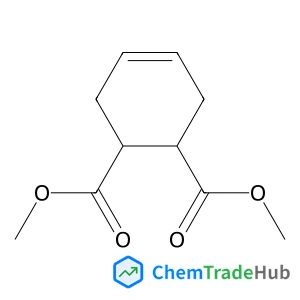
4-Cyclohexene-1,2-dicarboxylic acid, 1,2-dimethyl ester, (1R,2R)-rel-
CAS Number:
17673-68-6
Molecular Formula:
C10H14O4
Recommended Suppliers





Disclaimer
This page provides academic journal information for reference and research purposes only. We are not affiliated with any journal publishers and do not handle publication submissions. For publication-related inquiries, please contact the respective journal publishers directly.
If you notice any inaccuracies in the information displayed, please contact us at support@chemtradehub.com. We will promptly review and address your concerns.