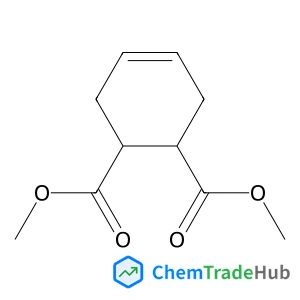
4-Cyclohexene-1,2-dicarboxylic acid, 1,2-dimethyl ester, (1R,2R)-rel-
CAS Number:
17673-68-6
Molecular Formula:
C10H14O4
Ruma Das, Gone Rajender
We explore the mechanism of the fluorescence enhancement and fluorescence quenching effect of single walled carbon nanotubes (SWCNTs) on highly fluorescent graphene quantum dots (GQDs) over a wide range of concentrations of SWCNTs. At very low concentrations of SWCNTs, the fluorescence intensity of the GQDs is enhanced, while at higher concentrations, systematic quenching of fluorescence is observed. The nature of the Stern–Volmer plot for the latter case was found to be non-linear indicating a combined effect of dynamic and static quenching. The contribution of the dynamic quenching component was assessed through the fluorescence lifetime measurements. The contribution of static quenching is confirmed from the red shift of the fluorescence spectra of the GQDs after addition of SWCNTs. The fluorescence intensity is first enhanced at very low concentration due to improved dispersion and higher absorption by GQDs, while at higher concentration, the fluorescence of GQDs is quenched due to the complex formation and associated reduction of the radiative sites of the GQDs, which is confirmed from time-resolved fluorescence measurements. Laser confocal microscopy imaging provides direct evidence of the enhancement and quenching of fluorescence at low and high concentrations of SWCNTs, respectively. This study provides an important insight into tuning the fluorescence of GQDs and understanding the interaction between GQDs and different CNTs, which is important for bio-imaging and drug delivery applications.
Giovanni Di Liberto, Sergio Tosoni, Gianfranco Pacchioni
DOI: 10.1039/C9CP03930A
O. Palumbo, A. Cimini, J.-B. Brubach, P. Roy, A. Paolone
DOI: 10.1039/D0CP00907E
Tongqing Long, Jun Cao
DOI: 10.1039/D0CP90055A
Susana Blanco, Alberto Macario, Juan Carlos López
DOI: 10.1039/C9CP04088A
Seiji Katakura, Naoya Nishi, Kazuya Kobayashi, Tetsuo Sakka
DOI: 10.1039/C9CP05297F
Marco Sauermoser, Signe Kjelstrup, Bruno G. Pollet, Eirik G. Flekkøy
DOI: 10.1039/C9CP05394H
Shijie Zhou, Lei Tong, Yinjie Liao, Juxia Yi, Yao Qi
DOI: 10.1039/C9CP02703C
Andrea Gardin, Alberta Ferrarini
DOI: 10.1039/D0CP90053B
Bai Pan, Xianshang Meng, Yidong Xia, Haiming Lu, Hui Li
DOI: 10.1039/C9CP06989E
6-(3-Fluorophenyl)picolinic acid is generally considered safe for laboratory use...
(3R)-3-Pyrrolidinol is used in the pharmaceutical industry as a precursor for dr...
When handling (4R,5R)-4,5-Diethoxycarbonyl-2,2-dimethyldioxolane (CAS: 59779-75-...
1-(6-Chloroimidazo[1,2-b]pyridazin-3-yl)ethanone is often synthesized via a mult...
The market for N-Ethyl-3,4-dimethylbenzylamine (CAS: 39180-83-1) remains steady,...
Tert-butyl 3-(pyrrolidin-1-yl)azetidine-1-carboxylate is a chemical compound wit...
1-Bromo-3-chloro-2,4-dimethoxybenzene (CAS: 1228956-93-1) falls under the classi...
The safety of 8-Bromo-2-methyl-3,4-dihydroisoquinolin-1(2H)-one (CAS: 1368622-07...
Benzyl [(3S)-2,6-dioxo-3-piperidinyl]carbamate is generally safe when handled wi...
1-{[4-(4,4,5,5-Tetramethyl-1,3,2-dioxaborolan-2-yl)phenyl]sulfonyl}pyrrolidine s...

Physical Chemistry Chemical Physics (PCCP) is an international journal co-owned by 19 physical chemistry and physics societies from around the world. This journal publishes original, cutting-edge research in physical chemistry, chemical physics and biophysical chemistry. To be suitable for publication in PCCP, articles must include significant innovation and/or insight into physical chemistry; this is the most important criterion that reviewers and Editors will judge against when evaluating submissions. The journal has a broad scope and welcomes contributions spanning experiment, theory, computation and data science. Topical coverage includes spectroscopy, dynamics, kinetics, statistical mechanics, thermodynamics, electrochemistry, catalysis, surface science, quantum mechanics, quantum computing and machine learning. Interdisciplinary research areas such as polymers and soft matter, materials, nanoscience, energy, surfaces/interfaces, and biophysical chemistry are welcomed if they demonstrate significant innovation and/or insight into physical chemistry. Joined experimental/theoretical studies are particularly appreciated when complementary and based on up-to-date approaches.
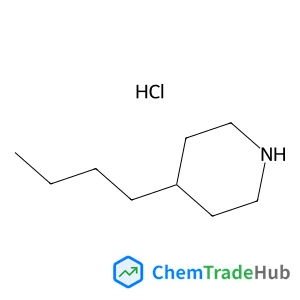
![2-Methyl-2-propanyl [(2S)-1-hydroxy-3-(4-hydroxyphenyl)-2-propanyl]carbamate structure](https://static.chemtradehub.com/structs/833/83345-46-4-eec2.webp "2-Methyl-2-propanyl [(2S)-1-hydroxy-3-(4-hydroxyphenyl)-2-propanyl]carbamate structure")