












Multiionic effects on the capacitance of porous electrodes
Literature Information
Publication Date
2018-01-16
DOI
10.1039/C7CP06778J
Impact Factor
3.676
Authors
M. L. Jiménez, S. Ahualli, P. Arenas-Guerrero, M. M. Fernández, G. Iglesias, A. V. Delgado
View Original
Abstract
The rapid and reversible ionic electrosorption in the electrical double layers (EDLs) of moderately charged micropores in contact with a solution is the main concept underlying capacitive energy and desalination devices. For the usual operating conditions, the ion concentration is large enough for the confinement of ions to play an important role in their distribution in the EDL. On the other hand, although most laboratory experiments have been carried out with simple salt solutions, realistic applications require a proper analysis of the effect of the different ionic species existing in natural waters. Here we focus on the role of multiionic solutions on the double layer structure. For this purpose, a model is presented in which the EDL overlap and the existence of a Stern layer are considered. It is also taken into account that the ions can be tightly packed by using the Carnahan–Starling model. This model is applied to analyze the structure of the EDL with multiionic solutions containing divalent ions. The predictions of this model are found to largely differ from those of the better known Bikerman equation, and are more realistic. It is demonstrated that the presence of tiny amounts of divalent ions in the bulk is enough to dominate the EDL behavior, and hence, its capacitance, energy storage, and desalination properties.
Recommended Journals
Related Literature
MARTINI-based simulation method for step-growth polymerization and its analysis by size exclusion characterization: a case study of cross-linked polyurethane
Hassan Ghermezcheshme, Hesam Makki, Mohsen Mohseni, Morteza Ebrahimi, Gijsbertus de With
2019-09-13
Paper
DOI: 10.1039/C9CP03407B
A methodical study of quantum phase engineering in topological crystalline insulator SnTe and related alloys
Mohsen Yarmohammadi, Kavoos Mirabbaszadeh
2019-08-16
Paper
DOI: 10.1039/C9CP03655E
A quantum chemical study of hydrogen adsorption on carbon-supported palladium clusters
Lisa Warczinski, Christof Hättig
2019-09-10
Paper
DOI: 10.1039/C9CP04606B
Impact of effective polarisability models on the near-field interaction of dissolved greenhouse gases at ice and air interfaces
Drew F. Parsons, Friedrich Anton Burger, Priyadarshini Thiyam, I. Brevik, Clas Persson
2019-09-16
Paper
DOI: 10.1039/C9CP03165K
Pulse radiolysis study on the reactivity of NO3˙ radical toward uranous(iv), hydrazinium nitrate and hydroxyl ammonium nitrate at room temperature and at 45 °C
R. Musat, J. L. Marignier, C. Le Naour, S. Denisov, L. Venault, Ph. Moisy, M. Mostafavi
2020-02-13
Paper
DOI: 10.1039/C9CP07034F
Gas adsorption and light interaction mechanism in phosphorene-based field-effect transistors
Manthila Rajapakse, George Anderson, Congyan Zhang, Rajib Musa, Jackson Walter, Ming Yu, Jacek B. Jasinski
2020-02-21
Paper
DOI: 10.1039/C9CP06547D
The binding mode of vilazodone in the human serotonin transporter elucidated by ligand docking and molecular dynamics simulations
Guoxun Zheng, Tingting Fu, Jiajun Hong, Fengcheng Li, Xiaojun Yao, Weiwei Xue
2020-01-23
Paper
DOI: 10.1039/C9CP05764A
Band alignment control in a blue phosphorus/C2N van der Waals heterojunction using an electric field
Zhihui Zhang, Zifeng Xie, Jian Liu, Ye Tian, Yan Zhang, Xing Wei, Tingting Guo, Lei Ni, Jibin Fan, Yijun Weng, Zhengdi Zha, Li Duan
2020-02-25
Paper
DOI: 10.1039/C9CP06696A
Gradient heterostructure perovskite single crystals enable the improvement of radiative recombination for scintillator application
Wenyi Shao, Yang Li, Xiang Wang, Xiao Ouyang, Jiafa Cai, Chen Li, Zhengyun Wu, Qiang Xu
2020-02-25
Paper
DOI: 10.1039/C9CP06259A
You might also like
Compound Q&A
Is 6-(3-Fluorophenyl)picolinic acid (CAS: 887982-40-3) safe?
6-(3-Fluorophenyl)picolinic acid is generally considered safe for laboratory use...
887982-40-36-(3-Fluorophenyl)pi...
Compound Q&A
What industries use (3R)-3-Pyrrolidinol (CAS: 2799-21-5)?
(3R)-3-Pyrrolidinol is used in the pharmaceutical industry as a precursor for dr...
2799-21-5(3R)-3-Pyrrolidinol
Compound Q&A
What precautions should be taken when handling (4R,5R)-4,5-Diethoxycarbonyl-2,2-dimethyldioxolane (CAS: 59779-75-8)?
When handling (4R,5R)-4,5-Diethoxycarbonyl-2,2-dimethyldioxolane (CAS: 59779-75-...
59779-75-8(4R,5R)-4,5-Diethoxy...
Compound Q&A
How is 1-(6-Chloroimidazo[1,2-b]pyridazin-3-yl)ethanone (CAS: 90734-71-7) typically synthesized?
1-(6-Chloroimidazo[1,2-b]pyridazin-3-yl)ethanone is often synthesized via a mult...
90734-71-71-(6-Chloroimidazo[1...
Compound Q&A
What is the market or research trend for N-Ethyl-3,4-dimethylbenzylamine (CAS: 39180-83-1)?
The market for N-Ethyl-3,4-dimethylbenzylamine (CAS: 39180-83-1) remains steady,...
39180-83-1N-Ethyl-3,4-dimethyl...
Compound Q&A
What is Tert-butyl 3-(pyrrolidin-1-yl)azetidine-1-carboxylate (CAS: 1019008-21-9)?
Tert-butyl 3-(pyrrolidin-1-yl)azetidine-1-carboxylate is a chemical compound wit...
1019008-21-9Tert-butyl 3-(pyrrol...
Compound Q&A
What regulatory guidelines apply to 1-Bromo-3-chloro-2,4-dimethoxybenzene (CAS: 1228956-93-1)?
1-Bromo-3-chloro-2,4-dimethoxybenzene (CAS: 1228956-93-1) falls under the classi...
1228956-93-11-Bromo-3-chloro-2,4...
Compound Q&A
Is 8-Bromo-2-methyl-3,4-dihydroisoquinolin-1(2H)-one (CAS: 1368622-07-4) safe?
The safety of 8-Bromo-2-methyl-3,4-dihydroisoquinolin-1(2H)-one (CAS: 1368622-07...
1368622-07-48-Bromo-2-methyl-3,4...
Compound Q&A
Is Benzyl [(3S)-2,6-dioxo-3-piperidinyl]carbamate (CAS: 22785-43-9) safe?
Benzyl [(3S)-2,6-dioxo-3-piperidinyl]carbamate is generally safe when handled wi...
22785-43-9Benzyl [(3S)-2,6-dio...
Compound Q&A
How should 1-{[4-(4,4,5,5-Tetramethyl-1,3,2-dioxaborolan-2-yl)phenyl]sulfonyl}pyrrolidine (CAS: 928657-21-0) be stored?
1-{[4-(4,4,5,5-Tetramethyl-1,3,2-dioxaborolan-2-yl)phenyl]sulfonyl}pyrrolidine s...
928657-21-01-{[4-(4,4,5,5-Tetra...
Source Journal
Physical Chemistry Chemical Physics

CiteScore:
5.5
Self-citation Rate:
10.3%
Articles per Year:
3036
Physical Chemistry Chemical Physics (PCCP) is an international journal co-owned by 19 physical chemistry and physics societies from around the world. This journal publishes original, cutting-edge research in physical chemistry, chemical physics and biophysical chemistry. To be suitable for publication in PCCP, articles must include significant innovation and/or insight into physical chemistry; this is the most important criterion that reviewers and Editors will judge against when evaluating submissions. The journal has a broad scope and welcomes contributions spanning experiment, theory, computation and data science. Topical coverage includes spectroscopy, dynamics, kinetics, statistical mechanics, thermodynamics, electrochemistry, catalysis, surface science, quantum mechanics, quantum computing and machine learning. Interdisciplinary research areas such as polymers and soft matter, materials, nanoscience, energy, surfaces/interfaces, and biophysical chemistry are welcomed if they demonstrate significant innovation and/or insight into physical chemistry. Joined experimental/theoretical studies are particularly appreciated when complementary and based on up-to-date approaches.
Recommended Compounds

(11alpha,13E)-11-Hydroxy-9,15-dioxoprost-13-en-1-oic acid
CAS Number:
22973-19-9
Molecular Formula:
C20H32O5
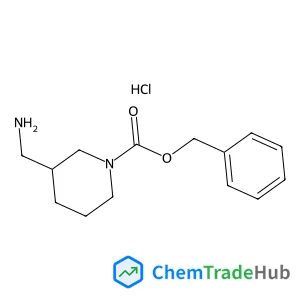
Benzyl 3-(aminomethyl)piperidine-1-carboxylate hydrochloride
CAS Number:
1186663-23-9
Molecular Formula:
C14H21ClN2O2
Recommended Suppliers






Disclaimer
This page provides academic journal information for reference and research purposes only. We are not affiliated with any journal publishers and do not handle publication submissions. For publication-related inquiries, please contact the respective journal publishers directly.
If you notice any inaccuracies in the information displayed, please contact us at support@chemtradehub.com. We will promptly review and address your concerns.