












Front cover
Literature Information
Publication Date
DOI
10.1039/B918591G
Impact Factor
6.222
Authors
View Original
Abstract
The first page of this article is displayed as the abstract.
Related Literature
[Pb9CdCdPb9]6−: A Zintl cluster anion with an unsupported cadmium–cadmium bond
Binbin Zhou, Mark S. Denning, Thomas A. D. Chapman, John E. McGrady, Jose M. Goicoechea
2009-10-22
Communication
DOI: 10.1039/B917185A
Synthesis of 1,2-annulated and 1,2-unsubstituted pyrrolo[2,1,5-de]quinolizin-5-ones (cycl[3.3.2]azin-5-ones) via [3+2] cycloadditions of 1-oxoquinolizinium ylides with cyclic alkenes
Hua-You Hu, Hong-Wen Hu, Jian-Hua Xu
2010-08-26
Paper
DOI: 10.1039/C0OB00299B
Syntheses, structural characterization and CO releasing properties of boranocarbonate [H3BCO2H]− derivatives
Tamil Selvi Pitchumony, Bernhard Spingler, Roberto Motterlini, Roger Alberto
2010-08-24
Paper
DOI: 10.1039/C0OB00099J
Deazaflavins as mediators in light-driven cytochrome P450 catalyzed hydroxylations
Felipe E. Zilly, Andreas Taglieber, Frank Schulz, Frank Hollmann, Manfred T. Reetz
2009-10-14
Communication
DOI: 10.1039/B913863C
Electrochemistry at carbon nanotubes: perspective and issues
Ioana Dumitrescu, Patrick R. Unwin, Julie V. Macpherson
2009-09-23
Feature Article
DOI: 10.1039/B909734A
Reduction of electron deficient guanine radical species in plasmidDNA by tyrosine derivatives
Mandi Tsoi, Trinh T. Do, Vicky J. Tang, Joseph A. Aguilera, Jamie R. Milligan
2010-03-24
Paper
DOI: 10.1039/B922749K
Elaboration and properties of hierarchically structured optical thin films of MIL-101(Cr)
Patricia Horcajada, Christian Serre, Cédric Boissière, David Grosso, Clément Sanchez, Gérard Férey
2009-10-29
Communication
DOI: 10.1039/B915011K
Synthesis of homogeneous antifreeze glycopeptidesvia a ligation–desulfurisation strategy
James Garner, Katrina A. Jolliffe, Margaret M. Harding, Richard J. Payne
2009-10-21
Communication
DOI: 10.1039/B918021D
Photoluminescent quantum dot–cucurbituril nanocomposites
Md. Badruz Zaman, David Bardelang, Xiaohua Wu, Dashan Wang, James C. Margeson, Donald M. Leek, John A. Ripmeester, Christopher I. Ratcliffe, Quan Lin, Bai Yang, Kui Yu
2009-10-05
Communication
DOI: 10.1039/B913914A
You might also like
Compound Q&A
What industries use (1R,3S)-1,3-Cyclopentanediol (CAS: 16326-97-9)?
(1R,3S)-1,3-Cyclopentanediol finds applications in various industries. In the ph...
16326-97-9(1R,3S)-1,3-Cyclopen...
Compound Q&A
What precautions should be taken when handling N'-[4-(Dimethylamino)phenyl]-N,N-dimethyl-1,4-benzenediamine (CAS: 637-31-0)?
When handling N'-[4-(Dimethylamino)phenyl]-N,N-dimethyl-1,4-benzenediamine, it i...
637-31-0N'-[4-(Dimethylamino...
Compound Q&A
Are there alternatives to 5-(2,4-Difluorophenyl)-2-methoxypyrimidine (CAS: 1352318-16-1) in synthesis?
There are several alternatives to 5-(2,4-Difluorophenyl)-2-methoxypyrimidine in ...
1352318-16-15-(2,4-Difluoropheny...
Compound Q&A
What regulatory guidelines apply to 1-(3-Methoxyphenoxy)propan-2-ol (CAS: 382141-68-6)?
1-(3-Methoxyphenoxy)propan-2-ol (CAS: 382141-68-6) must comply with the Globally...
382141-68-61-(3-Methoxyphenoxy)...
Compound Q&A
Is Tetrodotoxin Citrate (CAS: 18660-81-6) safe?
Tetrodotoxin Citrate is extremely dangerous and should be handled with extreme c...
18660-81-6Tetrodotoxin Citrate
Compound Q&A
What are the main uses of 2-Methyl-2-propanyl [(1R,3S)-3-hydroxycyclopentyl]carbamate (CAS: 225641-84-9)?
2-Methyl-2-propanyl [(1R,3S)-3-hydroxycyclopentyl]carbamate (CAS: 225641-84-9) i...
225641-84-92-Methyl-2-propanyl ...
Compound Q&A
How should waste containing 4-(2-Hydroxyhexafluoroisopropyl)Benzoic Acid (CAS: 16261-80-6) be handled?
Waste containing 4-(2-Hydroxyhexafluoroisopropyl)Benzoic Acid (CAS: 16261-80-6) ...
16261-80-64-(2-Hydroxyhexafluo...
Compound Q&A
How is 2-Methyl-2-proanyl {(2S)-1-[(benzyloxy)amino]-3-hydroxy-3-methyl-1-oxo-2-butanyl}carbamate (CAS: 102507-19-7) typically synthesized?
2-Methyl-2-proanyl {(2S)-1-[(benzyloxy)amino]-3-hydroxy-3-methyl-1-oxo-2-butanyl...
102507-19-72-Methyl-2-propanyl ...
Compound Q&A
What is Benzeneethanamine, α-ethyl-, hydrochloride (1:1) (CAS: 20735-15-3)?
Benzeneethanamine, α-ethyl-, hydrochloride (1:1) is an organic compound with the...
20735-15-3Benzeneethanamine, α...
Compound Q&A
Are there alternatives to 3-{(E)-[4-(Dimethylamino)phenyl]diazenyl}benzoic acid (CAS: 20691-84-3) in synthesis?
In the synthesis of compounds similar to 3-{(E)-[4-(Dimethylamino)phenyl]diazeny...
20691-84-33-{(E)-[4-(Dimethyla...
Source Journal
Chemical Communications

CiteScore:
8.6
Self-citation Rate:
4.7%
Articles per Year:
2458
ChemComm publishes urgent research which is of outstanding significance and interest to experts in the field, while also appealing to the journal’s broad chemistry readership. Our communication format is ideally suited to short, urgent studies that are of such importance that they require accelerated publication. Our scope covers all topics in chemistry, and research at the interface of chemistry and other disciplines (such as materials science, nanoscience, physics, engineering and biology) where there is a significant novelty in the chemistry aspects. Major topic areas covered include: Analytical Chemistry Catalysis Chemical Biology and medicinal chemistry Computational Chemistry and Machine Learning Energy and sustainable chemistry Environmental Chemistry Green Chemistry Inorganic Chemistry Materials Chemistry Nanoscience Organic Chemistry Physical Chemistry Polymer Chemistry Supramolecular Chemistry
Recommended Compounds
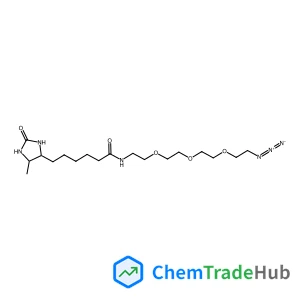
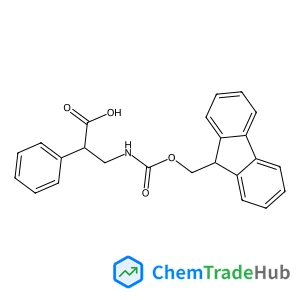
(S)-3-((((9H-Fluoren-9-yl)methoxy)carbonyl)amino)-2-phenylpropanoic acid
CAS Number:
1217663-60-9
Molecular Formula:
C24H21NO4
Recommended Suppliers




Disclaimer
This page provides academic journal information for reference and research purposes only. We are not affiliated with any journal publishers and do not handle publication submissions. For publication-related inquiries, please contact the respective journal publishers directly.
If you notice any inaccuracies in the information displayed, please contact us at support@chemtradehub.com. We will promptly review and address your concerns.