













Reduction of electron deficient guanine radical species in plasmidDNA by tyrosine derivatives
Literature Information
Publication Date
2010-03-24
DOI
10.1039/B922749K
Impact Factor
3.876
Authors
Mandi Tsoi, Trinh T. Do, Vicky J. Tang, Joseph A. Aguilera, Jamie R. Milligan
View Original
Abstract
Guanine bases are the most easily oxidized sites in DNA and therefore electron deficient guanine radical species are major intermediates in the direct effect of ionizing radiation (ionization of the DNA itself) on DNA as a consequence of hole migration to guanine. As a model for this process we have used gamma-irradiation in the presence of thiocyanate ions to generate single electron oxidized guanine radicals in a plasmid target in aqueous solution. The stable species formed from these radicals can be detected and quantified by the formation of strand breaks in the plasmid after a post-irradiation incubation using a suitable enzyme. If a tyrosine derivative is also present during irradiation, the production of guanine oxidation products is decreased by electron transfer from tyrosine to the intermediate guanyl radical species. By using cationic tyrosine containing ligands we are able to observe this process when the tyrosine is electrostatically bound to the plasmid. The driving force dependence of this reaction was determined by comparing the reactivity of tyrosine with its 3-nitro analog. The results imply that the electron transfer reaction is coupled to a proton transfer. The experimental conditions used in this model system provide a reasonable approximation to those involved in the radioprotection of DNA by tightly bound proteins in chromatin.
Recommended Journals
Related Literature
Morphology oriented CuS nanostructures: superior K-ion storage using surface enhanced pseudocapacitive effects
Chandrasekaran Nithya, Gowtham Thiyagaraj
2020-04-28
Paper
DOI: 10.1039/D0SE00469C
Insights into the scalability of catalytic upgrading of biomass pyrolysis vapors using micro and bench-scale reactors
Andreas Eschenbacher, Alireza Saraeian, Brent H. Shanks, Peter Arendt Jensen, Ulrik Birk Henriksen, Jesper Ahrenfeldt, Anker Degn Jensen
2020-05-15
Paper
DOI: 10.1039/D0SE00303D
Low temperature recovery of acetone–butanol–ethanol (ABE) fermentation products via microwave induced membrane distillation on carbon nanotube immobilized membranes
Oindrila Gupta, Sagar Roy, Somenath Mitra
2020-05-05
Paper
DOI: 10.1039/D0SE00461H
Hidden figures of photo-charging: a thermo-electrochemical approach for a solar-rechargeable redox flow cell system
Dowon Bae, Gerrit M. Faasse
2020-03-27
Communication
DOI: 10.1039/D0SE00348D
Substrate strain engineering: an efficient strategy to enhance the catalytic activity of SACs on waved graphene for e-NRR
Di Liu, Haoqiang Ai, Wan Tong Lou, Feifei Li, Kin Ho Lo
2020-05-14
Paper
DOI: 10.1039/D0SE00518E
Effects of cation size and concentration of cationic chlorides on the properties of formamidinium lead iodide based perovskite solar cells
Minjin Kim, Tae Kyung Lee, In Woo Choi, Hye Won Choi, Yimhyun Jo, Jiyun Lee, Gi-Hwan Kim, Sang Kyu Kwak, Dong Suk Kim
2020-05-13
Paper
DOI: 10.1039/D0SE00382D
Boosting cell performance with self-supported PtCu nanotube arrays serving as the cathode in a proton exchange membrane fuel cell
Hongmei Yu, Wei Song, Zhigang Shao
2020-05-05
Paper
DOI: 10.1039/D0SE00103A
Modified mesoporous graphitic carbon nitride: a novel high-performance heterogeneous base catalyst for transesterification reaction
Meghali Devi, Monjur H. Barbhuiya, Bishal Das, Bishal Bhuyan, Siddhartha S. Dhar
2020-05-06
Paper
DOI: 10.1039/D0SE00406E
Mesoscopic analyses of the impact of morphology and operating conditions on the transport resistances in a proton-exchange-membrane fuel-cell catalyst layer
Yu-Tong Mu, Adam Z. Weber, Zhao-Lin Gu, Tobias Schuler, Wen-Quan Tao
2020-05-01
Paper
DOI: 10.1039/D0SE00560F
You might also like
Compound Q&A
What industries use (1R,3S)-1,3-Cyclopentanediol (CAS: 16326-97-9)?
(1R,3S)-1,3-Cyclopentanediol finds applications in various industries. In the ph...
16326-97-9(1R,3S)-1,3-Cyclopen...
Compound Q&A
What precautions should be taken when handling N'-[4-(Dimethylamino)phenyl]-N,N-dimethyl-1,4-benzenediamine (CAS: 637-31-0)?
When handling N'-[4-(Dimethylamino)phenyl]-N,N-dimethyl-1,4-benzenediamine, it i...
637-31-0N'-[4-(Dimethylamino...
Compound Q&A
Are there alternatives to 5-(2,4-Difluorophenyl)-2-methoxypyrimidine (CAS: 1352318-16-1) in synthesis?
There are several alternatives to 5-(2,4-Difluorophenyl)-2-methoxypyrimidine in ...
1352318-16-15-(2,4-Difluoropheny...
Compound Q&A
What regulatory guidelines apply to 1-(3-Methoxyphenoxy)propan-2-ol (CAS: 382141-68-6)?
1-(3-Methoxyphenoxy)propan-2-ol (CAS: 382141-68-6) must comply with the Globally...
382141-68-61-(3-Methoxyphenoxy)...
Compound Q&A
Is Tetrodotoxin Citrate (CAS: 18660-81-6) safe?
Tetrodotoxin Citrate is extremely dangerous and should be handled with extreme c...
18660-81-6Tetrodotoxin Citrate
Compound Q&A
What are the main uses of 2-Methyl-2-propanyl [(1R,3S)-3-hydroxycyclopentyl]carbamate (CAS: 225641-84-9)?
2-Methyl-2-propanyl [(1R,3S)-3-hydroxycyclopentyl]carbamate (CAS: 225641-84-9) i...
225641-84-92-Methyl-2-propanyl ...
Compound Q&A
How should waste containing 4-(2-Hydroxyhexafluoroisopropyl)Benzoic Acid (CAS: 16261-80-6) be handled?
Waste containing 4-(2-Hydroxyhexafluoroisopropyl)Benzoic Acid (CAS: 16261-80-6) ...
16261-80-64-(2-Hydroxyhexafluo...
Compound Q&A
How is 2-Methyl-2-proanyl {(2S)-1-[(benzyloxy)amino]-3-hydroxy-3-methyl-1-oxo-2-butanyl}carbamate (CAS: 102507-19-7) typically synthesized?
2-Methyl-2-proanyl {(2S)-1-[(benzyloxy)amino]-3-hydroxy-3-methyl-1-oxo-2-butanyl...
102507-19-72-Methyl-2-propanyl ...
Compound Q&A
What is Benzeneethanamine, α-ethyl-, hydrochloride (1:1) (CAS: 20735-15-3)?
Benzeneethanamine, α-ethyl-, hydrochloride (1:1) is an organic compound with the...
20735-15-3Benzeneethanamine, α...
Compound Q&A
Are there alternatives to 3-{(E)-[4-(Dimethylamino)phenyl]diazenyl}benzoic acid (CAS: 20691-84-3) in synthesis?
In the synthesis of compounds similar to 3-{(E)-[4-(Dimethylamino)phenyl]diazeny...
20691-84-33-{(E)-[4-(Dimethyla...
Source Journal
Organic & Biomolecular Chemistry

CiteScore:
3.4
Self-citation Rate:
10.3%
Articles per Year:
1041
Organic & Biomolecular Chemistry (OBC) publishes original and high impact research and reviews in organic chemistry. We welcome research that shows new or significantly improved protocols or methodologies in total synthesis, synthetic methodology or physical and theoretical organic chemistry as well as research that shows a significant advance in the organic chemistry or molecular design aspects of chemical biology, catalysis, supramolecular and macromolecular chemistry, theoretical chemistry, mechanism-oriented physical organic chemistry, medicinal chemistry or natural products. Articles published in the journal should report new work which makes a highly-significant impact in the field. Routine and incremental work is generally not suitable for publication in the journal. More details about key areas of our scope are below. In all cases authors should include in their article clear rationale for why their research has been carried out.
Recommended Compounds

![4-[(3-Chloro-2-fluorophenyl)amino]-7-methoxy-6-quinazolinyl acetate structure](https://static.chemtradehub.com/structs/740/740081-22-5-f58f.webp "4-[(3-Chloro-2-fluorophenyl)amino]-7-methoxy-6-quinazolinyl acetate structure")
4-[(3-Chloro-2-fluorophenyl)amino]-7-methoxy-6-quinazolinyl acetate
CAS Number:
740081-22-5
Molecular Formula:
C17H13ClFN3O3
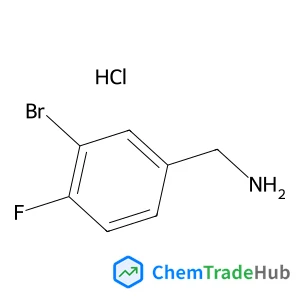
1-(3-Bromo-4-fluorophenyl)methanamine hydrochloride (1:1)
CAS Number:
202865-68-7
Molecular Formula:
C7H8BrClFN
Recommended Suppliers





Disclaimer
This page provides academic journal information for reference and research purposes only. We are not affiliated with any journal publishers and do not handle publication submissions. For publication-related inquiries, please contact the respective journal publishers directly.
If you notice any inaccuracies in the information displayed, please contact us at support@chemtradehub.com. We will promptly review and address your concerns.