











Structural evolution and properties of subnanometer Tcn (n = 2–15) clusters
Literature Information
Publication Date
2009-09-21
DOI
10.1039/B914610E
Impact Factor
3.676
Authors
Philippe F. Weck, Eunja Kim, Frédéric Poineau, Kenneth R. Czerwinski
View Original
Abstract
All-electron scalar relativistic calculations of the geometric and electronic structures of neutral subnanometer Tcn (n = 2–15) clusters have been performed using spin-polarized density functional theory. It is shown that the structural evolution of Tcnclusters from n = 3 to n = 8 is similar to Mn clusters, which also belong to the group of VIIB transition metals. The calculated binding energy per atom varies gradually from 0.65 eV for Tc2 to 2.35 eV for Tc15. The computed electron affinity and ionization potential follow the classical electrostatic metallic droplet model for clusters larger than Tc6 and converge asymptotically to the experimental value of the bulk Tc work function. A study of the kinetic stability of Tc clusters in terms of the second difference of binding energies and the energy gap between the frontier orbital states predicts Tc3(D3h), Tc4(Td), Tc6(Oh), Tc12(Ih), and Tc13(Ih) to be the most stable clusters. Vibrational spectra of Tc clusters are also provided for further experimental identification.
Recommended Journals
Related Literature
Activity, stability and degradation of multi walled carbon nanotube (MWCNT) supported Ptfuelcell electrocatalysts‡
Frédéric Hasché, Mehtap Oezaslan
2010-10-29
Paper
DOI: 10.1039/C0CP00609B
Stochastic approach to laser-induced ultrafast dynamics: the desorption of H2/D2 from Ru(0001)
Gernot Füchsel, Tillmann Klamroth, Jean Christophe Tremblay, Peter Saalfrank
2010-09-21
Paper
DOI: 10.1039/C0CP00895H
Metal–organic frameworks as high-potential adsorbents for liquid-phase separations of olefins, alkylnaphthalenes and dichlorobenzenes
Luc Alaerts, Michael Maes, Monique A. van der Veen, Pierre A. Jacobs, Dirk E. De Vos
2009-03-05
Paper
DOI: 10.1039/B823233D
Theoretical study of electronic structures of [(H2O)3(O-)Mn(μ-oxo)2Mn(OH2)4]q+ (q = 2 or 3) with Mn–O bond
Masashi Katsuda, Erika Hishikawa, Masaki Mitani, Yasunori Yoshioka
2010-01-27
Paper
DOI: 10.1039/B914793D
One-pot electrodeposition, characterization and photoactivity of stoichiometric copper indium gallium diselenide (CIGS) thin films for solar cells‡§
Jia Jia, Kévin Giffard, Kyle Pellarin, Carly Hewson
2010-09-13
Paper
DOI: 10.1039/C0CP00586J
Molecular structures of dicarboxylated viologens on a Cu(100) surface during an ongoing charge transfer reaction
Jyh-Shen Tsay, Tsu-Yi Fu, Peter Broekmann, Takamasa Sagara, Klaus Wandelt
2010-10-15
Paper
DOI: 10.1039/C0CP00865F
Calculation of absorption and emission spectra of [n]cycloparaphenylenes: the reason for the large Stokes shift
Dage Sundholm, Stefan Taubert, Fabio Pichierri
2010-01-28
Paper
DOI: 10.1039/B922175A
Reply to “Comment on ‘NMR spectroscopic studies of cellobiose solvation in EmimAc aimed to understand the dissolution mechanism of cellulose in ionic liquids’” by R. C. Remsing, I. D. Petrik, Z. Liu and G. Moyna, Phys. Chem. Chem. Phys., 2010, 12, DOI: 10.1039/c004203j
Jinming Zhang, Hao Zhang, Jin Wu, Jun Zhang, Jiasong He, Junfeng Xiang
2010-10-19
Comment
DOI: 10.1039/C005453B
Confinement effects on excitation energies and regioselectivity as probed by the Fukui function and the molecular electrostatic potential
Alex Borgoo, David J. Tozer, Paul Geerlings, Frank De Proft
2009-03-12
Paper
DOI: 10.1039/B820114E
The role of the extra-framework cations in the adsorption of CO2 on faujasite Y
G. D. Pirngruber, P. Raybaud, Y. Belmabkhout, Jiří Čejka, Arnošt Zukal
2010-09-24
Paper
DOI: 10.1039/B927476F
You might also like
Compound Q&A
Is 6-(3-Fluorophenyl)picolinic acid (CAS: 887982-40-3) safe?
6-(3-Fluorophenyl)picolinic acid is generally considered safe for laboratory use...
887982-40-36-(3-Fluorophenyl)pi...
Compound Q&A
What industries use (3R)-3-Pyrrolidinol (CAS: 2799-21-5)?
(3R)-3-Pyrrolidinol is used in the pharmaceutical industry as a precursor for dr...
2799-21-5(3R)-3-Pyrrolidinol
Compound Q&A
What precautions should be taken when handling (4R,5R)-4,5-Diethoxycarbonyl-2,2-dimethyldioxolane (CAS: 59779-75-8)?
When handling (4R,5R)-4,5-Diethoxycarbonyl-2,2-dimethyldioxolane (CAS: 59779-75-...
59779-75-8(4R,5R)-4,5-Diethoxy...
Compound Q&A
How is 1-(6-Chloroimidazo[1,2-b]pyridazin-3-yl)ethanone (CAS: 90734-71-7) typically synthesized?
1-(6-Chloroimidazo[1,2-b]pyridazin-3-yl)ethanone is often synthesized via a mult...
90734-71-71-(6-Chloroimidazo[1...
Compound Q&A
What is the market or research trend for N-Ethyl-3,4-dimethylbenzylamine (CAS: 39180-83-1)?
The market for N-Ethyl-3,4-dimethylbenzylamine (CAS: 39180-83-1) remains steady,...
39180-83-1N-Ethyl-3,4-dimethyl...
Compound Q&A
What is Tert-butyl 3-(pyrrolidin-1-yl)azetidine-1-carboxylate (CAS: 1019008-21-9)?
Tert-butyl 3-(pyrrolidin-1-yl)azetidine-1-carboxylate is a chemical compound wit...
1019008-21-9Tert-butyl 3-(pyrrol...
Compound Q&A
What regulatory guidelines apply to 1-Bromo-3-chloro-2,4-dimethoxybenzene (CAS: 1228956-93-1)?
1-Bromo-3-chloro-2,4-dimethoxybenzene (CAS: 1228956-93-1) falls under the classi...
1228956-93-11-Bromo-3-chloro-2,4...
Compound Q&A
Is 8-Bromo-2-methyl-3,4-dihydroisoquinolin-1(2H)-one (CAS: 1368622-07-4) safe?
The safety of 8-Bromo-2-methyl-3,4-dihydroisoquinolin-1(2H)-one (CAS: 1368622-07...
1368622-07-48-Bromo-2-methyl-3,4...
Compound Q&A
Is Benzyl [(3S)-2,6-dioxo-3-piperidinyl]carbamate (CAS: 22785-43-9) safe?
Benzyl [(3S)-2,6-dioxo-3-piperidinyl]carbamate is generally safe when handled wi...
22785-43-9Benzyl [(3S)-2,6-dio...
Compound Q&A
How should 1-{[4-(4,4,5,5-Tetramethyl-1,3,2-dioxaborolan-2-yl)phenyl]sulfonyl}pyrrolidine (CAS: 928657-21-0) be stored?
1-{[4-(4,4,5,5-Tetramethyl-1,3,2-dioxaborolan-2-yl)phenyl]sulfonyl}pyrrolidine s...
928657-21-01-{[4-(4,4,5,5-Tetra...
Source Journal
Physical Chemistry Chemical Physics

CiteScore:
5.5
Self-citation Rate:
10.3%
Articles per Year:
3036
Physical Chemistry Chemical Physics (PCCP) is an international journal co-owned by 19 physical chemistry and physics societies from around the world. This journal publishes original, cutting-edge research in physical chemistry, chemical physics and biophysical chemistry. To be suitable for publication in PCCP, articles must include significant innovation and/or insight into physical chemistry; this is the most important criterion that reviewers and Editors will judge against when evaluating submissions. The journal has a broad scope and welcomes contributions spanning experiment, theory, computation and data science. Topical coverage includes spectroscopy, dynamics, kinetics, statistical mechanics, thermodynamics, electrochemistry, catalysis, surface science, quantum mechanics, quantum computing and machine learning. Interdisciplinary research areas such as polymers and soft matter, materials, nanoscience, energy, surfaces/interfaces, and biophysical chemistry are welcomed if they demonstrate significant innovation and/or insight into physical chemistry. Joined experimental/theoretical studies are particularly appreciated when complementary and based on up-to-date approaches.
Recommended Compounds
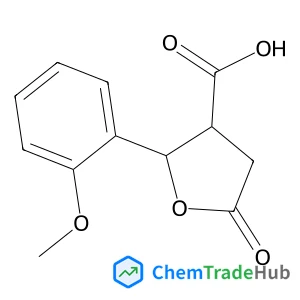
trans-2-(2-Methoxyphenyl)-5-oxotetrahydrofuran-3-carboxylic acid
CAS Number:
99226-02-5
Molecular Formula:
C12H12O5
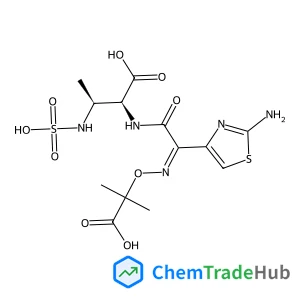
Aztreonam USP Related Compound A (Open-ring Aztreonam)
CAS Number:
87500-74-1
Molecular Formula:
C13H19N5O9S2
Recommended Suppliers





Disclaimer
This page provides academic journal information for reference and research purposes only. We are not affiliated with any journal publishers and do not handle publication submissions. For publication-related inquiries, please contact the respective journal publishers directly.
If you notice any inaccuracies in the information displayed, please contact us at support@chemtradehub.com. We will promptly review and address your concerns.