












Confinement effects on excitation energies and regioselectivity as probed by the Fukui function and the molecular electrostatic potential
Literature Information
Publication Date
2009-03-12
DOI
10.1039/B820114E
Impact Factor
3.676
Authors
Alex Borgoo, David J. Tozer, Paul Geerlings, Frank De Proft
View Original
Abstract
When a molecule is placed as a guest inside a zeolite pore, its electronic structure will be altered, among others by the effect of the so-called “confinement”. It has been established that the compression of the molecular orbitals influences a system’s reactivity. In this work we use a simple potential barrier method to quantify the importance of confinement effects on chemical reactivity. In the first part, excitation energies and molecular orbital energy gaps are evaluated for molecules placed in cavities of different sizes, resembling a zeolite pore. Our results for ethylene and formaldehyde reveal an increase in excitation energy and the gap between the occupied and the unoccupied levels. In the case of the larger molecules naphthalene and anthracene, the HOMO–LUMO gap shows very little sensitivity to the confinement. To investigate the role of confinement effects on local aspects of chemical reactivity and on regioselectivity, we evaluated its effect on the Fukui function and the molecular electrostatic potential, reactivity indices that are central in the description of orbital and charge controlled reactions. The results indicate that confinement can influence the regioselectivity and that the reactivity of anions is expected to change, due to the artificial binding of the excess electron.
Related Literature
Why does the Y326I mutant of monoamine oxidase B decompose an endogenous amphetamine at a slower rate than the wild type enzyme? Reaction step elucidated by multiscale molecular simulations
Urška Jug, Janez Mavri, Jernej Stare
2018-01-23
Paper
DOI: 10.1039/C7CP07069A
Photophysics and peripheral ring size dependent aggregate emission of cross-conjugated enediynes: applications to white light emission and vapor sensing
Anuja Singh, Avik Kumar Pati, Ashok Kumar Mishra
2018-01-05
Paper
DOI: 10.1039/C7CP08091C
Rotationally resolved electronic spectroscopy of 3-cyanoindole and the 3-cyanoindole–water complex
Michael Schneider, Marie-Luise Hebestreit, Mirko Matthias Lindic, Hilda Parsian, América Yareth Torres-Boy, Leonardo Álvarez-Valtierra, W. Leo Meerts, Ralf Kühnemuth, Michael Schmitt
2018-08-27
Paper
DOI: 10.1039/C8CP04020F
Unravelling the mechanisms of interference between overlapping resonances
2018-01-10
Communication
DOI: 10.1039/C7CP07769F
Unraveling doping induced anatase–rutile phase transition in TiO2 using electron, X-ray and gamma-ray as spectroscopic probes
D. Banerjee, Santosh K. Gupta, N. Patra, Sk Wasim Raja, N. Pathak, D. Bhattacharyya, P. K. Pujari, S. V. Thakare, S. N. Jha
2018-10-25
Paper
DOI: 10.1039/C8CP04310H
Synthesis and self-assembly behavior of polyhedral oligomeric silsesquioxane-based triblock copolymers in selective solvents by dissipative particle dynamics simulation
Yun Jin, Danyi Guo, Bo Li, Shouping Xu, Jiang Cheng, Li Li, Xiufang Wen, Pihui Pi
2018-01-10
Paper
DOI: 10.1039/C7CP06020C
Multiionic effects on the capacitance of porous electrodes
M. L. Jiménez, S. Ahualli, P. Arenas-Guerrero, M. M. Fernández, G. Iglesias, A. V. Delgado
2018-01-16
Paper
DOI: 10.1039/C7CP06778J
A nearly perfect spin filter and a spin logic gate based on a porphyrin/graphene hybrid material
Ke-Qiu Chen
2018-01-05
Paper
DOI: 10.1039/C7CP07795E
Conflicting effect of chemical doping on the thermoelectric response of ordered PEDOT aggregates
Alessandra Catellani, Arrigo Calzolari
2018-01-25
Paper
DOI: 10.1039/C7CP07898F
You might also like
Compound Q&A
Is 6-(3-Fluorophenyl)picolinic acid (CAS: 887982-40-3) safe?
6-(3-Fluorophenyl)picolinic acid is generally considered safe for laboratory use...
887982-40-36-(3-Fluorophenyl)pi...
Compound Q&A
What industries use (3R)-3-Pyrrolidinol (CAS: 2799-21-5)?
(3R)-3-Pyrrolidinol is used in the pharmaceutical industry as a precursor for dr...
2799-21-5(3R)-3-Pyrrolidinol
Compound Q&A
What precautions should be taken when handling (4R,5R)-4,5-Diethoxycarbonyl-2,2-dimethyldioxolane (CAS: 59779-75-8)?
When handling (4R,5R)-4,5-Diethoxycarbonyl-2,2-dimethyldioxolane (CAS: 59779-75-...
59779-75-8(4R,5R)-4,5-Diethoxy...
Compound Q&A
How is 1-(6-Chloroimidazo[1,2-b]pyridazin-3-yl)ethanone (CAS: 90734-71-7) typically synthesized?
1-(6-Chloroimidazo[1,2-b]pyridazin-3-yl)ethanone is often synthesized via a mult...
90734-71-71-(6-Chloroimidazo[1...
Compound Q&A
What is the market or research trend for N-Ethyl-3,4-dimethylbenzylamine (CAS: 39180-83-1)?
The market for N-Ethyl-3,4-dimethylbenzylamine (CAS: 39180-83-1) remains steady,...
39180-83-1N-Ethyl-3,4-dimethyl...
Compound Q&A
What is Tert-butyl 3-(pyrrolidin-1-yl)azetidine-1-carboxylate (CAS: 1019008-21-9)?
Tert-butyl 3-(pyrrolidin-1-yl)azetidine-1-carboxylate is a chemical compound wit...
1019008-21-9Tert-butyl 3-(pyrrol...
Compound Q&A
What regulatory guidelines apply to 1-Bromo-3-chloro-2,4-dimethoxybenzene (CAS: 1228956-93-1)?
1-Bromo-3-chloro-2,4-dimethoxybenzene (CAS: 1228956-93-1) falls under the classi...
1228956-93-11-Bromo-3-chloro-2,4...
Compound Q&A
Is 8-Bromo-2-methyl-3,4-dihydroisoquinolin-1(2H)-one (CAS: 1368622-07-4) safe?
The safety of 8-Bromo-2-methyl-3,4-dihydroisoquinolin-1(2H)-one (CAS: 1368622-07...
1368622-07-48-Bromo-2-methyl-3,4...
Compound Q&A
Is Benzyl [(3S)-2,6-dioxo-3-piperidinyl]carbamate (CAS: 22785-43-9) safe?
Benzyl [(3S)-2,6-dioxo-3-piperidinyl]carbamate is generally safe when handled wi...
22785-43-9Benzyl [(3S)-2,6-dio...
Compound Q&A
How should 1-{[4-(4,4,5,5-Tetramethyl-1,3,2-dioxaborolan-2-yl)phenyl]sulfonyl}pyrrolidine (CAS: 928657-21-0) be stored?
1-{[4-(4,4,5,5-Tetramethyl-1,3,2-dioxaborolan-2-yl)phenyl]sulfonyl}pyrrolidine s...
928657-21-01-{[4-(4,4,5,5-Tetra...
Source Journal
Physical Chemistry Chemical Physics

CiteScore:
5.5
Self-citation Rate:
10.3%
Articles per Year:
3036
Physical Chemistry Chemical Physics (PCCP) is an international journal co-owned by 19 physical chemistry and physics societies from around the world. This journal publishes original, cutting-edge research in physical chemistry, chemical physics and biophysical chemistry. To be suitable for publication in PCCP, articles must include significant innovation and/or insight into physical chemistry; this is the most important criterion that reviewers and Editors will judge against when evaluating submissions. The journal has a broad scope and welcomes contributions spanning experiment, theory, computation and data science. Topical coverage includes spectroscopy, dynamics, kinetics, statistical mechanics, thermodynamics, electrochemistry, catalysis, surface science, quantum mechanics, quantum computing and machine learning. Interdisciplinary research areas such as polymers and soft matter, materials, nanoscience, energy, surfaces/interfaces, and biophysical chemistry are welcomed if they demonstrate significant innovation and/or insight into physical chemistry. Joined experimental/theoretical studies are particularly appreciated when complementary and based on up-to-date approaches.
Recommended Compounds
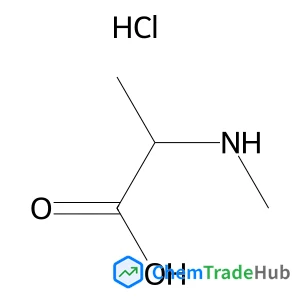
(R)-2-(Methylamino)propanoic acid hydrochloride
CAS Number:
1155878-14-0
Molecular Formula:
C4H10ClNO2
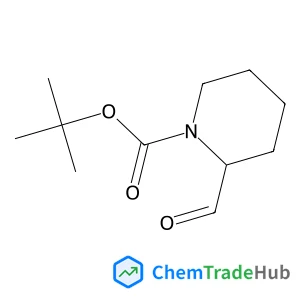
2-Methyl-2-propanyl (2R)-2-formyl-1-piperidinecarboxylate
CAS Number:
134526-69-5
Molecular Formula:
C11H19NO3
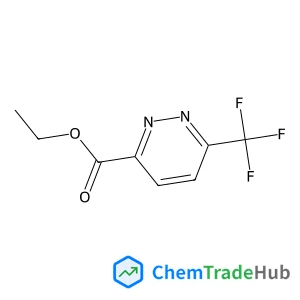
Ethyl 6-(trifluoromethyl)pyridazine-3-carboxylate
CAS Number:
1192155-06-8
Molecular Formula:
C8H7F3N2O2
Recommended Suppliers







Disclaimer
This page provides academic journal information for reference and research purposes only. We are not affiliated with any journal publishers and do not handle publication submissions. For publication-related inquiries, please contact the respective journal publishers directly.
If you notice any inaccuracies in the information displayed, please contact us at support@chemtradehub.com. We will promptly review and address your concerns.