












Molecular structures of dicarboxylated viologens on a Cu(100) surface during an ongoing charge transfer reaction
Literature Information
Publication Date
2010-10-15
DOI
10.1039/C0CP00865F
Impact Factor
3.676
Authors
Jyh-Shen Tsay, Tsu-Yi Fu, Peter Broekmann, Takamasa Sagara, Klaus Wandelt
View Original
Abstract
Molecular structures of dicarboxylated viologens (1,1′-bis (7-carboxyheptyl)-4,4′-bipyridinium dibromide molecules, V-(C7–COOH)2) on a Cu(100) surface are studied by means of in situ scanning tunneling microscopy (STM) in combination with cyclic voltammetry (CV). Self-assembled monolayers of adsorbed dicarboxylated viologens form during an ongoing charge transfer reaction. Mainly six structures of the organic molecules are observed, including a dot array, metastable phases, stripe patterns, a closed stacking stripe pattern, chloride desorption, and a dimer phase. The molecular structural models for all the structures have been successfully established. The carboxylated viologen molecules in the dicationic state prefer the face-on configuration on the surface and form the dot array phase. The other phases are shown by the radical state of the viologens. The metastable phases show two forms: cluster-like and stripe pattern-like structures. Main features of the metastable phases are face-to-face configurations of the radical viologens in π-stacking form between neighboring parallel bipyridiniums. Hydrogen bonding is considered to be the major factor in constructing the network of the stripe pattern. At a more negative potential, the bilayers of the stripe pattern transform to be a monolayer of the closed stacking stripe pattern because of the enhanced electrostatic force. The closed stacking stripe pattern is stable on the surface until chloride desorption. As the chloride anions desorb from the Cu(100) surface, the disordered dimers transform to an ordered dimer phase on a Cu(100)-1×1 surface due to the hydrogen bonding between neighboring dimer rows.
Related Literature
Anomalous fluorescence enhancement and fluorescence quenching of graphene quantum dots by single walled carbon nanotubes
Ruma Das, Gone Rajender
2018-01-10
Paper
DOI: 10.1039/C7CP06994D
Unraveling doping induced anatase–rutile phase transition in TiO2 using electron, X-ray and gamma-ray as spectroscopic probes
D. Banerjee, Santosh K. Gupta, N. Patra, Sk Wasim Raja, N. Pathak, D. Bhattacharyya, P. K. Pujari, S. V. Thakare, S. N. Jha
2018-10-25
Paper
DOI: 10.1039/C8CP04310H
Harvesting visible light with MoO3 nanorods modified by Fe(iii) nanoclusters for effective photocatalytic degradation of organic pollutants
U. Alam, S. Kumar, J. Koch, C. Tegenkamp, M. Muneer
2018-01-17
Paper
DOI: 10.1039/C7CP08206A
Thermodynamic evidence of flexibility in H2O and CO2 absorption of transition metal ion exchanged zeolite LTA
Xin Guo, Lili Wu, Alexandra Navrotsky
2018-01-11
Paper
DOI: 10.1039/C7CP08188J
Triplet electron transfer and spin polarization in a palladium porphyrin–fullerene conjugate
Prashanth K. Poddutoori, Yuri E. Kandrashkin, Christopher O. Obondi, Francis D'Souza, Art van der Est
2018-10-29
Paper
DOI: 10.1039/C8CP04937H
On the physics of both surface overcharging and charge reversal at heterophase interfaces
Zhi-Yong Wang, Pengli Zhang, Zengwei Ma
2018-01-04
Paper
DOI: 10.1039/C7CP08117K
Correction: Necessary and sufficient conditions for the successful three-phase photocatalytic reduction of CO2 by H2O over heterogeneous photocatalysts
2018-07-26
Correction
DOI: 10.1039/C8CP91824D
Dissociative electron attachment to HGaF4 Lewis–Brønsted superacid
Marcin Czapla, Jack Simons
2018-08-10
Paper
DOI: 10.1039/C8CP04007A
Empirical study of physicochemical and spectral properties of CuII-containing chelate-based ionic liquids
Huidan Wei, Yongtao Wang, Jia Yao, Haoran Li
2018-01-06
Paper
DOI: 10.1039/C7CP07933H
You might also like
Compound Q&A
Is 6-(3-Fluorophenyl)picolinic acid (CAS: 887982-40-3) safe?
6-(3-Fluorophenyl)picolinic acid is generally considered safe for laboratory use...
887982-40-36-(3-Fluorophenyl)pi...
Compound Q&A
What industries use (3R)-3-Pyrrolidinol (CAS: 2799-21-5)?
(3R)-3-Pyrrolidinol is used in the pharmaceutical industry as a precursor for dr...
2799-21-5(3R)-3-Pyrrolidinol
Compound Q&A
What precautions should be taken when handling (4R,5R)-4,5-Diethoxycarbonyl-2,2-dimethyldioxolane (CAS: 59779-75-8)?
When handling (4R,5R)-4,5-Diethoxycarbonyl-2,2-dimethyldioxolane (CAS: 59779-75-...
59779-75-8(4R,5R)-4,5-Diethoxy...
Compound Q&A
How is 1-(6-Chloroimidazo[1,2-b]pyridazin-3-yl)ethanone (CAS: 90734-71-7) typically synthesized?
1-(6-Chloroimidazo[1,2-b]pyridazin-3-yl)ethanone is often synthesized via a mult...
90734-71-71-(6-Chloroimidazo[1...
Compound Q&A
What is the market or research trend for N-Ethyl-3,4-dimethylbenzylamine (CAS: 39180-83-1)?
The market for N-Ethyl-3,4-dimethylbenzylamine (CAS: 39180-83-1) remains steady,...
39180-83-1N-Ethyl-3,4-dimethyl...
Compound Q&A
What is Tert-butyl 3-(pyrrolidin-1-yl)azetidine-1-carboxylate (CAS: 1019008-21-9)?
Tert-butyl 3-(pyrrolidin-1-yl)azetidine-1-carboxylate is a chemical compound wit...
1019008-21-9Tert-butyl 3-(pyrrol...
Compound Q&A
What regulatory guidelines apply to 1-Bromo-3-chloro-2,4-dimethoxybenzene (CAS: 1228956-93-1)?
1-Bromo-3-chloro-2,4-dimethoxybenzene (CAS: 1228956-93-1) falls under the classi...
1228956-93-11-Bromo-3-chloro-2,4...
Compound Q&A
Is 8-Bromo-2-methyl-3,4-dihydroisoquinolin-1(2H)-one (CAS: 1368622-07-4) safe?
The safety of 8-Bromo-2-methyl-3,4-dihydroisoquinolin-1(2H)-one (CAS: 1368622-07...
1368622-07-48-Bromo-2-methyl-3,4...
Compound Q&A
Is Benzyl [(3S)-2,6-dioxo-3-piperidinyl]carbamate (CAS: 22785-43-9) safe?
Benzyl [(3S)-2,6-dioxo-3-piperidinyl]carbamate is generally safe when handled wi...
22785-43-9Benzyl [(3S)-2,6-dio...
Compound Q&A
How should 1-{[4-(4,4,5,5-Tetramethyl-1,3,2-dioxaborolan-2-yl)phenyl]sulfonyl}pyrrolidine (CAS: 928657-21-0) be stored?
1-{[4-(4,4,5,5-Tetramethyl-1,3,2-dioxaborolan-2-yl)phenyl]sulfonyl}pyrrolidine s...
928657-21-01-{[4-(4,4,5,5-Tetra...
Source Journal
Physical Chemistry Chemical Physics

CiteScore:
5.5
Self-citation Rate:
10.3%
Articles per Year:
3036
Physical Chemistry Chemical Physics (PCCP) is an international journal co-owned by 19 physical chemistry and physics societies from around the world. This journal publishes original, cutting-edge research in physical chemistry, chemical physics and biophysical chemistry. To be suitable for publication in PCCP, articles must include significant innovation and/or insight into physical chemistry; this is the most important criterion that reviewers and Editors will judge against when evaluating submissions. The journal has a broad scope and welcomes contributions spanning experiment, theory, computation and data science. Topical coverage includes spectroscopy, dynamics, kinetics, statistical mechanics, thermodynamics, electrochemistry, catalysis, surface science, quantum mechanics, quantum computing and machine learning. Interdisciplinary research areas such as polymers and soft matter, materials, nanoscience, energy, surfaces/interfaces, and biophysical chemistry are welcomed if they demonstrate significant innovation and/or insight into physical chemistry. Joined experimental/theoretical studies are particularly appreciated when complementary and based on up-to-date approaches.
Recommended Compounds
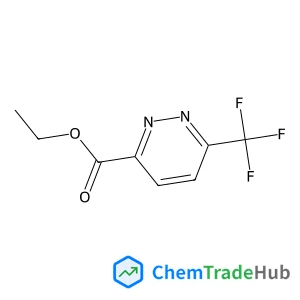
Ethyl 6-(trifluoromethyl)pyridazine-3-carboxylate
CAS Number:
1192155-06-8
Molecular Formula:
C8H7F3N2O2
![[4-Chloro-3-(diethylcarbamoyl)phenyl]boronic acid structure](https://static.chemtradehub.com/structs/871/871332-68-2-0e3b.webp "[4-Chloro-3-(diethylcarbamoyl)phenyl]boronic acid structure")
[4-Chloro-3-(diethylcarbamoyl)phenyl]boronic acid
CAS Number:
871332-68-2
Molecular Formula:
C11H15BClNO3
Recommended Suppliers





Disclaimer
This page provides academic journal information for reference and research purposes only. We are not affiliated with any journal publishers and do not handle publication submissions. For publication-related inquiries, please contact the respective journal publishers directly.
If you notice any inaccuracies in the information displayed, please contact us at support@chemtradehub.com. We will promptly review and address your concerns.