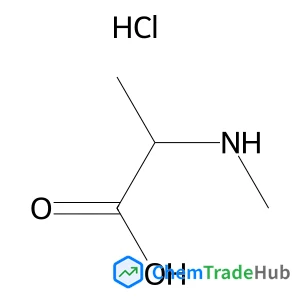
(R)-2-(Methylamino)propanoic acid hydrochloride
CAS Number:
1155878-14-0
Molecular Formula:
C4H10ClNO2
Marcus C. Göbel, Giuliano Gregori, Joachim Maier
Thin films of CeO2 (both nominally pure and 10 mol% gadolinium-doped) grown via pulsed-laser deposition were studied. The electrical conductivity of the samples was measured as a function of thickness, temperature and oxygen partial pressure (pO2) using impedance spectroscopy. As expected, undoped CeO2 exhibits electronic conductivity (with activation energy between 1.4 and 1.6 eV) whereas the highly doped samples are oxygen vacancy conductors (activation energy around 0.7 eV for epitaxial films). In order to investigate the influence of the nature of the substrate the thin films were grown on two different substrates, Al2O3 (0001) and SiO2 (0001), and compared. While the films grown on SiO2 exhibit a microstructure characterized by columnar grains, the films grown on Al2O3 are epitaxial. Notably, for films on both substrates the conductivity and activation energy vary with film thickness and exhibit remarkable differences when the films on different substrates are compared. In the case of the polycrystalline films (SiO2 substrate), the space charge layer effects of the grain boundaries dominate over the substrate–film interface effect. In the case of the epitaxial films (Al2O3 substrate), a small interface effect, probably due to a space charge layer or structural strain, is observed.
Sergey V. Zybin, William A. Goddard, III, Tao Cheng, Saber Naserifar, Andres Jaramillo-Botero, Fenglei Huang
DOI: 10.1039/C7CP07321F
DOI: 10.1039/C7CP07769F
Takashi Aizawa
DOI: 10.1039/C8CP03000F
Irene Isturiz, Carlo Marini, Marta Avila, Masashi Okubo, Huiqiao Li, Haoshen Zhou, Takashi Mizokawa, Naurang Lal Saini, Laura Simonelli
DOI: 10.1039/C8CP00716K
Ibrahim Sadiek, Tommi Mikkonen, Juha Toivonen, Aleksandra Foltynowicz
DOI: 10.1039/C8CP05666H
Anita Dawes, Natalia Pascual, Nigel J. Mason, Sabrina Gärtner, Søren V. Hoffmann, Nykola C. Jones
DOI: 10.1039/C8CP01228H
Yun Jin, Danyi Guo, Bo Li, Shouping Xu, Jiang Cheng, Li Li, Xiufang Wen, Pihui Pi
DOI: 10.1039/C7CP06020C
Xiao Hua Wang, Da Wei Wang, Ai Jun Yang, Nikhil Koratkar, Ji Feng Chu, Pin Lei Lv, Ming Zhe Rong
DOI: 10.1039/C7CP07906K
Lukas Jackalin, Boris B. Kharkov, Andrei V. Komolkin
DOI: 10.1039/C8CP04161J
6-(3-Fluorophenyl)picolinic acid is generally considered safe for laboratory use...
(3R)-3-Pyrrolidinol is used in the pharmaceutical industry as a precursor for dr...
When handling (4R,5R)-4,5-Diethoxycarbonyl-2,2-dimethyldioxolane (CAS: 59779-75-...
1-(6-Chloroimidazo[1,2-b]pyridazin-3-yl)ethanone is often synthesized via a mult...
The market for N-Ethyl-3,4-dimethylbenzylamine (CAS: 39180-83-1) remains steady,...
Tert-butyl 3-(pyrrolidin-1-yl)azetidine-1-carboxylate is a chemical compound wit...
1-Bromo-3-chloro-2,4-dimethoxybenzene (CAS: 1228956-93-1) falls under the classi...
The safety of 8-Bromo-2-methyl-3,4-dihydroisoquinolin-1(2H)-one (CAS: 1368622-07...
Benzyl [(3S)-2,6-dioxo-3-piperidinyl]carbamate is generally safe when handled wi...
1-{[4-(4,4,5,5-Tetramethyl-1,3,2-dioxaborolan-2-yl)phenyl]sulfonyl}pyrrolidine s...

Physical Chemistry Chemical Physics (PCCP) is an international journal co-owned by 19 physical chemistry and physics societies from around the world. This journal publishes original, cutting-edge research in physical chemistry, chemical physics and biophysical chemistry. To be suitable for publication in PCCP, articles must include significant innovation and/or insight into physical chemistry; this is the most important criterion that reviewers and Editors will judge against when evaluating submissions. The journal has a broad scope and welcomes contributions spanning experiment, theory, computation and data science. Topical coverage includes spectroscopy, dynamics, kinetics, statistical mechanics, thermodynamics, electrochemistry, catalysis, surface science, quantum mechanics, quantum computing and machine learning. Interdisciplinary research areas such as polymers and soft matter, materials, nanoscience, energy, surfaces/interfaces, and biophysical chemistry are welcomed if they demonstrate significant innovation and/or insight into physical chemistry. Joined experimental/theoretical studies are particularly appreciated when complementary and based on up-to-date approaches.