













Effects of bidirectional regulation on noises in gene networks
Literature Information
Publication Date
2010-01-20
DOI
10.1039/B912111K
Impact Factor
3.676
Authors
Yi Tao
View Original
Abstract
To investigate the effects of bidirectional regulation on the noise in protein concentration, a theoretical and simple three-gene network model is considered. The basic idea behind this model is from Paulsson’s proposition (J. Paulsson, Phys. Life Rev. 2005, 2, 157–175), where the synthesis and degradation of a mRNA species corresponding to a target protein are regulated directly and indirectly by a certain σ-factor, and a random increase in the concentration of the σ-factor should increase both the synthesis and degradation rates of the mRNA species (bidirectional regulation). Using the standard Ω-expansion technique (linear noise approximation) and Monte Carlo simulation, our main results show clearly that for the steady-state statistics the effects of the noise of the σ-factor on the stochastic fluctuation of the target protein could partially cancel out.
Related Literature
Composition dependent transport diffusion in non-ideal mixtures from spatially resolved nuclear magnetic resonance spectroscopy
Christian F. Pantoja, Y. Mauricio Muñoz-Muñoz, Lorraine Guastar, Jadran Vrabec, Julien Wist
2018-10-16
Paper
DOI: 10.1039/C8CP05539D
Harvesting visible light with MoO3 nanorods modified by Fe(iii) nanoclusters for effective photocatalytic degradation of organic pollutants
U. Alam, S. Kumar, J. Koch, C. Tegenkamp, M. Muneer
2018-01-17
Paper
DOI: 10.1039/C7CP08206A
Quantifying vapor transfer into evaporating ethanol drops in a humid atmosphere
Yuya Okauchi, Yuki Fukatani, Masamichi Kohno, Khellil Sefiane
2018-06-28
Paper
DOI: 10.1039/C8CP02521E
Friction induced structural transformations of water monolayers at graphene/Cu interfaces
Haifang Cai, Yufeng Guo, Wanlin Guo
2018-01-09
Paper
DOI: 10.1039/C7CP08035B
Group-VIII transition metal boride as promising hydrogen evolution reaction catalysts
Guang-Feng Wei, Ling-Ran Zhang, Zhi-Pan Liu
2018-09-04
Paper
DOI: 10.1039/C8CP05079A
Electrochemical surface-enhanced Raman spectroscopy (EC-SERS) study of the interaction between protein aggregates and biomimetic membranes
Reem Ahmed Karaballi, Soraya Merchant, Sasha R. Power, Christa L. Brosseau
2018-01-19
Paper
DOI: 10.1039/C7CP06838G
Correction: Necessary and sufficient conditions for the successful three-phase photocatalytic reduction of CO2 by H2O over heterogeneous photocatalysts
2018-07-26
Correction
DOI: 10.1039/C8CP91824D
Guanidinium/ammonium competition and proton transfer in the interaction of the amino acid arginine with the tetracarboxylic 18-crown-6 ionophore
Juan Ramón Avilés-Moreno, Giel Berden, Jos Oomens, Bruno Martínez-Haya
2018-01-05
Paper
DOI: 10.1039/C7CP07975C
Manipulating triplet states: tuning energies, absorption, lifetimes, and annihilation rates in anthanthrene derivatives
Jianmin Shi, Tod A. Grusenmeyer, Christopher L. McCleese, Ryan M. O’Donnell, Thomas M. Cooper, William M. Shensky, III, Joy E. Haley
2018-10-31
Paper
DOI: 10.1039/C8CP06048G
Structure and dynamics of high-temperature strontium aluminosilicate melts
Pierre Florian, James W. E. Drewitt, Louis Hennet, Vincent Sarou-Kanian, Dominique Massiot, Henry E. Fischer, Daniel R. Neuville
2018-10-12
Paper
DOI: 10.1039/C8CP04908D
You might also like
Compound Q&A
Is 6-(3-Fluorophenyl)picolinic acid (CAS: 887982-40-3) safe?
6-(3-Fluorophenyl)picolinic acid is generally considered safe for laboratory use...
887982-40-36-(3-Fluorophenyl)pi...
Compound Q&A
What industries use (3R)-3-Pyrrolidinol (CAS: 2799-21-5)?
(3R)-3-Pyrrolidinol is used in the pharmaceutical industry as a precursor for dr...
2799-21-5(3R)-3-Pyrrolidinol
Compound Q&A
What precautions should be taken when handling (4R,5R)-4,5-Diethoxycarbonyl-2,2-dimethyldioxolane (CAS: 59779-75-8)?
When handling (4R,5R)-4,5-Diethoxycarbonyl-2,2-dimethyldioxolane (CAS: 59779-75-...
59779-75-8(4R,5R)-4,5-Diethoxy...
Compound Q&A
How is 1-(6-Chloroimidazo[1,2-b]pyridazin-3-yl)ethanone (CAS: 90734-71-7) typically synthesized?
1-(6-Chloroimidazo[1,2-b]pyridazin-3-yl)ethanone is often synthesized via a mult...
90734-71-71-(6-Chloroimidazo[1...
Compound Q&A
What is the market or research trend for N-Ethyl-3,4-dimethylbenzylamine (CAS: 39180-83-1)?
The market for N-Ethyl-3,4-dimethylbenzylamine (CAS: 39180-83-1) remains steady,...
39180-83-1N-Ethyl-3,4-dimethyl...
Compound Q&A
What is Tert-butyl 3-(pyrrolidin-1-yl)azetidine-1-carboxylate (CAS: 1019008-21-9)?
Tert-butyl 3-(pyrrolidin-1-yl)azetidine-1-carboxylate is a chemical compound wit...
1019008-21-9Tert-butyl 3-(pyrrol...
Compound Q&A
What regulatory guidelines apply to 1-Bromo-3-chloro-2,4-dimethoxybenzene (CAS: 1228956-93-1)?
1-Bromo-3-chloro-2,4-dimethoxybenzene (CAS: 1228956-93-1) falls under the classi...
1228956-93-11-Bromo-3-chloro-2,4...
Compound Q&A
Is 8-Bromo-2-methyl-3,4-dihydroisoquinolin-1(2H)-one (CAS: 1368622-07-4) safe?
The safety of 8-Bromo-2-methyl-3,4-dihydroisoquinolin-1(2H)-one (CAS: 1368622-07...
1368622-07-48-Bromo-2-methyl-3,4...
Compound Q&A
Is Benzyl [(3S)-2,6-dioxo-3-piperidinyl]carbamate (CAS: 22785-43-9) safe?
Benzyl [(3S)-2,6-dioxo-3-piperidinyl]carbamate is generally safe when handled wi...
22785-43-9Benzyl [(3S)-2,6-dio...
Compound Q&A
How should 1-{[4-(4,4,5,5-Tetramethyl-1,3,2-dioxaborolan-2-yl)phenyl]sulfonyl}pyrrolidine (CAS: 928657-21-0) be stored?
1-{[4-(4,4,5,5-Tetramethyl-1,3,2-dioxaborolan-2-yl)phenyl]sulfonyl}pyrrolidine s...
928657-21-01-{[4-(4,4,5,5-Tetra...
Source Journal
Physical Chemistry Chemical Physics

CiteScore:
5.5
Self-citation Rate:
10.3%
Articles per Year:
3036
Physical Chemistry Chemical Physics (PCCP) is an international journal co-owned by 19 physical chemistry and physics societies from around the world. This journal publishes original, cutting-edge research in physical chemistry, chemical physics and biophysical chemistry. To be suitable for publication in PCCP, articles must include significant innovation and/or insight into physical chemistry; this is the most important criterion that reviewers and Editors will judge against when evaluating submissions. The journal has a broad scope and welcomes contributions spanning experiment, theory, computation and data science. Topical coverage includes spectroscopy, dynamics, kinetics, statistical mechanics, thermodynamics, electrochemistry, catalysis, surface science, quantum mechanics, quantum computing and machine learning. Interdisciplinary research areas such as polymers and soft matter, materials, nanoscience, energy, surfaces/interfaces, and biophysical chemistry are welcomed if they demonstrate significant innovation and/or insight into physical chemistry. Joined experimental/theoretical studies are particularly appreciated when complementary and based on up-to-date approaches.
Recommended Compounds
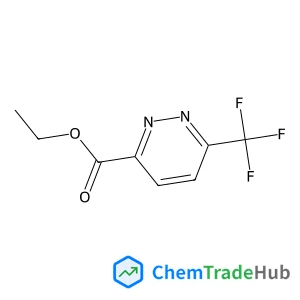
Ethyl 6-(trifluoromethyl)pyridazine-3-carboxylate
CAS Number:
1192155-06-8
Molecular Formula:
C8H7F3N2O2

![2-Methyl-2-propanyl [(2S)-1-hydroxy-3-(4-hydroxyphenyl)-2-propanyl]carbamate structure](https://static.chemtradehub.com/structs/833/83345-46-4-eec2.webp "2-Methyl-2-propanyl [(2S)-1-hydroxy-3-(4-hydroxyphenyl)-2-propanyl]carbamate structure")
2-Methyl-2-propanyl [(2S)-1-hydroxy-3-(4-hydroxyphenyl)-2-propanyl]carbamate
CAS Number:
83345-46-4
Molecular Formula:
C14H21NO4
Recommended Suppliers







Disclaimer
This page provides academic journal information for reference and research purposes only. We are not affiliated with any journal publishers and do not handle publication submissions. For publication-related inquiries, please contact the respective journal publishers directly.
If you notice any inaccuracies in the information displayed, please contact us at support@chemtradehub.com. We will promptly review and address your concerns.