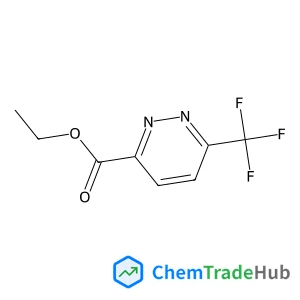
Ethyl 6-(trifluoromethyl)pyridazine-3-carboxylate
CAS Number:
1192155-06-8
Molecular Formula:
C8H7F3N2O2
Yuya Okauchi, Yuki Fukatani, Masamichi Kohno, Khellil Sefiane
The effect of ambient temperature and relative humidity on the dynamics of ethanol drop evaporation is investigated. Although drop evaporation of mixtures and pure fluids has been extensively studied, very little is known about the transition from a pure fluid to a binary mixture following transfer of a second component present in the atmosphere. This is of importance for industrial, biological and medical applications where the purity of the solvent is paramount. Adsorption–absorption and/or condensation of water into ethanol drops during evaporation is presented through direct quantification of the drop composition in time. In particular, we combine drop profile measurements with Gas Injection Chromatography (GIC) to directly quantify the amount of ethanol evaporated and that of water intake over time. As expected, drops evaporate faster at higher temperatures since both the ethanol saturation concentration and the vapor diffusion coefficient are directly proportional to temperature. On the other hand, increases in the ethanol evaporation rate and in the water intake are observed at higher relative humidity. The increase in ethanol evaporation at higher relative humidity is interpreted by the greater diffusion coefficient of ethanol into humid air when compared to dry air. Moreover, as ethanol evaporates in a high humidity environment, the drop interfacial temperature falls below the dew point due to evaporative cooling and water condenses compared to lower humidity conditions. As a consequence of the heat released by adsorption–absorption and/or condensation, a greater temperature is reported at the liquid–vapor interface as confirmed by IR thermography, inducing a greater ethanol saturation concentration at the surface and hence a greater driving force for evaporation. By coupling the drop profile and the composition of ethanol and water within the drop, we propose a combined evaporation–adsorption/absorption and/or condensation empirical correlation. The proposed correlation accounts for: the decreases in ethanol concentration due to water adsorption–absorption and/or condensation, the diffusion coefficient dependence on relative humidity, and the amount of water intake during evaporation. The proposed empirical correlation agrees remarkably well with experimental observations.
Ruihan Wang
DOI: 10.1039/C9CP04673A
Emmanuelle M. M. Weber, Dennis Kurzbach, Daniel Abergel
DOI: 10.1039/C9CP03334C
Zhenzhen Guo, Nuoyi Zheng, Liyun Zhang, Zhijun Xia, Dehua Wang, Jianfen Shen, Hua Yan, Shuchang Wu, Hongyang Liu
DOI: 10.1039/D0CP00186D
Chenyi Li, Hichem Dammak, Guilhem Dezanneau
DOI: 10.1039/C9CP03048D
Drew F. Parsons, Friedrich Anton Burger, Priyadarshini Thiyam, I. Brevik, Clas Persson
DOI: 10.1039/C9CP03165K
Manthila Rajapakse, George Anderson, Congyan Zhang, Rajib Musa, Jackson Walter, Ming Yu, Jacek B. Jasinski
DOI: 10.1039/C9CP06547D
Giorgia Confalonieri, Rossella Arletti, Simona Quartieri, Giovanna Vezzalini
DOI: 10.1039/C9CP06760D
Germán Molpeceres, Johannes Kästner
DOI: 10.1039/D0CP00250J
6-(3-Fluorophenyl)picolinic acid is generally considered safe for laboratory use...
(3R)-3-Pyrrolidinol is used in the pharmaceutical industry as a precursor for dr...
When handling (4R,5R)-4,5-Diethoxycarbonyl-2,2-dimethyldioxolane (CAS: 59779-75-...
1-(6-Chloroimidazo[1,2-b]pyridazin-3-yl)ethanone is often synthesized via a mult...
The market for N-Ethyl-3,4-dimethylbenzylamine (CAS: 39180-83-1) remains steady,...
Tert-butyl 3-(pyrrolidin-1-yl)azetidine-1-carboxylate is a chemical compound wit...
1-Bromo-3-chloro-2,4-dimethoxybenzene (CAS: 1228956-93-1) falls under the classi...
The safety of 8-Bromo-2-methyl-3,4-dihydroisoquinolin-1(2H)-one (CAS: 1368622-07...
Benzyl [(3S)-2,6-dioxo-3-piperidinyl]carbamate is generally safe when handled wi...
1-{[4-(4,4,5,5-Tetramethyl-1,3,2-dioxaborolan-2-yl)phenyl]sulfonyl}pyrrolidine s...

Physical Chemistry Chemical Physics (PCCP) is an international journal co-owned by 19 physical chemistry and physics societies from around the world. This journal publishes original, cutting-edge research in physical chemistry, chemical physics and biophysical chemistry. To be suitable for publication in PCCP, articles must include significant innovation and/or insight into physical chemistry; this is the most important criterion that reviewers and Editors will judge against when evaluating submissions. The journal has a broad scope and welcomes contributions spanning experiment, theory, computation and data science. Topical coverage includes spectroscopy, dynamics, kinetics, statistical mechanics, thermodynamics, electrochemistry, catalysis, surface science, quantum mechanics, quantum computing and machine learning. Interdisciplinary research areas such as polymers and soft matter, materials, nanoscience, energy, surfaces/interfaces, and biophysical chemistry are welcomed if they demonstrate significant innovation and/or insight into physical chemistry. Joined experimental/theoretical studies are particularly appreciated when complementary and based on up-to-date approaches.
![2-Methyl-2-propanyl [(2S)-1-hydroxy-3-(4-hydroxyphenyl)-2-propanyl]carbamate structure](https://static.chemtradehub.com/structs/833/83345-46-4-eec2.webp "2-Methyl-2-propanyl [(2S)-1-hydroxy-3-(4-hydroxyphenyl)-2-propanyl]carbamate structure")