











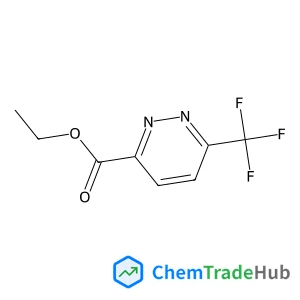
Ethyl 6-(trifluoromethyl)pyridazine-3-carboxylate
CAS Number:
1192155-06-8
Molecular Formula:
C8H7F3N2O2
Maarten M. M. Jansen, Jose Gracia, Ben E. Nieuwenhuys, (Hans) J. W. Niemantsverdriet
Co-adsorption of CO and H2 on a Rh(100) single crystal surface has been studied by a combination of temperature programmed desorption (TPD), reflection absorption infrared spectroscopy (RAIRS), low energy electron diffraction (LEED), and density functional theory (DFT) calculations. Exposure of CO to a hydrogen precovered surfaces at 150 K results in some displacement of adsorbed hydrogen and a layer with 0.67 ML H and 0.67 ML CO is obtained. A c(3√2 ×√2)R45° structure is formed with CO occupying bridge sites and hydrogen occupying partly bridge sites on the surface and partly octahedral subsurface sites, causing hydrogen to desorb at temperatures around 230 K.
Maroof Ali, Vinod Kumar, Sheila N. Baker, Gary A. Baker, Siddharth Pandey
DOI: 10.1039/B920500D
Ryuhei Matsumoto, Masaya Kakuta, Taiki Sugiyama, Yoshio Goto, Hideki Sakai, Yuichi Tokita, Tsuyonobu Hatazawa, Seiya Tsujimura, Osamu Shirai, Kenji Kano
DOI: 10.1039/C0CP00556H
Minh-Huong Ha-Thi, Niloufar Shafizadeh, Lionel Poisson, Benoit Soep
DOI: 10.1039/C0CP00687D
Ibrahim Abou Hamad, D. O. Wipf, P. A. Rikvold
DOI: 10.1039/B920970K
Sergio Tosoni, Joachim Sauer
DOI: 10.1039/C0CP01261K
Marcus C. Göbel, Giuliano Gregori, Joachim Maier
DOI: 10.1039/C0CP00385A
Michael Hippler, Susanne Hesse, Martin A. Suhm
DOI: 10.1039/C0CP00530D
Shon Glyn Jones, Hon Man Yau, Erika Davies, James M. Hook, Tristan G. A. Youngs, Jason B. Harper, Anna K. Croft
DOI: 10.1039/B919831H
Christiane C. Hofmann, Stefan M. Lindner, Michaela Ruppert, Andreas Hirsch, Saif A. Haque, Mukundan Thelakkat, Jürgen Köhler
DOI: 10.1039/C0CP01200A
David M. Laughman, Radha D. Banhatti, Klaus Funke
DOI: 10.1039/C0CP00765J
6-(3-Fluorophenyl)picolinic acid is generally considered safe for laboratory use...
(3R)-3-Pyrrolidinol is used in the pharmaceutical industry as a precursor for dr...
When handling (4R,5R)-4,5-Diethoxycarbonyl-2,2-dimethyldioxolane (CAS: 59779-75-...
1-(6-Chloroimidazo[1,2-b]pyridazin-3-yl)ethanone is often synthesized via a mult...
The market for N-Ethyl-3,4-dimethylbenzylamine (CAS: 39180-83-1) remains steady,...
Tert-butyl 3-(pyrrolidin-1-yl)azetidine-1-carboxylate is a chemical compound wit...
1-Bromo-3-chloro-2,4-dimethoxybenzene (CAS: 1228956-93-1) falls under the classi...
The safety of 8-Bromo-2-methyl-3,4-dihydroisoquinolin-1(2H)-one (CAS: 1368622-07...
Benzyl [(3S)-2,6-dioxo-3-piperidinyl]carbamate is generally safe when handled wi...
1-{[4-(4,4,5,5-Tetramethyl-1,3,2-dioxaborolan-2-yl)phenyl]sulfonyl}pyrrolidine s...

Physical Chemistry Chemical Physics (PCCP) is an international journal co-owned by 19 physical chemistry and physics societies from around the world. This journal publishes original, cutting-edge research in physical chemistry, chemical physics and biophysical chemistry. To be suitable for publication in PCCP, articles must include significant innovation and/or insight into physical chemistry; this is the most important criterion that reviewers and Editors will judge against when evaluating submissions. The journal has a broad scope and welcomes contributions spanning experiment, theory, computation and data science. Topical coverage includes spectroscopy, dynamics, kinetics, statistical mechanics, thermodynamics, electrochemistry, catalysis, surface science, quantum mechanics, quantum computing and machine learning. Interdisciplinary research areas such as polymers and soft matter, materials, nanoscience, energy, surfaces/interfaces, and biophysical chemistry are welcomed if they demonstrate significant innovation and/or insight into physical chemistry. Joined experimental/theoretical studies are particularly appreciated when complementary and based on up-to-date approaches.

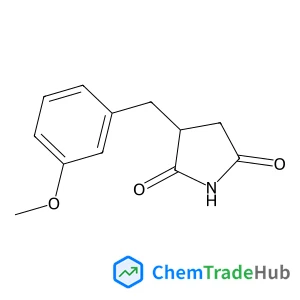
![Benzyl spiro[indole-3,4'-piperidine]-1(2H)-carboxylate hydrochloride (1:1) structure](https://static.chemtradehub.com/structs/159/159635-46-8-8de0.webp "Benzyl spiro[indole-3,4'-piperidine]-1(2H)-carboxylate hydrochloride (1:1) structure")




