












J-aggregation of ionic liquid solutions of meso-tetrakis(4-sulfonatophenyl)porphyrin
Literature Information
Publication Date
2009-12-21
DOI
10.1039/B920500D
Impact Factor
3.676
Authors
Maroof Ali, Vinod Kumar, Sheila N. Baker, Gary A. Baker, Siddharth Pandey
View Original
Abstract
The title porphyrin was dissolved in the hydrophilic ionic liquid 1-butyl-3-methylimidazolium tetrafluoroborate, [bmim][BF4], and triggered to assemble into J-aggregates by the addition of incremental volumes of water containing various amounts of acid (0.1, 0.2, or 1.0 M HCl). In contrast to recent studies, the current investigation is unique in that it centers on media that contain a predominant ionic liquid component (2.9–5.4 M [bmim][BF4]), as opposed to an aqueous electrolyte containing a small fraction of ionic liquid as dissociated solute. Complex aggregation and underlying photophysical behavior are revealed from absorption spectroscopy, steady-state fluorescence, and resonance light scattering studies. Upon addition of aqueous HCl, the efficient formation of H4TPPS2− J-aggregates from the diprotonated form of meso-tetrakis(4-sulfonatophenyl)porphyrin (H2TPPS4−) occurs in [bmim][BF4]-rich media in a manner highly dependent upon the acidity, TPPS concentration, and solvent composition. The unique features of TPPS aggregation in this ionic liquid were elucidated, including the surprising disassembly of J-aggregates at higher aqueous contents, and our results are described qualitatively in terms of the molecular exciton theory. Finally, the potential of this system for the optical sensing of water at a sensitivity below 0.5 wt% is demonstrated. Overall, our findings accentuate how little is known about functional self-assembly within ionic liquids and suggest a number of avenues for exploring this completely untouched research landscape.
Related Literature
Unraveling doping induced anatase–rutile phase transition in TiO2 using electron, X-ray and gamma-ray as spectroscopic probes
D. Banerjee, Santosh K. Gupta, N. Patra, Sk Wasim Raja, N. Pathak, D. Bhattacharyya, P. K. Pujari, S. V. Thakare, S. N. Jha
2018-10-25
Paper
DOI: 10.1039/C8CP04310H
‘Nano on micro’ hierarchical porous all carbon structures: an insight into interfacial interactions with bacteria
Shriram Janghela, Nagendra Singh Neeraj, Kavita Agarwal, Debmalya Roy, Kingsuk Mukhopadhyay, Namburi Eswara Prasad
2018-11-06
Paper
DOI: 10.1039/C8CP05570J
Why does the Y326I mutant of monoamine oxidase B decompose an endogenous amphetamine at a slower rate than the wild type enzyme? Reaction step elucidated by multiscale molecular simulations
Urška Jug, Janez Mavri, Jernej Stare
2018-01-23
Paper
DOI: 10.1039/C7CP07069A
The ortho-benzyne cation is not planar
D. Kaiser, E. Reusch, P. Hemberger, A. Bodi, E. Welz, B. Engels, I. Fischer
2018-01-09
Paper
DOI: 10.1039/C7CP08055G
Thermodynamic evidence of flexibility in H2O and CO2 absorption of transition metal ion exchanged zeolite LTA
Xin Guo, Lili Wu, Alexandra Navrotsky
2018-01-11
Paper
DOI: 10.1039/C7CP08188J
A hybrid hydrazine redox flow battery with a reversible electron acceptor
Swapnil Varhade, Zahid M. Bhat, Ravikumar Thimmappa, Mruthyunjayachari C. Devendrachari, Alagar R. Kottaichamy, Manu Gautam, Shahid P. Shafi, Musthafa Ottakam Thotiyl
2018-07-31
Paper
DOI: 10.1039/C8CP03768J
Crystallization kinetics of water on graphite
Takashi Aizawa
2018-08-10
Paper
DOI: 10.1039/C8CP03000F
Ordering of lipid membranes altered by boron nitride nanosheets
Yonghui Zhang, Zhen Li, Chun Chan, Jiale Ma, Chunyi Zhi, Xiaolin Cheng
2017-11-22
Paper
DOI: 10.1039/C7CP07136A
Effects of point defects on the magnetoelectronic structures of MXenes from first principles
Arkamita Bandyopadhyay, Dibyajyoti Ghosh
2018-01-04
Paper
DOI: 10.1039/C7CP07165E
You might also like
Compound Q&A
Is 6-(3-Fluorophenyl)picolinic acid (CAS: 887982-40-3) safe?
6-(3-Fluorophenyl)picolinic acid is generally considered safe for laboratory use...
887982-40-36-(3-Fluorophenyl)pi...
Compound Q&A
What industries use (3R)-3-Pyrrolidinol (CAS: 2799-21-5)?
(3R)-3-Pyrrolidinol is used in the pharmaceutical industry as a precursor for dr...
2799-21-5(3R)-3-Pyrrolidinol
Compound Q&A
What precautions should be taken when handling (4R,5R)-4,5-Diethoxycarbonyl-2,2-dimethyldioxolane (CAS: 59779-75-8)?
When handling (4R,5R)-4,5-Diethoxycarbonyl-2,2-dimethyldioxolane (CAS: 59779-75-...
59779-75-8(4R,5R)-4,5-Diethoxy...
Compound Q&A
How is 1-(6-Chloroimidazo[1,2-b]pyridazin-3-yl)ethanone (CAS: 90734-71-7) typically synthesized?
1-(6-Chloroimidazo[1,2-b]pyridazin-3-yl)ethanone is often synthesized via a mult...
90734-71-71-(6-Chloroimidazo[1...
Compound Q&A
What is the market or research trend for N-Ethyl-3,4-dimethylbenzylamine (CAS: 39180-83-1)?
The market for N-Ethyl-3,4-dimethylbenzylamine (CAS: 39180-83-1) remains steady,...
39180-83-1N-Ethyl-3,4-dimethyl...
Compound Q&A
What is Tert-butyl 3-(pyrrolidin-1-yl)azetidine-1-carboxylate (CAS: 1019008-21-9)?
Tert-butyl 3-(pyrrolidin-1-yl)azetidine-1-carboxylate is a chemical compound wit...
1019008-21-9Tert-butyl 3-(pyrrol...
Compound Q&A
What regulatory guidelines apply to 1-Bromo-3-chloro-2,4-dimethoxybenzene (CAS: 1228956-93-1)?
1-Bromo-3-chloro-2,4-dimethoxybenzene (CAS: 1228956-93-1) falls under the classi...
1228956-93-11-Bromo-3-chloro-2,4...
Compound Q&A
Is 8-Bromo-2-methyl-3,4-dihydroisoquinolin-1(2H)-one (CAS: 1368622-07-4) safe?
The safety of 8-Bromo-2-methyl-3,4-dihydroisoquinolin-1(2H)-one (CAS: 1368622-07...
1368622-07-48-Bromo-2-methyl-3,4...
Compound Q&A
Is Benzyl [(3S)-2,6-dioxo-3-piperidinyl]carbamate (CAS: 22785-43-9) safe?
Benzyl [(3S)-2,6-dioxo-3-piperidinyl]carbamate is generally safe when handled wi...
22785-43-9Benzyl [(3S)-2,6-dio...
Compound Q&A
How should 1-{[4-(4,4,5,5-Tetramethyl-1,3,2-dioxaborolan-2-yl)phenyl]sulfonyl}pyrrolidine (CAS: 928657-21-0) be stored?
1-{[4-(4,4,5,5-Tetramethyl-1,3,2-dioxaborolan-2-yl)phenyl]sulfonyl}pyrrolidine s...
928657-21-01-{[4-(4,4,5,5-Tetra...
Source Journal
Physical Chemistry Chemical Physics

CiteScore:
5.5
Self-citation Rate:
10.3%
Articles per Year:
3036
Physical Chemistry Chemical Physics (PCCP) is an international journal co-owned by 19 physical chemistry and physics societies from around the world. This journal publishes original, cutting-edge research in physical chemistry, chemical physics and biophysical chemistry. To be suitable for publication in PCCP, articles must include significant innovation and/or insight into physical chemistry; this is the most important criterion that reviewers and Editors will judge against when evaluating submissions. The journal has a broad scope and welcomes contributions spanning experiment, theory, computation and data science. Topical coverage includes spectroscopy, dynamics, kinetics, statistical mechanics, thermodynamics, electrochemistry, catalysis, surface science, quantum mechanics, quantum computing and machine learning. Interdisciplinary research areas such as polymers and soft matter, materials, nanoscience, energy, surfaces/interfaces, and biophysical chemistry are welcomed if they demonstrate significant innovation and/or insight into physical chemistry. Joined experimental/theoretical studies are particularly appreciated when complementary and based on up-to-date approaches.
Recommended Compounds
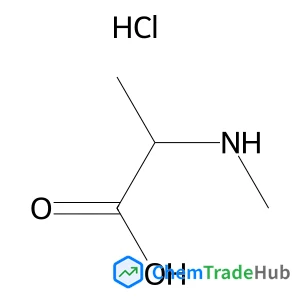
(R)-2-(Methylamino)propanoic acid hydrochloride
CAS Number:
1155878-14-0
Molecular Formula:
C4H10ClNO2
Recommended Suppliers




Disclaimer
This page provides academic journal information for reference and research purposes only. We are not affiliated with any journal publishers and do not handle publication submissions. For publication-related inquiries, please contact the respective journal publishers directly.
If you notice any inaccuracies in the information displayed, please contact us at support@chemtradehub.com. We will promptly review and address your concerns.