












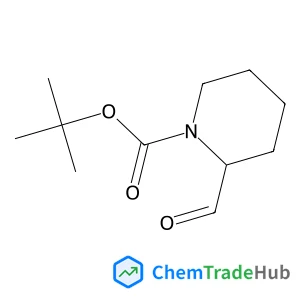
2-Methyl-2-propanyl (2R)-2-formyl-1-piperidinecarboxylate
CAS Number:
134526-69-5
Molecular Formula:
C11H19NO3
Torsten Gutmann, Martin Sellin, Hergen Breitzke, Annegret Stark, Gerd Buntkowsky
Para-hydrogen induced polarization (PHIP) is observed in an organic solvent-free homogeneous catalyst/substrate system using ionic liquids. The hydrogenation reactions are performed employing a Rh-catalyst/ionic liquid system without further organic solvents. The PHIP phenomenon is demonstrated for the ethyl acrylate system. Small amounts of ionic liquids (ILs) containing weakly coordinating anions such as [Tf2N]− act as homogenizing cosolvents for the catalyst in ethyl acrylate, leading to a dramatic activation of the catalytic process and a high PHIP signal enhancement. The achieved enhancement depends strongly on the viscosity of the ethyl acrylate/IL mixture. Furthermore, by deliberate choice of the IL constituents it was possible to design a model system exhibiting both sufficient catalyst solubility and biphasic liquid–liquid behavior. This shows that in ionic liquids PHIP enhancements followed by a fast quantitative removal of the para-hydrogenated product from the catalyst phase is in principle possible. The possible PHIP enhancement factors will depend strongly on the design of a suitable hydrogenation reactor.
Gábor Peintler, György Csekő, Andrea Petz, Attila K. Horváth
DOI: 10.1039/B920618C
Frédéric Hasché, Mehtap Oezaslan
DOI: 10.1039/C0CP00609B
Maroof Ali, Vinod Kumar, Sheila N. Baker, Gary A. Baker, Siddharth Pandey
DOI: 10.1039/B920500D
Jonathan Clayden, Ulrich Hennecke, Mark A. Vincent, Ian H. Hillier, Madeleine Helliwell
DOI: 10.1039/C0CP00571A
Gregory Favaro, Anna Radko, Abraham Jacob Domb, Daniel Mandler
DOI: 10.1039/C0CP00601G
Joana T. Carneiro, Ana R. Almeida, Jacob A. Moulijn, Guido Mul
DOI: 10.1039/B919886E
Hongtao Liu, Yang Liu, Jinghong Li
DOI: 10.1039/B921469K
Gernot Füchsel, Tillmann Klamroth, Jean Christophe Tremblay, Peter Saalfrank
DOI: 10.1039/C0CP00895H
Miroslav Gál, Magdaléna Hromadová, Jana Bulíčková, Viliam Kolivoška, Josef Cvačka, Kateřina Nováková, Ladislav Kavan, Markéta Zukalová, Lothar Dunsch
DOI: 10.1039/C0CP00986E
Masashi Katsuda, Erika Hishikawa, Masaki Mitani, Yasunori Yoshioka
DOI: 10.1039/B914793D
6-(3-Fluorophenyl)picolinic acid is generally considered safe for laboratory use...
(3R)-3-Pyrrolidinol is used in the pharmaceutical industry as a precursor for dr...
When handling (4R,5R)-4,5-Diethoxycarbonyl-2,2-dimethyldioxolane (CAS: 59779-75-...
1-(6-Chloroimidazo[1,2-b]pyridazin-3-yl)ethanone is often synthesized via a mult...
The market for N-Ethyl-3,4-dimethylbenzylamine (CAS: 39180-83-1) remains steady,...
Tert-butyl 3-(pyrrolidin-1-yl)azetidine-1-carboxylate is a chemical compound wit...
1-Bromo-3-chloro-2,4-dimethoxybenzene (CAS: 1228956-93-1) falls under the classi...
The safety of 8-Bromo-2-methyl-3,4-dihydroisoquinolin-1(2H)-one (CAS: 1368622-07...
Benzyl [(3S)-2,6-dioxo-3-piperidinyl]carbamate is generally safe when handled wi...
1-{[4-(4,4,5,5-Tetramethyl-1,3,2-dioxaborolan-2-yl)phenyl]sulfonyl}pyrrolidine s...

Physical Chemistry Chemical Physics (PCCP) is an international journal co-owned by 19 physical chemistry and physics societies from around the world. This journal publishes original, cutting-edge research in physical chemistry, chemical physics and biophysical chemistry. To be suitable for publication in PCCP, articles must include significant innovation and/or insight into physical chemistry; this is the most important criterion that reviewers and Editors will judge against when evaluating submissions. The journal has a broad scope and welcomes contributions spanning experiment, theory, computation and data science. Topical coverage includes spectroscopy, dynamics, kinetics, statistical mechanics, thermodynamics, electrochemistry, catalysis, surface science, quantum mechanics, quantum computing and machine learning. Interdisciplinary research areas such as polymers and soft matter, materials, nanoscience, energy, surfaces/interfaces, and biophysical chemistry are welcomed if they demonstrate significant innovation and/or insight into physical chemistry. Joined experimental/theoretical studies are particularly appreciated when complementary and based on up-to-date approaches.
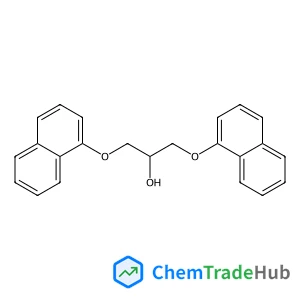
![Benzyl spiro[indole-3,4'-piperidine]-1(2H)-carboxylate hydrochloride (1:1) structure](https://static.chemtradehub.com/structs/159/159635-46-8-8de0.webp "Benzyl spiro[indole-3,4'-piperidine]-1(2H)-carboxylate hydrochloride (1:1) structure")
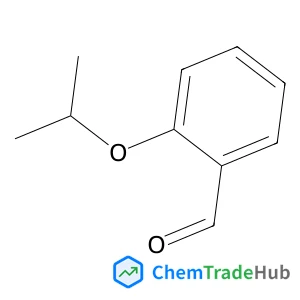
![4-[(2,4-Dihydroxyphenyl)diazenyl]-5-hydroxy-2,7-naphthalenedisulfonic acid structure](https://static.chemtradehub.com/structs/362/3627-01-8-79ac.webp "4-[(2,4-Dihydroxyphenyl)diazenyl]-5-hydroxy-2,7-naphthalenedisulfonic acid structure")





