












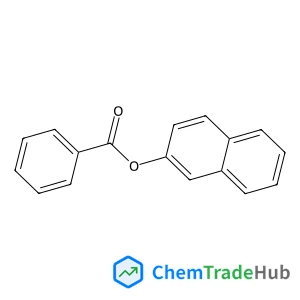
Furansversus 4H-pyrans: catalyst-controlled regiodivergent tandem Michael addition–cyclization reaction of 2-(1-alkynyl)-2-alken-1-ones with 1,3-dicarbonyl compounds
Literature Information
Publication Date
2009-05-11
DOI
10.1039/B905267D
Impact Factor
6.222
Authors
Yuanjing Xiao
View Original
Abstract
The DBU-catalyzed reaction of 1-(1-alkynyl)-2-alken-1-ones with 1,3-dicarbonyl compounds produces 4H-pyrans in moderate to excellent yield, whereas the cationic Pd(II)-catalyzed reaction affords furans regioselectively.
Related Literature
77Se solid-state NMR of As2Se3, As4Se4 and As4Se3 crystals: a combined experimental and computational study
Kateryna Sykina, Guang Yang, Claire Roiland, Laurent Le Pollès, Eric Le Fur, Chris J. Pickard, Bruno Bureau, Eric Furet
2013-03-07
Paper
DOI: 10.1039/C3CP41689E
Modulating the electronic properties of germanium nanowiresvia applied strain and surface passivation
Mahasin Alam Sk, Man-Fai Ng, Lin Huang, Kok Hwa Lim
2013-02-22
Paper
DOI: 10.1039/C3CP43530J
Single-molecule surface-enhanced Raman spectroscopy: a perspective on the current status
Hae Mi Lee, Seung Min Jin, Hyung Min Kim, Yung Doug Suh
2013-03-11
Perspective
DOI: 10.1039/C3CP44463E
The homogeneous ice nucleation rate of water droplets produced in a microfluidic device and the role of temperature uncertainty
Birte Riechers, Frank Wittbracht, Andreas Hütten, Thomas Koop
2013-02-25
Paper
DOI: 10.1039/C3CP42437E
Protonated triplet-excited flavin resolved by step-scan FTIR spectroscopy: implications for photosensory LOV domains
Christian Thöing, Anna Pfeifer, Sergej Kakorin, Tilman Kottke
2013-03-01
Paper
DOI: 10.1039/C3CP43881C
New insights into two-photon absorption properties of functionalized aza-BODIPY dyes at telecommunication wavelengths: a theoretical study
Jilong Zhang, Kai Li, Xiaobo Sun, Zhijian Wu, Aimin Ren, Jikang Feng
2013-01-28
Paper
DOI: 10.1039/C3CP44435J
Structure of pH sensitive self-assembled amphiphilic di- and triblock copolyelectrolytes: micelles, aggregates and transient networks
Céline Charbonneau, Christophe Chassenieux, Olivier Colombani, Taco Nicolai
2013-01-11
Paper
DOI: 10.1039/C3CP43653E
Giant reduction of the phase transition temperature for beryllium doped VO2
Jiajia Zhang, Haiyan He, Yi Xie
2013-02-01
Paper
DOI: 10.1039/C3CP44476G
Microwave absorption in powders of small conducting particles for heating applications
Adrian Porch, Peter P. Edwards
2012-12-19
Paper
DOI: 10.1039/C2CP43310A
Microsecond folding experiments and simulations: a match is made
M. B. Prigozhin
2013-01-29
Perspective
DOI: 10.1039/C3CP43992E
You might also like
Compound Q&A
How should waste containing (6-Bromo-2-naphthyl)oxy](dimethyl)(2-methyl-2-propanyl)silane be handled?
Waste containing (6-Bromo-2-naphthyl)oxy](dimethyl)(2-methyl-2-propanyl)silane (...
100751-65-3[(6-Bromo-2-naphthyl...
Compound Q&A
How is 7-Fluoro-4-isoquinolinecarboxylic acid (CAS: 1841081-40-0) typically synthesized?
7-Fluoro-4-isoquinolinecarboxylic acid can be synthesized via a multi-step proce...
1841081-40-07-Fluoro-4-isoquinol...
Compound Q&A
What are the physical and chemical properties of 2,3,5,6-Tetrabromothieno[3,2-b]thiophene (CAS: 124638-53-5)?
2,3,5,6-Tetrabromothieno[3,2-b]thiophene is a crystalline compound with a high m...
124638-53-52,3,5,6-Tetrabromoth...
Compound Q&A
Is 1-[4-(Benzylamino)-7,8-dihydro-5H-pyrano[4,3-d]pyrimidin-2-yl]-2-methyl-1H-indole-4-carboxamide (CAS: 1542705-92-9) safe?
1-[4-(Benzylamino)-7,8-dihydro-5H-pyrano[4,3-d]pyrimidin-2-yl]-2-methyl-1H-indol...
1542705-92-91-[4-(Benzylamino)-7...
Compound Q&A
What is the market or research trend for imidazo[5,1-d]-1,2,3,5-tetrazine-8-carboxylic acid, 3,4-dihydro-3-methyl-4-oxo- (CAS: 113942-30-6)?
The market for imidazo[5,1-d]-1,2,3,5-tetrazine-8-carboxylic acid, 3,4-dihydro-3...
113942-30-6Imidazo[5,1-d]-1,2,3...
Compound Q&A
What is 3-(Triisopropylsilyl)propiolaldehyde (CAS: 163271-80-5)?
3-(Triisopropylsilyl)propiolaldehyde is a synthetic organic compound with the CA...
163271-80-53-(Triisopropylsilyl...
Compound Q&A
What regulatory guidelines apply to 6-Nitro-2H-1,4-benzoxazin-3(4H)-one (CAS: 81721-87-1)?
6-Nitro-2H-1,4-benzoxazin-3(4H)-one (CAS: 81721-87-1) is subject to various regu...
81721-87-16-Nitro-2H-1,4-benzo...
Compound Q&A
How should waste containing (3-Fluorophenyl)(4-{[(2-methyl-2-propanyl)oxy]carbonyl}-1-piperazinyl)acetic acid (CAS: 885272-91-3) be handled?
Waste containing (3-Fluorophenyl)(4-{[(2-methyl-2-propanyl)oxy]carbonyl}-1-piper...
885272-91-3(3-Fluorophenyl)(4-{...
Compound Q&A
What are the physical and chemical properties of N,N'-4,4'-Biphenyldiyldiisonicotinamide (CAS: 55119-40-9)?
N,N'-4,4'-Biphenyldiyldiisonicotinamide is a white crystalline solid with a mole...
55119-40-9N,N'-4,4'-Biphenyldi...
Compound Q&A
What industries use 6-Bromo-8-fluoro-2-quinazolinol (CAS: 1036756-15-6)?
6-Bromo-8-fluoro-2-quinazolinol is primarily used in the pharmaceutical industry...
1036756-15-66-Bromo-8-fluoro-2-q...
Source Journal
Chemical Communications

CiteScore:
8.6
Self-citation Rate:
4.7%
Articles per Year:
2458
ChemComm publishes urgent research which is of outstanding significance and interest to experts in the field, while also appealing to the journal’s broad chemistry readership. Our communication format is ideally suited to short, urgent studies that are of such importance that they require accelerated publication. Our scope covers all topics in chemistry, and research at the interface of chemistry and other disciplines (such as materials science, nanoscience, physics, engineering and biology) where there is a significant novelty in the chemistry aspects. Major topic areas covered include: Analytical Chemistry Catalysis Chemical Biology and medicinal chemistry Computational Chemistry and Machine Learning Energy and sustainable chemistry Environmental Chemistry Green Chemistry Inorganic Chemistry Materials Chemistry Nanoscience Organic Chemistry Physical Chemistry Polymer Chemistry Supramolecular Chemistry
Recommended Compounds
Recommended Suppliers






Disclaimer
This page provides academic journal information for reference and research purposes only. We are not affiliated with any journal publishers and do not handle publication submissions. For publication-related inquiries, please contact the respective journal publishers directly.
If you notice any inaccuracies in the information displayed, please contact us at support@chemtradehub.com. We will promptly review and address your concerns.