













Single-molecule surface-enhanced Raman spectroscopy: a perspective on the current status
Literature Information
Publication Date
2013-03-11
DOI
10.1039/C3CP44463E
Impact Factor
3.676
Authors
Hae Mi Lee, Seung Min Jin, Hyung Min Kim, Yung Doug Suh
View Original
Abstract
This perspective presents an overview of single-molecule surface-enhanced Raman scattering (sm-SERS). Our overview is organized as a brief theoretical background, discussion of the factors that enhance SERS, various experimental preparations for inserting a single molecule in a hot spot, recent sm-SERS experiments, and a perspective. Although, there have been numerous review papers on sm-SERS, we mainly concentrated on the logical development of sm-SERS on the basis of the fundamental concepts and their physical significance, so that readers outside this field can understand the motivation and the underlying physics when describing current sm-SERS measurements. Indeed, understanding such current sm-SERS experiments conducted by representative groups would be very helpful for readers to answer for themselves the fundamental and practical questions surrounding sm-SERS: (1) what information can sm-SERS provide? (2) Which factors based on the SERS mechanism should be considered to significantly amplify the SERS signal? (3) What kinds of related microscopy techniques could be combined with sm-SERS to attain more meaningful results? (4) Which statistical approaches can be used and how they can be applied to properly analyze sm-SERS data? We hope that this review article can help readers answer these questions.
Recommended Journals
Related Literature
Molecularly imprinted on-line solid-phase extraction combined with flow-injection chemiluminescence for the determination of tetracycline
Yan Xiong, Houjiang Zhou, Zhujun Zhang, Deyong He, Chao He
2006-06-06
Paper
DOI: 10.1039/B606779B
Solid-supported room temperature phosphorescence from aflatoxins for analytical detection of Aspergillus spp. strains
T. Rojas-Durán, I. Sánchez-Barragán, J. M. Costa-Fernández, A. Sanz-Medel
2006-05-09
Communication
DOI: 10.1039/B604139F
Separation and detection of individual submicron particles by capillary electrophoresis with laser-light-scattering detection
Yohannes H. Rezenom, Amber D. Wellman, Luanne Tilstra, Colin D. Medley, S. Douglass Gilman
2007-08-30
Paper
DOI: 10.1039/B709509K
An optical sensor for reactive oxygen species: encapsulation of functionalised silica nanoparticles into silicate nanoprobes to reduce fluorophore leaching
Victoria J. Hammond, Jonathan W. Aylott, Gillian M. Greenway, Paul Watts, Abigail Webster, Charlotte Wiles
2007-10-02
Paper
DOI: 10.1039/B711995J
Composite sequence proteomic analysis of proteinbiomarkers of Campylobacter coli, C. lari and C. concisus for bacterial identification‡
Clifton K. Fagerquist, Emma Yee, William G. Miller
2007-07-20
Paper
DOI: 10.1039/B702859H
Review of applications of high-field asymmetric waveform ion mobility spectrometry (FAIMS) and differential mobility spectrometry (DMS)
Beata M. Kolakowski, Zoltán Mester
2007-06-26
Tutorial Review
DOI: 10.1039/B706039D
Electrochemical oxidation of catecholamines and catechols at carbon nanotube electrodes
Stephen Maldonado, Stephen Morin, Keith J. Stevenson
2005-09-30
Paper
DOI: 10.1039/B506869J
Serial processing of biological reactions using flow-through microfluidic devices: coupled PCR/LDR for the detection of low-abundant DNA point mutations
Masahiko Hashimoto, Francis Barany
2007-07-11
Paper
DOI: 10.1039/B700071E
Sample preparation: a challenge in the development of point-of-care nucleic acid-based assays for resource-limited settings
Magda Anastassova Dineva, Lourdes Mahilum-Tapay, Helen Lee
2007-10-01
Perspective
DOI: 10.1039/B705672A
Raman spectroscopic monitoring of droplet polymerization in a microfluidic device
Susan E. Barnes, Zuzanna T. Cygan, Jesse K. Yates, Kathryn L. Beers, Eric J. Amis
2006-07-12
Paper
DOI: 10.1039/B603693G
You might also like
Compound Q&A
How should waste containing (6-Bromo-2-naphthyl)oxy](dimethyl)(2-methyl-2-propanyl)silane be handled?
Waste containing (6-Bromo-2-naphthyl)oxy](dimethyl)(2-methyl-2-propanyl)silane (...
100751-65-3[(6-Bromo-2-naphthyl...
Compound Q&A
How is 7-Fluoro-4-isoquinolinecarboxylic acid (CAS: 1841081-40-0) typically synthesized?
7-Fluoro-4-isoquinolinecarboxylic acid can be synthesized via a multi-step proce...
1841081-40-07-Fluoro-4-isoquinol...
Compound Q&A
What are the physical and chemical properties of 2,3,5,6-Tetrabromothieno[3,2-b]thiophene (CAS: 124638-53-5)?
2,3,5,6-Tetrabromothieno[3,2-b]thiophene is a crystalline compound with a high m...
124638-53-52,3,5,6-Tetrabromoth...
Compound Q&A
Is 1-[4-(Benzylamino)-7,8-dihydro-5H-pyrano[4,3-d]pyrimidin-2-yl]-2-methyl-1H-indole-4-carboxamide (CAS: 1542705-92-9) safe?
1-[4-(Benzylamino)-7,8-dihydro-5H-pyrano[4,3-d]pyrimidin-2-yl]-2-methyl-1H-indol...
1542705-92-91-[4-(Benzylamino)-7...
Compound Q&A
What is the market or research trend for imidazo[5,1-d]-1,2,3,5-tetrazine-8-carboxylic acid, 3,4-dihydro-3-methyl-4-oxo- (CAS: 113942-30-6)?
The market for imidazo[5,1-d]-1,2,3,5-tetrazine-8-carboxylic acid, 3,4-dihydro-3...
113942-30-6Imidazo[5,1-d]-1,2,3...
Compound Q&A
What is 3-(Triisopropylsilyl)propiolaldehyde (CAS: 163271-80-5)?
3-(Triisopropylsilyl)propiolaldehyde is a synthetic organic compound with the CA...
163271-80-53-(Triisopropylsilyl...
Compound Q&A
What regulatory guidelines apply to 6-Nitro-2H-1,4-benzoxazin-3(4H)-one (CAS: 81721-87-1)?
6-Nitro-2H-1,4-benzoxazin-3(4H)-one (CAS: 81721-87-1) is subject to various regu...
81721-87-16-Nitro-2H-1,4-benzo...
Compound Q&A
How should waste containing (3-Fluorophenyl)(4-{[(2-methyl-2-propanyl)oxy]carbonyl}-1-piperazinyl)acetic acid (CAS: 885272-91-3) be handled?
Waste containing (3-Fluorophenyl)(4-{[(2-methyl-2-propanyl)oxy]carbonyl}-1-piper...
885272-91-3(3-Fluorophenyl)(4-{...
Compound Q&A
What are the physical and chemical properties of N,N'-4,4'-Biphenyldiyldiisonicotinamide (CAS: 55119-40-9)?
N,N'-4,4'-Biphenyldiyldiisonicotinamide is a white crystalline solid with a mole...
55119-40-9N,N'-4,4'-Biphenyldi...
Compound Q&A
What industries use 6-Bromo-8-fluoro-2-quinazolinol (CAS: 1036756-15-6)?
6-Bromo-8-fluoro-2-quinazolinol is primarily used in the pharmaceutical industry...
1036756-15-66-Bromo-8-fluoro-2-q...
Source Journal
Physical Chemistry Chemical Physics

CiteScore:
5.5
Self-citation Rate:
10.3%
Articles per Year:
3036
Physical Chemistry Chemical Physics (PCCP) is an international journal co-owned by 19 physical chemistry and physics societies from around the world. This journal publishes original, cutting-edge research in physical chemistry, chemical physics and biophysical chemistry. To be suitable for publication in PCCP, articles must include significant innovation and/or insight into physical chemistry; this is the most important criterion that reviewers and Editors will judge against when evaluating submissions. The journal has a broad scope and welcomes contributions spanning experiment, theory, computation and data science. Topical coverage includes spectroscopy, dynamics, kinetics, statistical mechanics, thermodynamics, electrochemistry, catalysis, surface science, quantum mechanics, quantum computing and machine learning. Interdisciplinary research areas such as polymers and soft matter, materials, nanoscience, energy, surfaces/interfaces, and biophysical chemistry are welcomed if they demonstrate significant innovation and/or insight into physical chemistry. Joined experimental/theoretical studies are particularly appreciated when complementary and based on up-to-date approaches.
Recommended Compounds

Oxalic acid compound with cyclohexylsulfamothioic O-acid (11)
CAS Number:
31895-22-4
Molecular Formula:
C7H13NO4S3
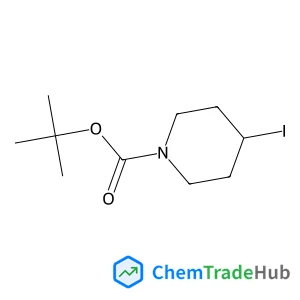
2-Methyl-2-propanyl 4-iodo-1-piperidinecarboxylate
CAS Number:
301673-14-3
Molecular Formula:
C10H18INO2
Recommended Suppliers





Disclaimer
This page provides academic journal information for reference and research purposes only. We are not affiliated with any journal publishers and do not handle publication submissions. For publication-related inquiries, please contact the respective journal publishers directly.
If you notice any inaccuracies in the information displayed, please contact us at support@chemtradehub.com. We will promptly review and address your concerns.