













Modulating the electronic properties of germanium nanowiresvia applied strain and surface passivation
Literature Information
Publication Date
2013-02-22
DOI
10.1039/C3CP43530J
Impact Factor
3.676
Authors
Mahasin Alam Sk, Man-Fai Ng, Lin Huang, Kok Hwa Lim
View Original
Abstract
We report a systematic study on the surface passivation and strain effects on the electronic properties of hydrogenated germanium nanowires (H-GeNWs) with different growth orientations and diameters using density functional theory calculations. We show that increasing the coverage percentage of halogen passivations – fluorine (F) and chlorine (Cl) in particular – reduces the band gap of the GeNWs drastically but not linearly, depending on the chemical environment of the passivation sites. Moreover, we find that in general, applying strain – either compression or tensile – can only induce a decreased band gap in GeNWs but exception is found in 〈110〉 GeNWs: an increased band gap can be induced which is determined to be related to their surface structures. The current work reveals that electronic response upon structural changes caused by external factors is more sensitive in 〈110〉 GeNWs than in 〈100〉 GeNWs, suggesting that GeNWs with selected growth orientation can be applied in specialized applications that require different degrees of sensitivity or robustness.
Related Literature
Needle enzyme electrode based glucose diffusive transport measurement in a collagen gel and validation of a simulation model
Zimei Rong, Umber Cheema, Pankaj Vadgama
2006-05-16
Paper
DOI: 10.1039/B600334F
Aggregation-induced phosphorescence of iridium(iii) complexes with 2,2′-bipyridine-acylhydrazone and their highly selective recognition to Cu2+
Na Zhao, Yu-Hui Wu, Jian Luo, Lin-Xi Shi
2012-11-22
Paper
DOI: 10.1039/C2AN36501D
Review of applications of high-field asymmetric waveform ion mobility spectrometry (FAIMS) and differential mobility spectrometry (DMS)
Beata M. Kolakowski, Zoltán Mester
2007-06-26
Tutorial Review
DOI: 10.1039/B706039D
Molecularly imprinted on-line solid-phase extraction combined with flow-injection chemiluminescence for the determination of tetracycline
Yan Xiong, Houjiang Zhou, Zhujun Zhang, Deyong He, Chao He
2006-06-06
Paper
DOI: 10.1039/B606779B
Surface confined ionic liquid as a stationary phase for HPLC
Qian Wang, Gary A. Baker, Sheila N. Baker, Luis A. Colón
2006-07-21
Paper
DOI: 10.1039/B607337A
Voltammetric sizing of particles: chronoamperometry of impact events in acoustically agitated particulate suspensions
Neil V. Rees, Richard G. Compton
2007-05-31
Communication
DOI: 10.1039/B707003A
Optical sensor for the visual detection of mercury using mesoporous silica anchoring porphyrin moiety
Tatineni Balaji, Manickam Sasidharan, Hideyuki Matsunaga
2005-06-10
Paper
DOI: 10.1039/B503261J
Direct detection of Pb in urine and Cd, Pb, Cu, and Ag in natural waters using electrochemical sensors immobilized with DMSA functionalized magnetic nanoparticles
Wassana Yantasee, Kitiya Hongsirikarn, Cynthia L. Warner, Daiwon Choi, Thanapon Sangvanich, Mychailo B. Toloczko, Marvin G. Warner, Glen E. Fryxell, R. Shane Addleman, Charles Timchalk
2008-02-01
Paper
DOI: 10.1039/B711199A
You might also like
Compound Q&A
How should waste containing (6-Bromo-2-naphthyl)oxy](dimethyl)(2-methyl-2-propanyl)silane be handled?
Waste containing (6-Bromo-2-naphthyl)oxy](dimethyl)(2-methyl-2-propanyl)silane (...
100751-65-3[(6-Bromo-2-naphthyl...
Compound Q&A
How is 7-Fluoro-4-isoquinolinecarboxylic acid (CAS: 1841081-40-0) typically synthesized?
7-Fluoro-4-isoquinolinecarboxylic acid can be synthesized via a multi-step proce...
1841081-40-07-Fluoro-4-isoquinol...
Compound Q&A
What are the physical and chemical properties of 2,3,5,6-Tetrabromothieno[3,2-b]thiophene (CAS: 124638-53-5)?
2,3,5,6-Tetrabromothieno[3,2-b]thiophene is a crystalline compound with a high m...
124638-53-52,3,5,6-Tetrabromoth...
Compound Q&A
Is 1-[4-(Benzylamino)-7,8-dihydro-5H-pyrano[4,3-d]pyrimidin-2-yl]-2-methyl-1H-indole-4-carboxamide (CAS: 1542705-92-9) safe?
1-[4-(Benzylamino)-7,8-dihydro-5H-pyrano[4,3-d]pyrimidin-2-yl]-2-methyl-1H-indol...
1542705-92-91-[4-(Benzylamino)-7...
Compound Q&A
What is the market or research trend for imidazo[5,1-d]-1,2,3,5-tetrazine-8-carboxylic acid, 3,4-dihydro-3-methyl-4-oxo- (CAS: 113942-30-6)?
The market for imidazo[5,1-d]-1,2,3,5-tetrazine-8-carboxylic acid, 3,4-dihydro-3...
113942-30-6Imidazo[5,1-d]-1,2,3...
Compound Q&A
What is 3-(Triisopropylsilyl)propiolaldehyde (CAS: 163271-80-5)?
3-(Triisopropylsilyl)propiolaldehyde is a synthetic organic compound with the CA...
163271-80-53-(Triisopropylsilyl...
Compound Q&A
What regulatory guidelines apply to 6-Nitro-2H-1,4-benzoxazin-3(4H)-one (CAS: 81721-87-1)?
6-Nitro-2H-1,4-benzoxazin-3(4H)-one (CAS: 81721-87-1) is subject to various regu...
81721-87-16-Nitro-2H-1,4-benzo...
Compound Q&A
How should waste containing (3-Fluorophenyl)(4-{[(2-methyl-2-propanyl)oxy]carbonyl}-1-piperazinyl)acetic acid (CAS: 885272-91-3) be handled?
Waste containing (3-Fluorophenyl)(4-{[(2-methyl-2-propanyl)oxy]carbonyl}-1-piper...
885272-91-3(3-Fluorophenyl)(4-{...
Compound Q&A
What are the physical and chemical properties of N,N'-4,4'-Biphenyldiyldiisonicotinamide (CAS: 55119-40-9)?
N,N'-4,4'-Biphenyldiyldiisonicotinamide is a white crystalline solid with a mole...
55119-40-9N,N'-4,4'-Biphenyldi...
Compound Q&A
What industries use 6-Bromo-8-fluoro-2-quinazolinol (CAS: 1036756-15-6)?
6-Bromo-8-fluoro-2-quinazolinol is primarily used in the pharmaceutical industry...
1036756-15-66-Bromo-8-fluoro-2-q...
Source Journal
Physical Chemistry Chemical Physics

CiteScore:
5.5
Self-citation Rate:
10.3%
Articles per Year:
3036
Physical Chemistry Chemical Physics (PCCP) is an international journal co-owned by 19 physical chemistry and physics societies from around the world. This journal publishes original, cutting-edge research in physical chemistry, chemical physics and biophysical chemistry. To be suitable for publication in PCCP, articles must include significant innovation and/or insight into physical chemistry; this is the most important criterion that reviewers and Editors will judge against when evaluating submissions. The journal has a broad scope and welcomes contributions spanning experiment, theory, computation and data science. Topical coverage includes spectroscopy, dynamics, kinetics, statistical mechanics, thermodynamics, electrochemistry, catalysis, surface science, quantum mechanics, quantum computing and machine learning. Interdisciplinary research areas such as polymers and soft matter, materials, nanoscience, energy, surfaces/interfaces, and biophysical chemistry are welcomed if they demonstrate significant innovation and/or insight into physical chemistry. Joined experimental/theoretical studies are particularly appreciated when complementary and based on up-to-date approaches.
Recommended Compounds



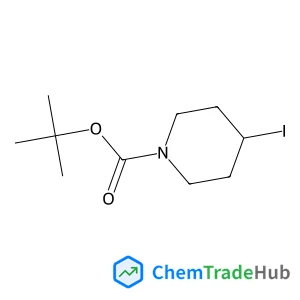
2-Methyl-2-propanyl 4-iodo-1-piperidinecarboxylate
CAS Number:
301673-14-3
Molecular Formula:
C10H18INO2
Recommended Suppliers







Disclaimer
This page provides academic journal information for reference and research purposes only. We are not affiliated with any journal publishers and do not handle publication submissions. For publication-related inquiries, please contact the respective journal publishers directly.
If you notice any inaccuracies in the information displayed, please contact us at support@chemtradehub.com. We will promptly review and address your concerns.