












Infrared spectroscopy of ‘forbidden’ peptide sequences
Literature Information
Publication Date
2009-05-08
DOI
10.1039/B903039E
Impact Factor
3.676
Authors
Timothy D. Vaden, Sally A. N. Gowers, Lavina C. Snoek
View Original
Abstract
Certain pentapeptide sequences are absent from all known universal protein primary structures, even though they are found in the non-coding regions of DNA. These ‘forbidden’ sequences may have been rejected by evolution because they disrupt the formation of functional secondary protein structures. The uncapped pentapeptides FFMCT and WCFNL, which model the two ‘most forbidden’ sequences, were studied in a cold molecular beam using IR/UV holeburning spectroscopy, and DFT calculations were carried out to help reveal their inherent conformational preferences. Computed IR spectra for different structures were compared to the experimental IR spectra in the Amide I/II and Amide A vibrational band regions. The conformational assignments based on this analysis provide preliminary clues for understanding how these peptides may form structures that hinder the desired protein folding process. For FFMCT the structural analysis indicates a strong preference for a β-turn conformation, where the C-terminal OH binds to the N-terminal F side chain. The WCFNL results show that the peptide adopts a 310-helical conformation with free N- and C-termini, and less backbone hydrogen bonding than in FFMCT. Both structural motifs could drastically disturb the overall folding process when being part of a peptide or protein.
Related Literature
Direct conversion of iron stearate into magnetic Fe and Fe3C nanocrystals encapsulated in polyhedral graphite cages
Junfeng Geng, David A. Jefferson, Brian F. G. Johnson
2004-09-21
Communication
DOI: 10.1039/B406227B
K6Cd4Sn3Se13: A polar open-framework compound based on the partially destroyed supertetrahedral [Cd4Sn4Se17]10− cluster
Nan Ding, Duck-Young Chung, Mercouri G. Kanatzidis
2004-04-23
Communication
DOI: 10.1039/B402686A
Washing-free electrochemical DNA detection using double-stranded probes and competitive hybridization reaction
Kyuwon Kim, Haesik Yang, Se Ho Park, Dae-Sik Lee, Sung-Jin Kim, Yong Taik Lim, Youn Tae Kim
2004-05-28
Communication
DOI: 10.1039/B402914C
Rapid cloning and expression of a fungal polyketide synthase gene involved in squalestatin biosynthesis
Russell J. Cox, Frank Glod, Deirdre Hurley, Colin M. Lazarus, Thomas. P. Nicholson, Brian A. M. Rudd, Thomas J. Simpson, Barrie Wilkinson, Ying Zhang
2004-09-24
Communication
DOI: 10.1039/B411973H
Site-specific oxidative cleavage of DNA by metallosalen–DNA conjugates
Jennifer L. Czlapinski, Terry L. Sheppard
2004-09-24
Communication
DOI: 10.1039/B410493E
First example of the chemical, oxidative cleavage of the C–P bond in aminophosphonate chemistry. The oxidation of 1-amino-1-(3,4-dihydroxyphenyl)methylphosphonic acid by NaIO4
Marcin Drąg, Adam Jezierski, Pawel Kafarski
2004-04-08
Communication
DOI: 10.1039/B401633E
Ferromagnetic NiII–GdIII interactions in complexes with NiGd, NiGdNi, and NiGdGdNi cores supported by tripodal ligands
Tomoka Yamaguchi, Yukinari Sunatsuki, Masaaki Kojima, Haruo Akashi, Masanobu Tsuchimoto, Nazzareno Re, Shutaro Osa, Naohide Matsumoto
2004-04-05
Communication
DOI: 10.1039/B401033G
Stereochemistry of hydrogen removal from the ‘unactivated’ C-3 position of 4-hydroxybutyryl-CoA catalysed by 4-hydroxybutyryl-CoA dehydratase
Richard Scott, Ulrike Näser, Peter Friedrich, Thorsten Selmer, Wolfgang Buckel, Bernard T. Golding
2004-04-23
Communication
DOI: 10.1039/B402322F
Reactions of N-heterocyclic carbenes (NHCs) with one-electron oxidants: possible formation of a carbenecation radical
Taramatee Ramnial, Iain McKenzie, Brian Gorodetsky, Emily M. W. Tsang, Jason A. C. Clyburne
2004-04-01
Communication
DOI: 10.1039/B314110A
Self-assembly of a novel pentanuclear centred-tetrahedral silver species
Edwin C. Constable, Catherine E. Housecroft, Markus Neuburger, Sebastien Reymann, Sylvia Schaffner
2004-03-29
Communication
DOI: 10.1039/B402376E
You might also like
Compound Q&A
What precautions should be taken when handling 2-Chloro-1,2-bis(4-methylphenyl)ethanone (CAS: 71193-32-3)?
When handling 2-Chloro-1,2-bis(4-methylphenyl)ethanone (CAS: 71193-32-3), it is ...
71193-32-32-Chloro-1,2-bis(4-m...
Compound Q&A
What industries use 4-Ethoxy-3-(5-methyl-4-oxo-7-propyl-1,4-dihydroimidazo[5,1-f][1,2,4]triazin-2-yl)benzenesulfonyl chloride (CAS: 224789-26-8)?
4-Ethoxy-3-(5-methyl-4-oxo-7-propyl-1,4-dihydroimidazo[5,1-f][1,2,4]triazin-2-yl...
224789-26-84-Ethoxy-3-(5-methyl...
Compound Q&A
How should Methyl 3-Oxo-4-Androsten-17-Carboxylate (CAS: 2681-55-2) be stored?
Methyl 3-Oxo-4-Androsten-17-Carboxylate (CAS: 2681-55-2) should be stored in a c...
2681-55-2Methyl 3-Oxo-4-Andro...
Compound Q&A
What are the main uses of (R)-3-Amino-4-(3-hexylphenylamino)-4-oxobutylphosphonic acid (CAS: 909725-61-7)?
(R)-3-Amino-4-(3-hexylphenylamino)-4-oxobutylphosphonic acid is primarily used i...
909725-61-7(R)-3-Amino-4-(3-hex...
Compound Q&A
What regulatory guidelines apply to 2-Methyl-2-propanyl 3-amino-3-carbamoyl-1-azetidinecarboxylate (CAS: 1254120-14-3)?
2-Methyl-2-propanyl 3-amino-3-carbamoyl-1-azetidinecarboxylate (CAS: 1254120-14-...
1254120-14-32-Methyl-2-propanyl ...
Compound Q&A
Are there alternatives to (E)-4-(tert-Butoxy)-4-oxobut-2-enoic acid (CAS: 135355-96-3) in synthesis?
There are alternative reagents that can be used in synthesis instead of (E)-4-(t...
135355-96-3(E)-4-(tert-Butoxy)-...
Compound Q&A
What are the physical and chemical properties of [2-(3-Chlorophenyl)-1,3-thiazol-4-yl]methanol (CAS: 121202-20-8)?
[2-(3-Chlorophenyl)-1,3-thiazol-4-yl]methanol (CAS: 121202-20-8) is a crystallin...
121202-20-8[2-(3-Chlorophenyl)-...
Compound Q&A
What is the market or research trend for Methyl (2S)-[(4S)-2,2-dimethyl-1,3-dioxolan-4-yl]{[(4-methylphenyl)sulfonyl]oxy}acetate (CAS: 166249-17-8)?
The market and research trends for Methyl (2S)-[(4S)-2,2-dimethyl-1,3-dioxolan-4...
166249-17-8Methyl (2S)-[(4S)-2,...
Compound Q&A
What is the market or research trend for 1-Bromo-2-isocyanatoethane (CAS: 42865-19-0)?
The market for 1-Bromo-2-isocyanatoethane (CAS: 42865-19-0) is driven by its use...
42865-19-01-Bromo-2-isocyanato...
Compound Q&A
What are the main uses of 4-Nitro-D-phenylalanine hydrochloride (CAS: 147065-06-3)?
4-Nitro-D-phenylalanine hydrochloride (CAS: 147065-06-3) is primarily used in re...
147065-06-34-Nitro-D-phenylalan...
Source Journal
Physical Chemistry Chemical Physics

CiteScore:
5.5
Self-citation Rate:
10.3%
Articles per Year:
3036
Physical Chemistry Chemical Physics (PCCP) is an international journal co-owned by 19 physical chemistry and physics societies from around the world. This journal publishes original, cutting-edge research in physical chemistry, chemical physics and biophysical chemistry. To be suitable for publication in PCCP, articles must include significant innovation and/or insight into physical chemistry; this is the most important criterion that reviewers and Editors will judge against when evaluating submissions. The journal has a broad scope and welcomes contributions spanning experiment, theory, computation and data science. Topical coverage includes spectroscopy, dynamics, kinetics, statistical mechanics, thermodynamics, electrochemistry, catalysis, surface science, quantum mechanics, quantum computing and machine learning. Interdisciplinary research areas such as polymers and soft matter, materials, nanoscience, energy, surfaces/interfaces, and biophysical chemistry are welcomed if they demonstrate significant innovation and/or insight into physical chemistry. Joined experimental/theoretical studies are particularly appreciated when complementary and based on up-to-date approaches.
Recommended Compounds
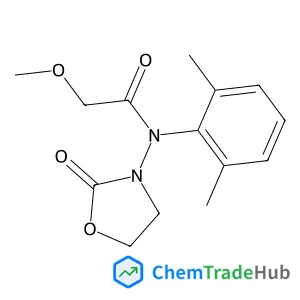
N-(2,6-Dimethylphenyl)-2-methoxy-N-(2-oxo-1,3-oxazolidin-3-yl)acetamide
CAS Number:
77732-09-3
Molecular Formula:
C14H18N2O4
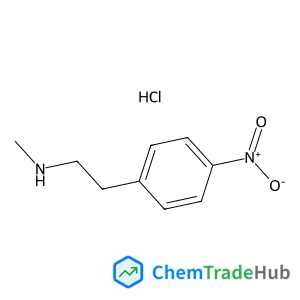
N-Methyl-2-(4-nitrophenyl)ethanamine hydrochloride (1:1)
CAS Number:
166943-39-1
Molecular Formula:
C9H13ClN2O2
Recommended Suppliers





Disclaimer
This page provides academic journal information for reference and research purposes only. We are not affiliated with any journal publishers and do not handle publication submissions. For publication-related inquiries, please contact the respective journal publishers directly.
If you notice any inaccuracies in the information displayed, please contact us at support@chemtradehub.com. We will promptly review and address your concerns.