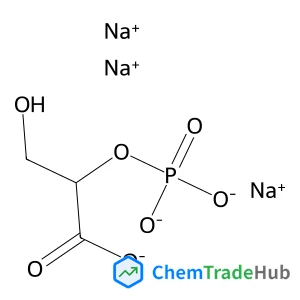
Sodium (1R)-1-carboxy-2-hydroxyethyl phosphate hydrate (2:1:1)
CAS Number:
70195-25-4
Molecular Formula:
C3H7Na2O8P
The first page of this article is displayed as the abstract.
Te-Chun Chu, Zachary J. Buras, Patrick Oßwald, Mengjie Liu, Mark Jacob Goldman, William H. Green
DOI: 10.1039/C8CP06097E
DOI: 10.1039/C8CP03645D
U. P. Gawai, D. K. Gaikwad, M. R. Bodke, H. A. Khawal, K. K. Pandey, A. K. Yadav, S. N. Jha, D. Bhattacharyya, B. N. Dole
DOI: 10.1039/C8CP05267K
Firas Faisal, Corinna Stumm, Manon Bertram, Tobias Wähler, Ralf Schuster, Feifei Xiang, Ole Lytken, Ioannis Katsounaros, Karl J. J. Mayrhofer, M. Alexander Schneider, Olaf Brummel
DOI: 10.1039/C8CP03770A
Xiuxian Yang, Zhenhong Dai, Yinchang Zhao, Wenchao Niu, Jianye Liu
DOI: 10.1039/C8CP04301A
Fabio Jonas Oldenburg, Marta Bon, Daniele Perego, Daniela Polino, Teodoro Laino, Lorenz Gubler
DOI: 10.1039/C8CP04517H
Petar M. Radjenovic, Laurence J. Hardwick
DOI: 10.1039/C8CP04652B
E. M. Neeman, T. R. Huet
DOI: 10.1039/C8CP04011G
3-(2-Bromoimidazo[2,1-b]thiazol-6-yl)propanoic acid hydrochloride is typically s...
2-Isopropyl-1,3-dioxane-5-carboxylic acid is typically synthesized by the carbox...
Alisporivir (CAS: 254435-95-5) is an antiviral medication used in the treatment ...
[1,2,4]triazolo[3,4-a]phthalazine (CAS: 234-80-0) is a crystalline compound with...
Regulatory guidelines for (2S)-5-Hydroxy-2-(4-hydroxyphenyl)-4-oxo-3,4-dihydro-2...
2,2-Difluorocyclohexanamine hydrochloride is generally safe when handled under p...
3-Nitro-2-phenylthiophene is primarily used in the synthesis of other organic co...
1-(Trifluoroacetyl)-4-piperidinecarbonitrile (CAS: 77940-79-5) is a colorless to...
Research and market trends for 1,3,6,8-Tetranitro-9H-carbazole (CAS: 4543-33-3) ...
Waste containing Dibenzo[b,d]thiophen-1-ylboronic acid (CAS: 1245943-60-5) shoul...

Physical Chemistry Chemical Physics (PCCP) is an international journal co-owned by 19 physical chemistry and physics societies from around the world. This journal publishes original, cutting-edge research in physical chemistry, chemical physics and biophysical chemistry. To be suitable for publication in PCCP, articles must include significant innovation and/or insight into physical chemistry; this is the most important criterion that reviewers and Editors will judge against when evaluating submissions. The journal has a broad scope and welcomes contributions spanning experiment, theory, computation and data science. Topical coverage includes spectroscopy, dynamics, kinetics, statistical mechanics, thermodynamics, electrochemistry, catalysis, surface science, quantum mechanics, quantum computing and machine learning. Interdisciplinary research areas such as polymers and soft matter, materials, nanoscience, energy, surfaces/interfaces, and biophysical chemistry are welcomed if they demonstrate significant innovation and/or insight into physical chemistry. Joined experimental/theoretical studies are particularly appreciated when complementary and based on up-to-date approaches.