(R)-2-(Methylamino)propanoic acid hydrochloride
CAS Number:
1155878-14-0
Molecular Formula:
C4H10ClNO2
Adrián Villegas-Jiménez, Alfonso Mucci, Jeanne Paquette
The characterization of the proton sorptive properties of calcite in aqueous solutions at 25 ± 1 °C over a relatively wide range of chemical conditions (7.16 ≤ pH ≤ 9.7; 3 × 10⁻⁵ M ≤ΣCa ≤ 5 × 10⁻³ M; 10−4 M ≤ΣCO2≤ 1.7 × 10⁻³ M) and solid : solution ratios (0.4 to 12.3 g L−1) was performed using a novel surface titration technique. A large net proton uptake, coupled with a significant release of Ca2+ ions is consistently observed, greatly exceeding the theoretical number of reactive surface sites. These observations are interpreted as a fast proton/calcium exchange equilibrium between the solution and “exchangeable cation sites” (e.g., lattice positions) at and/or beneath the calcite surface (species identified by “(exc)”), (CaCO3)2(exc) + 2H+⇔Ca(HCO3)2(exc) + Ca2+, that leads to a transient, “apparent” incongruent dissolution regime and the formation of a stable calcium-deficient, proton-enriched layer within the calcite lattice under circum-neutral and alkaline regimes at standard conditions. The 2H+/Ca2+ ion exchange is quantitatively described by the Langmuir-power exchange function under the Vanselow convention: where n = 1 and log10Kex = 13.0 ± 0.3. This calcite behavior, never reported before, masks surface equilibria and directly impacts the aqueous speciation of carbonate-rock systems with poor CO2(g) ventilation (e.g., aquifers, pore and deep sea waters, industrial reactors) via the buffering of pH and calcite dissolution. In contrast, at fixed pCO2 conditions, aqueous speciation remains unaffected upon CO2(g) sequestration resulting from ion exchange-induced calcite precipitation: (CaCO3)2(exc) + CO2(g) + H2O ⇔Ca(HCO3)2(exc) + CaCO3(s). Accordingly, reliable predictions of aqueous speciation in natural or engineered calcite-containing systems at variable pCO2 conditions must consider this exchange reaction and the associated Kex. The postulated proton/calcium exchange may have far-reaching implications on the interpretation of kinetic and equilibrium data and can partly explain the anomalous solution chemistry observed in some field and laboratory carbonate studies.

Angewandte Chemie International Edition

Journal of Enzyme inhibition and Medicinal Chemistry

Physical Chemistry Chemical Physics

Advanced Engineering Materials

European Journal of Organic Chemistry

Journal of Medical Biochemistry

Molecular Diversity

Foundations of Chemistry

Green Chemistry

Contact Lens & Anterior Eye
Doh-Kwon Lee, Lutz Kogel, Stefan G. Ebbinghaus, Ilia Valov, Hans-Dieter Wiemhoefer, Martin Lerch, Juergen Janek
DOI: 10.1039/B818474G
Christiane C. Hofmann, Stefan M. Lindner, Michaela Ruppert, Andreas Hirsch, Saif A. Haque, Mukundan Thelakkat, Jürgen Köhler
DOI: 10.1039/C0CP01200A
Daniel T. Bowron, Simon J. Teat
DOI: 10.1039/B921160H
DOI: 10.1039/B923053J
Andreas Berger, Laurent Cagnon, Ulrich Gösele, Kornelius Nielsch
DOI: 10.1039/C0CP00749H
Pawel Rejmak, Mariusz Mitoraj, Ewa Broclawik
DOI: 10.1039/B920551A
Huajie Feng, Xin Liu, Wei Gao, Xiaojuan Chen, Jing Wang, Liuping Chen, Hans-Dietrich Lüdemann
DOI: 10.1039/C0CP00337A
Masashi Katsuda, Erika Hishikawa, Masaki Mitani, Yasunori Yoshioka
DOI: 10.1039/B914793D
Moritz Winger
DOI: 10.1039/B922516C
6-(3-Fluorophenyl)picolinic acid is generally considered safe for laboratory use...
(3R)-3-Pyrrolidinol is used in the pharmaceutical industry as a precursor for dr...
When handling (4R,5R)-4,5-Diethoxycarbonyl-2,2-dimethyldioxolane (CAS: 59779-75-...
1-(6-Chloroimidazo[1,2-b]pyridazin-3-yl)ethanone is often synthesized via a mult...
The market for N-Ethyl-3,4-dimethylbenzylamine (CAS: 39180-83-1) remains steady,...
Tert-butyl 3-(pyrrolidin-1-yl)azetidine-1-carboxylate is a chemical compound wit...
1-Bromo-3-chloro-2,4-dimethoxybenzene (CAS: 1228956-93-1) falls under the classi...
The safety of 8-Bromo-2-methyl-3,4-dihydroisoquinolin-1(2H)-one (CAS: 1368622-07...
Benzyl [(3S)-2,6-dioxo-3-piperidinyl]carbamate is generally safe when handled wi...
1-{[4-(4,4,5,5-Tetramethyl-1,3,2-dioxaborolan-2-yl)phenyl]sulfonyl}pyrrolidine s...
Physical Chemistry Chemical Physics (PCCP) is an international journal co-owned by 19 physical chemistry and physics societies from around the world. This journal publishes original, cutting-edge research in physical chemistry, chemical physics and biophysical chemistry. To be suitable for publication in PCCP, articles must include significant innovation and/or insight into physical chemistry; this is the most important criterion that reviewers and Editors will judge against when evaluating submissions. The journal has a broad scope and welcomes contributions spanning experiment, theory, computation and data science. Topical coverage includes spectroscopy, dynamics, kinetics, statistical mechanics, thermodynamics, electrochemistry, catalysis, surface science, quantum mechanics, quantum computing and machine learning. Interdisciplinary research areas such as polymers and soft matter, materials, nanoscience, energy, surfaces/interfaces, and biophysical chemistry are welcomed if they demonstrate significant innovation and/or insight into physical chemistry. Joined experimental/theoretical studies are particularly appreciated when complementary and based on up-to-date approaches.
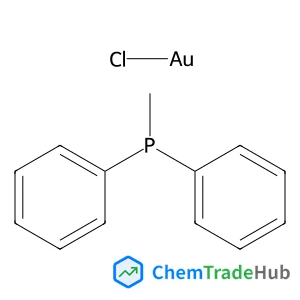
![4-[(2,4-Dihydroxyphenyl)diazenyl]-5-hydroxy-2,7-naphthalenedisulfonic acid structure](https://static.chemtradehub.com/structs/362/3627-01-8-79ac.webp "4-[(2,4-Dihydroxyphenyl)diazenyl]-5-hydroxy-2,7-naphthalenedisulfonic acid structure")