












Disproportionation of thermoelectric bismuth telluridenanowires as a result of the annealing process‡
Literature Information
Publication Date
2010-11-02
DOI
10.1039/C0CP00749H
Impact Factor
3.676
Authors
Andreas Berger, Laurent Cagnon, Ulrich Gösele, Kornelius Nielsch
View Original
Abstract
P-type thermoelectric bismuth telluride nanowires were fabricated by pulsed electrodeposition in anodic aluminium oxide (AAO) membranes. Subsequently, the nanowires were annealed at 423, 523 and 673 K in an inert atmosphere for 4 h. With increasing temperature, it was observed that the Te compound incongruently sublimates due to its high vapor pressure, leading to disproportionation (from Bi2Te3 to Bi4Te3via Bi4Te5). The crystalline structure of the nanowires was then investigated using XRD and SAED, with nanowire compositions investigated using an EDX attached to a TEM. The crystallinity of the nanowires was found to be enhanced with increased annealing temperature, and nanowires annealed at 673 K were stably maintained in the Bi4Te3 phase. Additionally, the Seebeck coefficient was determined and the thermopower of nanowires annealed at a temperature of 423 K was shown to be slightly enhanced. Significantly suppressed Seebeck values for annealing temperatures of 523 K and 673 K were also observed.
Recommended Journals
Related Literature
Linear humidity response of carbon dot-modified molybdenum disulfide
Guili He, Da Huang, Zhi Yang, Yutong Han, Jun Hu, Nantao Hu, Yanjie Su, Zhihua Zhou, Yafei Zhang, Yan Zhang
2018-01-04
Paper
DOI: 10.1039/C7CP07125F
The last link of the x-aminobutyric acid series: the five conformers of β-aminobutyric acid
I. León, I. Peña, C. Cabezas, E. R. Alonso, J. L. Alonso
2018-05-11
Paper
DOI: 10.1039/C8CP01734D
Electrolyte solvents for high voltage lithium ion batteries: ion correlation and specific anion effects in adiponitrile
Anand Narayanan Kirshnamoorthy, Kristina Oldiges, Andreas Heuer, Isidora Cekic-Laskovic, Christian Holm
2018-09-24
Paper
DOI: 10.1039/C8CP04102D
Temperature dependence of phonon properties in CVD MoS2 nanostructures – a statistical approach
Jarosław Judek, Arkadiusz P. Gertych, Karolina Czerniak, Mariusz Zdrojek
2018-05-16
Paper
DOI: 10.1039/C8CP01232F
Potential of polarizable force fields for predicting the separation performance of small hydrocarbons in M-MOF-74
Tim M. Becker, Azahara Luna-Triguero, Jose Manuel Vicent-Luna, Li-Chiang Lin, David Dubbeldam, Sofia Calero, Thijs J. H. Vlugt
2018-10-30
Paper
DOI: 10.1039/C8CP05750H
Modulation of the carrier mobility enhancement in Si/Ge core–shell nanowires under different interface confinements
Yan He, Gang Ouyang
2018-01-10
Communication
DOI: 10.1039/C7CP08259B
Process-morphology scaling relations quantify self-organization in capillary densified nanofiber arrays
Ashley L. Kaiser, Itai Y. Stein, Kehang Cui, Brian L. Wardle
2018-01-02
Communication
DOI: 10.1039/C7CP06869G
Anomalous fluorescence enhancement and fluorescence quenching of graphene quantum dots by single walled carbon nanotubes
Ruma Das, Gone Rajender
2018-01-10
Paper
DOI: 10.1039/C7CP06994D
You might also like
Compound Q&A
Is 6-(3-Fluorophenyl)picolinic acid (CAS: 887982-40-3) safe?
6-(3-Fluorophenyl)picolinic acid is generally considered safe for laboratory use...
887982-40-36-(3-Fluorophenyl)pi...
Compound Q&A
What industries use (3R)-3-Pyrrolidinol (CAS: 2799-21-5)?
(3R)-3-Pyrrolidinol is used in the pharmaceutical industry as a precursor for dr...
2799-21-5(3R)-3-Pyrrolidinol
Compound Q&A
What precautions should be taken when handling (4R,5R)-4,5-Diethoxycarbonyl-2,2-dimethyldioxolane (CAS: 59779-75-8)?
When handling (4R,5R)-4,5-Diethoxycarbonyl-2,2-dimethyldioxolane (CAS: 59779-75-...
59779-75-8(4R,5R)-4,5-Diethoxy...
Compound Q&A
How is 1-(6-Chloroimidazo[1,2-b]pyridazin-3-yl)ethanone (CAS: 90734-71-7) typically synthesized?
1-(6-Chloroimidazo[1,2-b]pyridazin-3-yl)ethanone is often synthesized via a mult...
90734-71-71-(6-Chloroimidazo[1...
Compound Q&A
What is the market or research trend for N-Ethyl-3,4-dimethylbenzylamine (CAS: 39180-83-1)?
The market for N-Ethyl-3,4-dimethylbenzylamine (CAS: 39180-83-1) remains steady,...
39180-83-1N-Ethyl-3,4-dimethyl...
Compound Q&A
What is Tert-butyl 3-(pyrrolidin-1-yl)azetidine-1-carboxylate (CAS: 1019008-21-9)?
Tert-butyl 3-(pyrrolidin-1-yl)azetidine-1-carboxylate is a chemical compound wit...
1019008-21-9Tert-butyl 3-(pyrrol...
Compound Q&A
What regulatory guidelines apply to 1-Bromo-3-chloro-2,4-dimethoxybenzene (CAS: 1228956-93-1)?
1-Bromo-3-chloro-2,4-dimethoxybenzene (CAS: 1228956-93-1) falls under the classi...
1228956-93-11-Bromo-3-chloro-2,4...
Compound Q&A
Is 8-Bromo-2-methyl-3,4-dihydroisoquinolin-1(2H)-one (CAS: 1368622-07-4) safe?
The safety of 8-Bromo-2-methyl-3,4-dihydroisoquinolin-1(2H)-one (CAS: 1368622-07...
1368622-07-48-Bromo-2-methyl-3,4...
Compound Q&A
Is Benzyl [(3S)-2,6-dioxo-3-piperidinyl]carbamate (CAS: 22785-43-9) safe?
Benzyl [(3S)-2,6-dioxo-3-piperidinyl]carbamate is generally safe when handled wi...
22785-43-9Benzyl [(3S)-2,6-dio...
Compound Q&A
How should 1-{[4-(4,4,5,5-Tetramethyl-1,3,2-dioxaborolan-2-yl)phenyl]sulfonyl}pyrrolidine (CAS: 928657-21-0) be stored?
1-{[4-(4,4,5,5-Tetramethyl-1,3,2-dioxaborolan-2-yl)phenyl]sulfonyl}pyrrolidine s...
928657-21-01-{[4-(4,4,5,5-Tetra...
Source Journal
Physical Chemistry Chemical Physics

CiteScore:
5.5
Self-citation Rate:
10.3%
Articles per Year:
3036
Physical Chemistry Chemical Physics (PCCP) is an international journal co-owned by 19 physical chemistry and physics societies from around the world. This journal publishes original, cutting-edge research in physical chemistry, chemical physics and biophysical chemistry. To be suitable for publication in PCCP, articles must include significant innovation and/or insight into physical chemistry; this is the most important criterion that reviewers and Editors will judge against when evaluating submissions. The journal has a broad scope and welcomes contributions spanning experiment, theory, computation and data science. Topical coverage includes spectroscopy, dynamics, kinetics, statistical mechanics, thermodynamics, electrochemistry, catalysis, surface science, quantum mechanics, quantum computing and machine learning. Interdisciplinary research areas such as polymers and soft matter, materials, nanoscience, energy, surfaces/interfaces, and biophysical chemistry are welcomed if they demonstrate significant innovation and/or insight into physical chemistry. Joined experimental/theoretical studies are particularly appreciated when complementary and based on up-to-date approaches.
Recommended Compounds
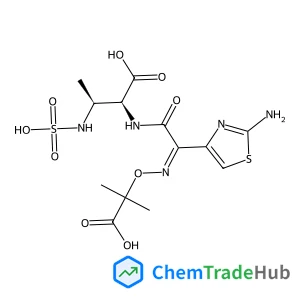
Aztreonam USP Related Compound A (Open-ring Aztreonam)
CAS Number:
87500-74-1
Molecular Formula:
C13H19N5O9S2
Recommended Suppliers





Disclaimer
This page provides academic journal information for reference and research purposes only. We are not affiliated with any journal publishers and do not handle publication submissions. For publication-related inquiries, please contact the respective journal publishers directly.
If you notice any inaccuracies in the information displayed, please contact us at support@chemtradehub.com. We will promptly review and address your concerns.