












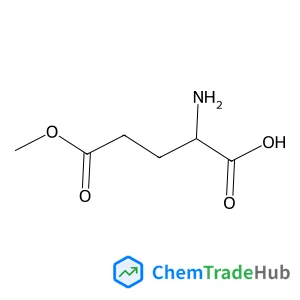
A genetic selection system for evolving enantioselectivity of enzymes
Literature Information
Publication Date
2008-09-22
DOI
10.1039/B814538E
Impact Factor
6.222
Authors
Manfred T. Reetz, Horst Höbenreich, Pankaj Soni, Layla Fernández
View Original
Abstract
As an alternative to screening in the directed evolution of enantioselective enzymes, a selection system has been implemented for a lipase-catalyzed hydrolytic kinetic resolution of a chiral ester.
Related Literature
Mesocellular polymer foams with unprecedented uniform large mesopores and high surface areas
Jinwoo Lee, Jaeyun Kim, Sang-Wook Kim, Chae-Ho Shin, Taeghwan Hyeon
2004-02-06
Communication
DOI: 10.1039/B310713B
Generation of strong, homochiral bases by electrochemical reduction of phenazine derivatives
A. Mateo Alonso, Roberto Horcajada, Helen J. Groombridge, Reshma Mandalia, Majid Motevalli, James H. P. Utley, Peter B. Wyatt
2004-01-20
Communication
DOI: 10.1039/B313995F
Living cationic polymerisation of styrene in an ionic liquid
R. Vijayaraghavan, D. R. MacFarlane
2004-02-13
Communication
DOI: 10.1039/B315100J
Confined organization of Au nanocrystals in glycolipidnanotube hollow cylinders
Bo Yang, Shoko Kamiya, Kaname Yoshida
2004-02-09
Communication
DOI: 10.1039/B313100A
Cooperative C–F⋯Si interaction in optically active helical polysilanes
Sun-Young Kim, Giseop Kwak, Yusuke Kawakami
2004-01-27
Communication
DOI: 10.1039/B314723A
Nickel-catalyzed highly chemoselective cocyclotrimerization of arynes with allenes: a novel method for 10-methylene-9,10-dihydrophenanthrenes
Jen-Chieh Hsieh, Dinesh Kumar Rayabarapu, Chien-Hong Cheng
2004-02-04
Communication
DOI: 10.1039/B315795D
First three examples of taxane-derived di-propellanes in Taxus canadensis needles
Qing Wen Shi, Françoise Sauriol, Alain Lesimple, Lolita O. Zamir
2004-02-04
Communication
DOI: 10.1039/B316051C
Metal organic chemical vapour deposition (MOCVD) of bone mineral like carbonated hydroxyapatite coatings
J. A. Darr, Z. X. Guo, V. Raman, M. Bououdina, I. U. Rehman
2004-02-13
Communication
DOI: 10.1039/B312855P
Modelling catalytic turnover frequencies in ionic liquids: the determination of the bimolecular rate constant for solvent displacement from [(C6H6)Cr(CO)2Solv] in 1-n-butyl-3-methylimidazolium hexafluorophosphate
Konrad Swiderski, Andrew McLean, Charles M. Gordon, D. H. Vaughan
2004-02-03
Communication
DOI: 10.1039/B315781D
Two contrasting ethynyl hydroboration pathways in the formation of a novel tris-hydroboration product from reaction of dimesitylborane with 2,5-diethynylpyridine
Christopher D. Entwistle, Andrei S. Batsanov, Judith A. K. Howard, Mark A. Fox, Todd B. Marder
2004-02-13
Communication
DOI: 10.1039/B316250H
You might also like
Compound Q&A
What are the main uses of 1H-Indazole-6-carbonitrile (CAS: 141290-59-7)?
1H-Indazole-6-carbonitrile finds applications in pharmaceuticals, where it serve...
141290-59-71H-Indazole-6-carbon...
Compound Q&A
How should waste containing Dioctyl (2E)-2-butenedioate (CAS: 2997-85-5) be handled?
Waste containing Dioctyl (2E)-2-butenedioate (CAS: 2997-85-5) should be collecte...
2997-85-5Dioctyl (2E)-2-buten...
Compound Q&A
What industries use Sodium [(1,2-benzoxazol-3-ylmethyl)sulfonyl]azanide (CAS: 68291-98-5)?
Sodium [(1,2-benzoxazol-3-ylmethyl)sulfonyl]azanide is primarily used in pharmac...
68291-98-5Sodium [(1,2-benzoxa...
Compound Q&A
Are there alternatives to Dimethyl 4-(4,4,5,5-tetramethyl-1,3,2-dioxaborolan-2-yl)-2,6-pyridinedicarboxylate (CAS: 741709-66-0) in synthesis?
Dimethyl 4-(4,4,5,5-tetramethyl-1,3,2-dioxaborolan-2-yl)-2,6-pyridinedicarboxyla...
741709-66-0Dimethyl 4-(4,4,5,5-...
Compound Q&A
How should waste containing 2-Fluoro-6-hydrazinopyridine (CAS: 80714-39-2) be handled?
Waste containing 2-Fluoro-6-hydrazinopyridine (CAS: 80714-39-2) should be manage...
80714-39-22-Fluoro-6-hydrazino...
Compound Q&A
What is 6-Formyl-2-pyridinecarboxylic acid (CAS: 499214-11-8)?
6-Formyl-2-pyridinecarboxylic acid is an organic compound with the molecular for...
499214-11-86-Formyl-2-pyridinec...
Compound Q&A
What is the market or research trend for 3-(3,4-dimethoxyphenyl)-2,5-dimethyl-N-(2-morpholin-4-ylethyl)pyrazolo[1,5-a]pyrimidin-7-amine (CAS: 900874-91-1)?
Research trends for this compound indicate a focus on its potential applications...
900874-91-13-(3,4-dimethoxyphen...
Compound Q&A
How is 9H-Tribenzo[b,d,f]azepine (CAS: 29875-73-8) typically synthesized?
9H-Tribenzo[b,d,f]azepine is typically synthesized via a multi-step process invo...
29875-73-89H-Tribenzo[b,d,f]az...
Compound Q&A
How is 1-Cyclopropyl-7-ethoxy-6-fluoro-8-methoxy-4-oxo-1,4-dihydro-3-quinolinecarboxylic acid (CAS: 1797982-51-4) typically synthesized?
1-Cyclopropyl-7-ethoxy-6-fluoro-8-methoxy-4-oxo-1,4-dihydro-3-quinolinecarboxyli...
1797982-51-41-Cyclopropyl-7-etho...
Compound Q&A
How should waste containing Methyl 3-oxo-1,2,3,4-tetrahydro-6-quinoxalinecarboxylate (CAS: 671820-52-3) be handled?
Waste containing Methyl 3-oxo-1,2,3,4-tetrahydro-6-quinoxalinecarboxylate (CAS: ...
671820-52-3Methyl 3-oxo-1,2,3,4...
Source Journal
Chemical Communications

CiteScore:
8.6
Self-citation Rate:
4.7%
Articles per Year:
2458
ChemComm publishes urgent research which is of outstanding significance and interest to experts in the field, while also appealing to the journal’s broad chemistry readership. Our communication format is ideally suited to short, urgent studies that are of such importance that they require accelerated publication. Our scope covers all topics in chemistry, and research at the interface of chemistry and other disciplines (such as materials science, nanoscience, physics, engineering and biology) where there is a significant novelty in the chemistry aspects. Major topic areas covered include: Analytical Chemistry Catalysis Chemical Biology and medicinal chemistry Computational Chemistry and Machine Learning Energy and sustainable chemistry Environmental Chemistry Green Chemistry Inorganic Chemistry Materials Chemistry Nanoscience Organic Chemistry Physical Chemistry Polymer Chemistry Supramolecular Chemistry
Recommended Compounds

![4-Penten-1-yl 2-[(2-furylmethyl)(1H-imidazol-1-ylcarbonyl)amino]butanoate structure](https://static.chemtradehub.com/structs/101/101903-30-4-ac34.webp "4-Penten-1-yl 2-[(2-furylmethyl)(1H-imidazol-1-ylcarbonyl)amino]butanoate structure")
4-Penten-1-yl 2-[(2-furylmethyl)(1H-imidazol-1-ylcarbonyl)amino]butanoate
CAS Number:
101903-30-4
Molecular Formula:
C18H23N3O4
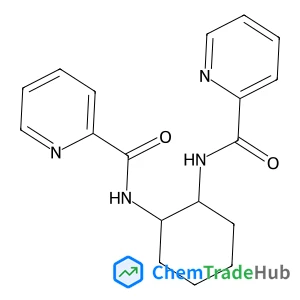
N,N'-(1R,2R)-1,2-Cyclohexanediyldi(2-pyridinecarboxamide)
CAS Number:
218290-24-5
Molecular Formula:
C18H20N4O2

Recommended Suppliers




Disclaimer
This page provides academic journal information for reference and research purposes only. We are not affiliated with any journal publishers and do not handle publication submissions. For publication-related inquiries, please contact the respective journal publishers directly.
If you notice any inaccuracies in the information displayed, please contact us at support@chemtradehub.com. We will promptly review and address your concerns.