












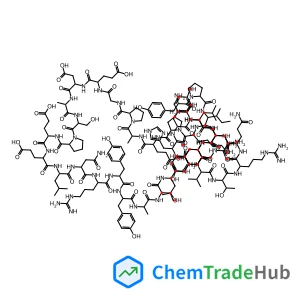
First three examples of taxane-derived di-propellanes in Taxus canadensis needles
Literature Information
Publication Date
2004-02-04
DOI
10.1039/B316051C
Impact Factor
6.222
Authors
Qing Wen Shi, Françoise Sauriol, Alain Lesimple, Lolita O. Zamir
View Original
Abstract
The first three examples of taxane-derived [3.3.3][3.4.5] di-propellanes isolated from the needles of a yew tree are reported. They differ in their acetylation pattern and their biogenesis from a putative taxane precursor is proposed.
Related Literature
Machine learning based feature engineering for thermoelectric materials by design
U. S. Vaitesswar, Tan Huang, Jose Recatala-Gomez, Shuo-Wang Yang
2024-01-03
Paper
DOI: 10.1039/D3DD00131H
A weakly ion pairing electrolyte designed for high voltage magnesium batteries
Rishabh D. Guha
2023-11-16
Paper
DOI: 10.1039/D3EE02861E
Deep generative design of porous organic cages via a variational autoencoder
Jiajun Zhou, Austin Mroz, Kim E. Jelfs
2023-10-26
Paper
DOI: 10.1039/D3DD00154G
Rare three-valence-band convergence leading to ultrahigh thermoelectric performance in all-scale hierarchical cubic SnTe
Fan Li, Xin Liu, Shu-Rong Li, Xiao-Fan Zhang, Ni Ma, Xin-Jing Li, Xin-Yun Lin, Haijun Wu
2023-11-09
Paper
DOI: 10.1039/D3EE02482B
Best practice for sampling in automated parallel synthesizers
2023-10-17
Paper
DOI: 10.1039/D3DD00074E
Simultaneous generation of furfuryl alcohol, formate, and H2 by co-electrolysis of furfuryl and HCHO over bifunctional CuAg bimetallic electrocatalysts at ultra-low voltage
Liang Zhao, Zheng Lv, Yue Shi, Shuanglong Zhou, Yan Liu, Jiani Han, Qi Zhang, Jianping Lai
2023-12-22
Paper
DOI: 10.1039/D3EE03761D
Photochromic single atom Ag/TiO2 catalysts for selective CO2 reduction to CH4
Chaogang Ban, Yang Wang, Yajie Feng, Zhouhao Zhu, Youyu Duan, Jiangping Ma, Xu Zhang, Xue Liu, Kai Zhou, Hanjun Zou
2023-12-07
Paper
DOI: 10.1039/D3EE02800C
Progress and future of the computational design of antimicrobial peptides (AMPs): bio-inspired functional molecules
Andrew S. Paluch, Marco Lattuada
2023-11-29
Perspective
DOI: 10.1039/D3DD00186E
Emerging consensus on net energy paves the way for improved integrated assessment modeling
Matthieu Auzanneau, Olivier Vidal, Emmanuel Prados, David J. Murphy, Roger W. Bentley, Michael Carbajales-Dale, Mikael Höök, Carey W. King, Florian Fizaine, Pierre Jacques, Matthew Kuperus Heun, Andrew Jackson, Charles Guay-Boutet, Emmanuel Aramendia, Hugo Le Boulzec, Charles A.S. Hall
2023-11-28
Opinion
DOI: 10.1039/D3EE00772C
You might also like
Compound Q&A
What are the main uses of 1H-Indazole-6-carbonitrile (CAS: 141290-59-7)?
1H-Indazole-6-carbonitrile finds applications in pharmaceuticals, where it serve...
141290-59-71H-Indazole-6-carbon...
Compound Q&A
How should waste containing Dioctyl (2E)-2-butenedioate (CAS: 2997-85-5) be handled?
Waste containing Dioctyl (2E)-2-butenedioate (CAS: 2997-85-5) should be collecte...
2997-85-5Dioctyl (2E)-2-buten...
Compound Q&A
What industries use Sodium [(1,2-benzoxazol-3-ylmethyl)sulfonyl]azanide (CAS: 68291-98-5)?
Sodium [(1,2-benzoxazol-3-ylmethyl)sulfonyl]azanide is primarily used in pharmac...
68291-98-5Sodium [(1,2-benzoxa...
Compound Q&A
Are there alternatives to Dimethyl 4-(4,4,5,5-tetramethyl-1,3,2-dioxaborolan-2-yl)-2,6-pyridinedicarboxylate (CAS: 741709-66-0) in synthesis?
Dimethyl 4-(4,4,5,5-tetramethyl-1,3,2-dioxaborolan-2-yl)-2,6-pyridinedicarboxyla...
741709-66-0Dimethyl 4-(4,4,5,5-...
Compound Q&A
How should waste containing 2-Fluoro-6-hydrazinopyridine (CAS: 80714-39-2) be handled?
Waste containing 2-Fluoro-6-hydrazinopyridine (CAS: 80714-39-2) should be manage...
80714-39-22-Fluoro-6-hydrazino...
Compound Q&A
What is 6-Formyl-2-pyridinecarboxylic acid (CAS: 499214-11-8)?
6-Formyl-2-pyridinecarboxylic acid is an organic compound with the molecular for...
499214-11-86-Formyl-2-pyridinec...
Compound Q&A
What is the market or research trend for 3-(3,4-dimethoxyphenyl)-2,5-dimethyl-N-(2-morpholin-4-ylethyl)pyrazolo[1,5-a]pyrimidin-7-amine (CAS: 900874-91-1)?
Research trends for this compound indicate a focus on its potential applications...
900874-91-13-(3,4-dimethoxyphen...
Compound Q&A
How is 9H-Tribenzo[b,d,f]azepine (CAS: 29875-73-8) typically synthesized?
9H-Tribenzo[b,d,f]azepine is typically synthesized via a multi-step process invo...
29875-73-89H-Tribenzo[b,d,f]az...
Compound Q&A
How is 1-Cyclopropyl-7-ethoxy-6-fluoro-8-methoxy-4-oxo-1,4-dihydro-3-quinolinecarboxylic acid (CAS: 1797982-51-4) typically synthesized?
1-Cyclopropyl-7-ethoxy-6-fluoro-8-methoxy-4-oxo-1,4-dihydro-3-quinolinecarboxyli...
1797982-51-41-Cyclopropyl-7-etho...
Compound Q&A
How should waste containing Methyl 3-oxo-1,2,3,4-tetrahydro-6-quinoxalinecarboxylate (CAS: 671820-52-3) be handled?
Waste containing Methyl 3-oxo-1,2,3,4-tetrahydro-6-quinoxalinecarboxylate (CAS: ...
671820-52-3Methyl 3-oxo-1,2,3,4...
Source Journal
Chemical Communications

CiteScore:
8.6
Self-citation Rate:
4.7%
Articles per Year:
2458
ChemComm publishes urgent research which is of outstanding significance and interest to experts in the field, while also appealing to the journal’s broad chemistry readership. Our communication format is ideally suited to short, urgent studies that are of such importance that they require accelerated publication. Our scope covers all topics in chemistry, and research at the interface of chemistry and other disciplines (such as materials science, nanoscience, physics, engineering and biology) where there is a significant novelty in the chemistry aspects. Major topic areas covered include: Analytical Chemistry Catalysis Chemical Biology and medicinal chemistry Computational Chemistry and Machine Learning Energy and sustainable chemistry Environmental Chemistry Green Chemistry Inorganic Chemistry Materials Chemistry Nanoscience Organic Chemistry Physical Chemistry Polymer Chemistry Supramolecular Chemistry
Recommended Compounds
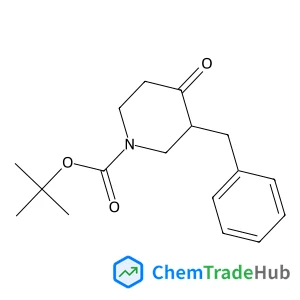
2-Methyl-2-propanyl 3-benzyl-4-oxo-1-piperidinecarboxylate
CAS Number:
193274-82-7
Molecular Formula:
C17H23NO3
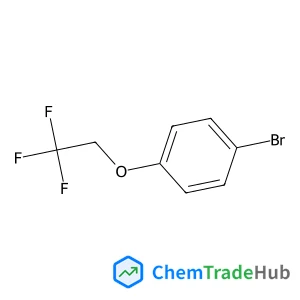
![Benzeneacetic acid, 2-[(2,6-dichlorophenyl)amino]-, compd. with 1-pyrrolidineethanol (1:1) structure](https://static.chemtradehub.com/structs/119/119623-66-4-5301.webp "Benzeneacetic acid, 2-[(2,6-dichlorophenyl)amino]-, compd. with 1-pyrrolidineethanol (1:1) structure")
Benzeneacetic acid, 2-[(2,6-dichlorophenyl)amino]-, compd. with 1-pyrrolidineethanol (1:1)
CAS Number:
119623-66-4
Molecular Formula:
C20H24Cl2N2O3
Recommended Suppliers





Disclaimer
This page provides academic journal information for reference and research purposes only. We are not affiliated with any journal publishers and do not handle publication submissions. For publication-related inquiries, please contact the respective journal publishers directly.
If you notice any inaccuracies in the information displayed, please contact us at support@chemtradehub.com. We will promptly review and address your concerns.