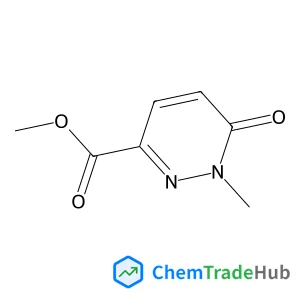
Methyl 1-methyl-6-oxo-1,6-dihydro-3-pyridazinecarboxylate
CAS Number:
74173-58-3
Molecular Formula:
C7H8N2O3
Carlos A. Jiménez-Hoyos, Benjamin G. Janesko, Gustavo E. Scuseria
We present an assessment of different density functionals, with emphasis on range-separated hybrids, for the prediction of fundamental and harmonic vibrational frequencies, infrared intensities, and Raman activities. Additionally, we discuss the basis set convergence of vibrational properties of H2O with long-range corrected hybrids. Our results show that B3LYP is the best functional for predicting vibrational frequencies (both fundamental and harmonic); the screened-PBE hybrid (HSE) density functional works best for infrared intensities, and the long-range corrected PBE (LC-ωPBE), M06-HF, and M06-L density functionals are almost as good as MP2 for predicting Raman activities. We show the predicted Raman spectrum of adenine as an example of a medium-size molecule where a DFT/Sadlej pVTZ calculation is affordable and compare our results against the experimental spectrum.
E. M. Neeman, T. R. Huet
DOI: 10.1039/C8CP04011G
Sujeet Dutta, S. Krishna Prasad
DOI: 10.1039/C8CP03603A
Xiao Tang, Weiguo Sun, Cheng Lu, Liangzhi Kou, Changfeng Chen
DOI: 10.1039/C8CP05778H
Mareike Wallrabe
DOI: 10.1039/C8CP06041J
Itziar Zubieta, Pablo Llombart, Carlos Vega, Eva G. Noya
DOI: 10.1039/C8CP04964E
M. Koroleva, D. Bidanov, E. Yurtov
DOI: 10.1039/C8CP05292A
Masoud Aryanpour, Nassim Rafiefard, Seyed Hossein Hosseini-Shokouh, Somayeh Fardindoost
DOI: 10.1039/C8CP05026K
Firas Faisal, Corinna Stumm, Manon Bertram, Tobias Wähler, Ralf Schuster, Feifei Xiang, Ole Lytken, Ioannis Katsounaros, Karl J. J. Mayrhofer, M. Alexander Schneider, Olaf Brummel
DOI: 10.1039/C8CP03770A
Jessica Patel, Mihirsinh Chauhan, Nikita Vashistha, Mahesh Kumar, Brijesh Tripathi, Manoj Kumar Pandey
DOI: 10.1039/C8CP05518A
Shu R. Huang, Yang Liu, František Tureček
DOI: 10.1039/C8CP06893C
3-(2-Bromoimidazo[2,1-b]thiazol-6-yl)propanoic acid hydrochloride is typically s...
2-Isopropyl-1,3-dioxane-5-carboxylic acid is typically synthesized by the carbox...
Alisporivir (CAS: 254435-95-5) is an antiviral medication used in the treatment ...
[1,2,4]triazolo[3,4-a]phthalazine (CAS: 234-80-0) is a crystalline compound with...
Regulatory guidelines for (2S)-5-Hydroxy-2-(4-hydroxyphenyl)-4-oxo-3,4-dihydro-2...
2,2-Difluorocyclohexanamine hydrochloride is generally safe when handled under p...
3-Nitro-2-phenylthiophene is primarily used in the synthesis of other organic co...
1-(Trifluoroacetyl)-4-piperidinecarbonitrile (CAS: 77940-79-5) is a colorless to...
Research and market trends for 1,3,6,8-Tetranitro-9H-carbazole (CAS: 4543-33-3) ...
Waste containing Dibenzo[b,d]thiophen-1-ylboronic acid (CAS: 1245943-60-5) shoul...

Physical Chemistry Chemical Physics (PCCP) is an international journal co-owned by 19 physical chemistry and physics societies from around the world. This journal publishes original, cutting-edge research in physical chemistry, chemical physics and biophysical chemistry. To be suitable for publication in PCCP, articles must include significant innovation and/or insight into physical chemistry; this is the most important criterion that reviewers and Editors will judge against when evaluating submissions. The journal has a broad scope and welcomes contributions spanning experiment, theory, computation and data science. Topical coverage includes spectroscopy, dynamics, kinetics, statistical mechanics, thermodynamics, electrochemistry, catalysis, surface science, quantum mechanics, quantum computing and machine learning. Interdisciplinary research areas such as polymers and soft matter, materials, nanoscience, energy, surfaces/interfaces, and biophysical chemistry are welcomed if they demonstrate significant innovation and/or insight into physical chemistry. Joined experimental/theoretical studies are particularly appreciated when complementary and based on up-to-date approaches.