


Amperometric sensing of ascorbic acid using a disposable screen-printed electrode modified with electrografted o-aminophenol film
Literature Information
Publication Date
2008-09-27
DOI
10.1039/B808499H
Impact Factor
4.616
Authors
Hossam M. Nassef, Laia Civit, Alex Fragoso
View Original
Abstract
Electrode modification by electrochemical reduction of diazonium salts of different aryl derivatives is useful for catalytic, analytical and biotechnological applications. A simple and sensitive method for the electrocatalytic detection of ascorbic acid using disposable screen-printed carbon electrodes modified with an electrografted o-aminophenol film, via the electrochemical reduction of its in situ prepared diazonium salts in aqueous solution, is presented. The performance of two commercial SPEs as substrates for grafting of diazonium films has been compared and the grafting process optimized with respect to deposition time and diazonium salt concentration, with the modified surfaces being characterised using cyclic voltammetry. The functionalised screen-printed electrodes demonstrated an excellent electrocatalytic activity towards the oxidation of ascorbic acid shifting the overpotential from 298 and 544 mV to 160 and 244 mV, respectively vs. Ag/AgCl. DC amperometric measurements were carried out for the quantitative determination of ascorbic acid using the modified electrodes. The catalytic oxidation peak current was linearly dependent on the ascorbic acid concentration in the range of 2–20 μM, with a correlation coefficient 0.998, and a limit of detection of 0.86 μM was obtained with an excellent reproducibility (RSD% = 1.98, n = 8). The functionalised screen-printed electrodes exhibited notable surface stability, and were used as a simple and precise disposable sensor for the selective determination of ascorbic acid.
Recommended Journals

Journal of Saudi Chemical Society

Russian Journal of Bioorganic Chemistry

Chemical Communications

Journal of Peptide Science

Current Opinion in Solid State & Materials Science

Acta Materialia

Russian Journal of Organic Chemistry

Chemistry Education Research and Practice

Journal of Natural Medicines

New Journal of Chemistry
Related Literature
Vibrational models for a crystal with 36 water molecules in the unit cell: IR spectra from experiment and calculation
Pavlin D. Mitev, Anders Eriksson, Jean-François Boily, Kersti Hermansson
2015-03-25
Paper
DOI: 10.1039/C5CP00390C
CO2 conversion to methanol on Cu(i) oxide nanolayers and clusters: an electronic structure insight into the reaction mechanism
Ellie L. Uzunova, Nicola Seriani, Hans Mikosch
2015-03-24
Paper
DOI: 10.1039/C5CP01267H
On the importance of shear dissipative forces in coarse-grained dynamics of molecular liquids
Sergei Izvekov, Betsy M. Rice
2015-03-23
Paper
DOI: 10.1039/C4CP06116K
A computational and conceptual DFT study on the mechanism of hydrogen activation by novel frustrated Lewis pairs
2015-03-13
Paper
DOI: 10.1039/C5CP00306G
How ABA block polymers activate cytochrome c in toluene: molecular dynamics simulation and experimental observation
Gong Chen, Xian Kong, Jingying Zhu, Diannan Lu, Zheng Liu
2015-03-12
Paper
DOI: 10.1039/C5CP00418G
Oligomeric interface modifiers in hybrid polymer solar cell prototypes investigated by fluorescence voltage spectroscopy
B. Reeja-Jayan, Katherine A. Koen, Robert J. Ono, David A. Vanden Bout, Christopher W. Bielawski, Arumugam Manthiram
2015-03-18
Paper
DOI: 10.1039/C5CP00012B
Influence of H- and OH-adsorbates on the ethanol oxidation reaction – a DEMS study
Maria Sol Rau, Carsten Cremers
2015-03-30
Paper
DOI: 10.1039/C5CP00132C
Adsorption of polyelectrolytes to like-charged substrates induced by multivalent counterions as exemplified by poly(styrene sulfonate) and silica
Plinio Maroni, Michal Borkovec
2015-03-23
Communication
DOI: 10.1039/C5CP00910C
Order and disorder around Cr3+ in chromium doped persistent luminescent AB2O4 spinels
Neelima Basavaraju, Kaustubh R. Priolkar, Didier Gourier, Aurélie Bessière, Bruno Viana
2015-03-24
Paper
DOI: 10.1039/C5CP01097G
Rydberg and valence state excitation dynamics: a velocity map imaging study involving the E–V state interaction in HBr
Dimitris Zaouris, Andreas Kartakoullis, Pavle Glodic, Peter C. Samartzis, Helgi Rafn Hróðmarsson, Ágúst Kvaran
2015-03-16
Paper
DOI: 10.1039/C5CP00748H
You might also like
Compound Q&A
Is 2-(2-chloroacetamido)-3-phenylpropanoic acid (CAS: 7765-11-9) safe?
2-(2-Chloroacetamido)-3-phenylpropanoic acid (CAS: 7765-11-9) is generally consi...
7765-11-92-(2-chloroacetamido...
Compound Q&A
Is 2-(Benzyloxy)-5-bromobenzoic acid (CAS: 62176-31-2) safe?
2-(Benzyloxy)-5-bromobenzoic acid can be handled safely if appropriate precautio...
62176-31-22-(Benzyloxy)-5-brom...
Compound Q&A
What is (4-Methyl-1,2,5-oxadiazol-3-yl)methanamine hydrochloride (CAS: 1159825-48-5)?
(4-Methyl-1,2,5-oxadiazol-3-yl)methanamine hydrochloride is a chemical compound ...
1159825-48-5(4-Methyl-1,2,5-oxad...
Compound Q&A
What is 2-(5-Hexylthiophen-2-yl)-4,4,5,5-tetramethyl-1,3,2-dioxaborolane (CAS: 917985-54-7)?
2-(5-Hexylthiophen-2-yl)-4,4,5,5-tetramethyl-1,3,2-dioxaborolane (CAS: 917985-54...
917985-54-72-(5-Hexylthiophen-2...
Compound Q&A
Are there alternatives to 4-(8-Methyl-9H-1,3-dioxolo[4,5-h][2,3]benzodiazepin-5-yl)benzenamine (CAS: 102771-26-6) in synthesis?
While 4-(8-Methyl-9H-1,3-dioxolo[4,5-h][2,3]benzodiazepin-5-yl)benzenamine (CAS:...
102771-26-64-(8-Methyl-9H-1,3-d...
Compound Q&A
What is the market or research trend for tert-butyl 3-hydroxy-4,5,7,8-tetrahydro-2H-pyrazolo[3,4-d]azepine-6-carboxylate (CAS: 851376-80-2)?
The market for tert-butyl 3-hydroxy-4,5,7,8-tetrahydro-2H-pyrazolo[3,4-d]azepine...
851376-80-2tert-butyl 3-hydroxy...
Compound Q&A
How should waste containing 3,5-Diamino-1H-pyrazole-4-carbonitrile (CAS: 6844-58-2) be handled?
Waste containing 3,5-Diamino-1H-pyrazole-4-carbonitrile (CAS: 6844-58-2) should ...
6844-58-23,5-Diamino-1H-pyraz...
Compound Q&A
How is (6-Fluoro-3-pyridinyl)boronic acid (CAS: 351019-18-6) typically synthesized?
(6-Fluoro-3-pyridinyl)boronic acid can be synthesized through the reaction of 6-...
351019-18-6(6-Fluoro-3-pyridiny...
Compound Q&A
What industries use Dibenzyl carbonimidoylbiscarbamate (CAS: 10065-79-9)?
Dibenzyl carbonimidoylbiscarbamate (CAS: 10065-79-9) finds applications in vario...
10065-79-9Dibenzyl carbonimido...
Compound Q&A
What is the market or research trend for (beta,beta,2,3,4,5,6-~2~H_7_)Phenylalanine (CAS: 74228-83-4)?
The market for (beta,beta,2,3,4,5,6-~2~H_7_)Phenylalanine (CAS: 74228-83-4) is g...
74228-83-4(beta,beta,2,3,4,5,6...
Source Journal
Analyst

CiteScore:
7.8
Self-citation Rate:
5.6%
Articles per Year:
653
Analyst publishes analytical and bioanalytical research that reports premier fundamental discoveries and inventions, and the applications of those discoveries, unconfined by traditional discipline barriers.
Recommended Compounds
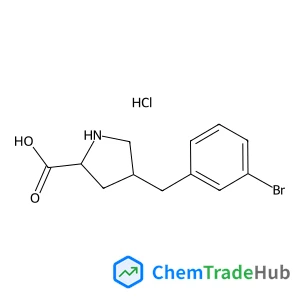
(2S,4R)-4-(3-Bromobenzyl)pyrrolidine-2-carboxylic acid hydrochloride
CAS Number:
1049734-10-2
Molecular Formula:
C12H15BrClNO2
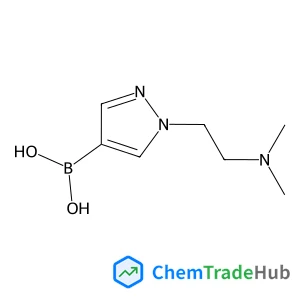
(1-(2-(Dimethylamino)ethyl)-1H-pyrazol-4-yl)boronic acid
CAS Number:
1086063-73-1
Molecular Formula:
C7H14BN3O2
Recommended Suppliers





Disclaimer
This page provides academic journal information for reference and research purposes only. We are not affiliated with any journal publishers and do not handle publication submissions. For publication-related inquiries, please contact the respective journal publishers directly.
If you notice any inaccuracies in the information displayed, please contact us at support@chemtradehub.com. We will promptly review and address your concerns.