


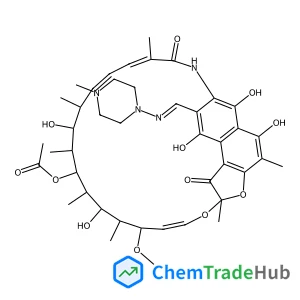
A computational and conceptual DFT study on the mechanism of hydrogen activation by novel frustrated Lewis pairs
Literature Information
Publication Date
2015-03-13
DOI
10.1039/C5CP00306G
Impact Factor
3.676
Authors
View Original
Abstract
A computational and conceptual density functional theory (DFT) study on the mechanism of molecular hydrogen activation by a set of three frustrated Lewis pairs (FLPs) was performed at the ωB97X-D/6-311G(d,p) level of theory. A reduced model and other two prototypes derived from experimental data, based on the donor nitrogen and acceptor boron atoms, were used. Analysis based on the energy results, geometries and the global electron density transfer at the TSs made it possible to obtain some interesting conclusions: (i) despite the well-known very low reactivity of molecular hydrogen, the catalytic effectiveness of the three FLPs produces reactions with almost unappreciable activation energies; (ii) the reactions, being exothermic, follow a one-step mechanism via polarised TSs; (iii) there are neither substituent effects on the kinetics nor on the thermodynamics of these reactions; (iv) the activation of molecular hydrogen seems to be attained when the N–B distance in the FLP derivatives is around 2.74 Å; and (v) the proposed FLP model is consistent with the behaviour of the experimental prototypes. Finally, the ability of the three FLPs as efficient catalysts was evaluated studying the hydrogenation of acetylene to yield ethylene.
Recommended Journals

Journal of Natural Medicines

Nature Medicine

Journal of Saudi Chemical Society

Acta Materialia

Russian Journal of Bioorganic Chemistry

Russian Chemical Bulletin

Current Opinion in Solid State & Materials Science

Chemistry Education Research and Practice

Russian Journal of Applied Chemistry

Current Opinion in Colloid & Interface Science
Related Literature
Water adsorption and O-defect formation on Fe2O3(0001) surfaces
Roman Ovcharenko, Elena Voloshina, Joachim Sauer
2016-08-31
Paper
DOI: 10.1039/C6CP05313K
Photocycloaddition reaction of atropisomeric maleimides: mechanism and selectivity
Xue-Ping Chang, Yiying Zheng, Ganglong Cui, Wei-Hai Fang, Walter Thiel
2016-08-16
Paper
DOI: 10.1039/C6CP04919B
Retracted Article: Comprehensive insights into the charge dynamics process and excellent photoelectric properties of heterojunction solar cells
Xiangyang Liu, Shun Wang, Haiwu Zheng, Xiuying Cheng, Yuzong Gu
2016-07-27
Paper
DOI: 10.1039/C6CP02656G
Hard magnetism in structurally engineered silica nanocomposite
Jeffrey I. Zink
2016-08-02
Paper
DOI: 10.1039/C6CP04843A
Life in the light: nucleic acid photoproperties as a legacy of chemical evolution
Ashley A. Beckstead, Yuyuan Zhang, Mattanjah S. de Vries, Bern Kohler
2016-08-11
Paper
DOI: 10.1039/C6CP04230A
Is the manifestation of the local dynamics in the spin–lattice NMR relaxation in dendrimers sensitive to excluded volume interactions?
2016-08-17
Paper
DOI: 10.1039/C6CP01520D
Stepwise collapse of highly overlapping electrical double layers
N. D. Spencer
2016-08-12
Paper
DOI: 10.1039/C6CP04222H
First hyperpolarizability of para-aminoaniline induced by a variety of gold nano particles
Stine T. Olsen, Kurt V. Mikkelsen
2016-08-18
Paper
DOI: 10.1039/C6CP01078D
Utilization of the Donnan potential induced by reverse salt flux in pressure retarded osmosis systems
Chul Ho Park, Sung Jo Kwak, Joo-Youn Nam, Moon Seok Jang, Jung-Hyun Lee
2016-08-15
Communication
DOI: 10.1039/C6CP03939A
Peptides@mica: from affinity to adhesion mechanism
T. Gladytz, R. Hassert, M. Pagel, H. J. Risselada, S. Naumov, A. G. Beck-Sickinger
2016-07-22
Paper
DOI: 10.1039/C6CP03325C
You might also like
Compound Q&A
Is 2-(2-chloroacetamido)-3-phenylpropanoic acid (CAS: 7765-11-9) safe?
2-(2-Chloroacetamido)-3-phenylpropanoic acid (CAS: 7765-11-9) is generally consi...
7765-11-92-(2-chloroacetamido...
Compound Q&A
Is 2-(Benzyloxy)-5-bromobenzoic acid (CAS: 62176-31-2) safe?
2-(Benzyloxy)-5-bromobenzoic acid can be handled safely if appropriate precautio...
62176-31-22-(Benzyloxy)-5-brom...
Compound Q&A
What is (4-Methyl-1,2,5-oxadiazol-3-yl)methanamine hydrochloride (CAS: 1159825-48-5)?
(4-Methyl-1,2,5-oxadiazol-3-yl)methanamine hydrochloride is a chemical compound ...
1159825-48-5(4-Methyl-1,2,5-oxad...
Compound Q&A
What is 2-(5-Hexylthiophen-2-yl)-4,4,5,5-tetramethyl-1,3,2-dioxaborolane (CAS: 917985-54-7)?
2-(5-Hexylthiophen-2-yl)-4,4,5,5-tetramethyl-1,3,2-dioxaborolane (CAS: 917985-54...
917985-54-72-(5-Hexylthiophen-2...
Compound Q&A
Are there alternatives to 4-(8-Methyl-9H-1,3-dioxolo[4,5-h][2,3]benzodiazepin-5-yl)benzenamine (CAS: 102771-26-6) in synthesis?
While 4-(8-Methyl-9H-1,3-dioxolo[4,5-h][2,3]benzodiazepin-5-yl)benzenamine (CAS:...
102771-26-64-(8-Methyl-9H-1,3-d...
Compound Q&A
What is the market or research trend for tert-butyl 3-hydroxy-4,5,7,8-tetrahydro-2H-pyrazolo[3,4-d]azepine-6-carboxylate (CAS: 851376-80-2)?
The market for tert-butyl 3-hydroxy-4,5,7,8-tetrahydro-2H-pyrazolo[3,4-d]azepine...
851376-80-2tert-butyl 3-hydroxy...
Compound Q&A
How should waste containing 3,5-Diamino-1H-pyrazole-4-carbonitrile (CAS: 6844-58-2) be handled?
Waste containing 3,5-Diamino-1H-pyrazole-4-carbonitrile (CAS: 6844-58-2) should ...
6844-58-23,5-Diamino-1H-pyraz...
Compound Q&A
How is (6-Fluoro-3-pyridinyl)boronic acid (CAS: 351019-18-6) typically synthesized?
(6-Fluoro-3-pyridinyl)boronic acid can be synthesized through the reaction of 6-...
351019-18-6(6-Fluoro-3-pyridiny...
Compound Q&A
What industries use Dibenzyl carbonimidoylbiscarbamate (CAS: 10065-79-9)?
Dibenzyl carbonimidoylbiscarbamate (CAS: 10065-79-9) finds applications in vario...
10065-79-9Dibenzyl carbonimido...
Compound Q&A
What is the market or research trend for (beta,beta,2,3,4,5,6-~2~H_7_)Phenylalanine (CAS: 74228-83-4)?
The market for (beta,beta,2,3,4,5,6-~2~H_7_)Phenylalanine (CAS: 74228-83-4) is g...
74228-83-4(beta,beta,2,3,4,5,6...
Source Journal
Physical Chemistry Chemical Physics

CiteScore:
5.5
Self-citation Rate:
10.3%
Articles per Year:
3036
Physical Chemistry Chemical Physics (PCCP) is an international journal co-owned by 19 physical chemistry and physics societies from around the world. This journal publishes original, cutting-edge research in physical chemistry, chemical physics and biophysical chemistry. To be suitable for publication in PCCP, articles must include significant innovation and/or insight into physical chemistry; this is the most important criterion that reviewers and Editors will judge against when evaluating submissions. The journal has a broad scope and welcomes contributions spanning experiment, theory, computation and data science. Topical coverage includes spectroscopy, dynamics, kinetics, statistical mechanics, thermodynamics, electrochemistry, catalysis, surface science, quantum mechanics, quantum computing and machine learning. Interdisciplinary research areas such as polymers and soft matter, materials, nanoscience, energy, surfaces/interfaces, and biophysical chemistry are welcomed if they demonstrate significant innovation and/or insight into physical chemistry. Joined experimental/theoretical studies are particularly appreciated when complementary and based on up-to-date approaches.
Recommended Compounds
![Ethyl thieno[3,2-f]quinoline-2-carboxylate structure](https://static.chemtradehub.com/structs/299/29948-26-3-f62b.webp "Ethyl thieno[3,2-f]quinoline-2-carboxylate structure")
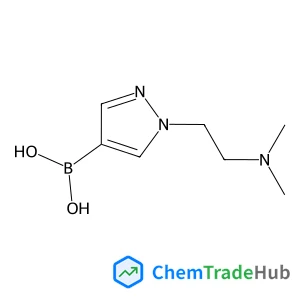
(1-(2-(Dimethylamino)ethyl)-1H-pyrazol-4-yl)boronic acid
CAS Number:
1086063-73-1
Molecular Formula:
C7H14BN3O2
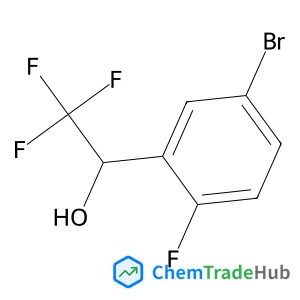
1-(5-Bromo-2-fluorophenyl)-2,2,2-trifluoroethanol
CAS Number:
1039827-16-1
Molecular Formula:
C8H5BrF4O
Recommended Suppliers





Disclaimer
This page provides academic journal information for reference and research purposes only. We are not affiliated with any journal publishers and do not handle publication submissions. For publication-related inquiries, please contact the respective journal publishers directly.
If you notice any inaccuracies in the information displayed, please contact us at support@chemtradehub.com. We will promptly review and address your concerns.