


Order and disorder around Cr3+ in chromium doped persistent luminescent AB2O4 spinels
Literature Information
Publication Date
2015-03-24
DOI
10.1039/C5CP01097G
Impact Factor
3.676
Authors
Neelima Basavaraju, Kaustubh R. Priolkar, Didier Gourier, Aurélie Bessière, Bruno Viana
View Original
Abstract
The X-ray absorption near edge structure (XANES) spectroscopy technique is used to better understand the charging and decharging processes of the persistent luminescence in the Cr3+doped AB2O4 spinels (A = Zn, Mg and B = Ga and Al) with low photon energy excitation by visible light. Cr K edge XANES spectra have been simulated for different near neighbour environments around the Cr3+ recombination centres and compared with the experimental curve. In the Cr3+:ZnGa2O4 compound, the Cr3+ local structure corresponds mostly to that of a normal spinel (∼70%), while the rest comprises of a distorted octahedral environment arising from cationic site inversion and a contribution from chromium clustering. This local structure is considerably different in Cr3+:MgGa2O4 and Cr3+:ZnAl2O4, where, for both cases, chromium clustering represents the main contribution. The strong correlation between the intensity of persistent luminescence and the percentage of Cr in clusters leads us to infer that the presence of Cr clusters is responsible for the decrease of the intensity of the visible light induced persistent luminescence in the Cr3+ doped AB2O4 spinels.
Recommended Journals

Current Opinion in Solid State & Materials Science

Crystallography Reports

New Journal of Chemistry

Drug Discovery Today

Russian Journal of General Chemistry

Russian Journal of Applied Chemistry

Chemical Communications

Organic Process Research & Development

Journal of Natural Medicines

Journal of Saudi Chemical Society
Related Literature
Influence of solvent polarity on the structure of drop-cast electroactive tetra(aniline)-surfactant thin films
Thomas G. Dane, Julia E. Bartenstein, Beatrice Sironi, Benjamin M. Mills, O. Alexander Bell, J. Emyr Macdonald, Thomas Arnold, Charl F. J. Faul, Wuge H. Briscoe
2016-08-12
Paper
DOI: 10.1039/C6CP05221E
Peptides@mica: from affinity to adhesion mechanism
T. Gladytz, R. Hassert, M. Pagel, H. J. Risselada, S. Naumov, A. G. Beck-Sickinger
2016-07-22
Paper
DOI: 10.1039/C6CP03325C
Utilization of the Donnan potential induced by reverse salt flux in pressure retarded osmosis systems
Chul Ho Park, Sung Jo Kwak, Joo-Youn Nam, Moon Seok Jang, Jung-Hyun Lee
2016-08-15
Communication
DOI: 10.1039/C6CP03939A
A DFT study on dihydropyrazine annulated linear polyacenes: aromaticity, stability and HOMO–LUMO energy modulation
Ramachandran Rakhi, Cherumuttathu H. Suresh
2016-08-15
Paper
DOI: 10.1039/C6CP03723B
The photoenhanced aging process of soot by the heterogeneous ozonization reaction
2016-08-01
Paper
DOI: 10.1039/C6CP03938C
Biaxial nematic phase stability and demixing behaviour in monolayers of rod–plate mixtures
Yuri Martínez-Ratón, Miguel González-Pinto, Enrique Velasco
2016-08-15
Paper
DOI: 10.1039/C6CP05022K
Structural characteristics of hydrated protons in the conductive channels: effects of confinement and fluorination studied by molecular dynamics simulation
Ning Zhang, Yuechun Song, Xuehua Ruan, Xiaoming Yan, Zhao Liu, Zhuanglin Shen, Xuemei Wu
2016-07-05
Paper
DOI: 10.1039/C6CP03012B
Hydrogen bonds in methane–water clusters
Juan-Ramón Salazar-Cano, Alfredo Guevara-García, Rubicelia Vargas, Albeiro Restrepo, Jorge Garza
2016-07-29
Paper
DOI: 10.1039/C6CP04086A
Nanostructured CuS networks composed of interconnected nanoparticles for asymmetric supercapacitors
Wenbin Fu, Weihua Han, Heming Zha, Junfeng Mei, Yunxia Li, Zemin Zhang, Erqing Xie
2016-08-08
Paper
DOI: 10.1039/C6CP02228F
C2H4 adsorption on Cu(210), revisited: bonding nature and coverage effects
Shuichi Amino, Elvis Arguelles, Michio Okada
2016-07-27
Paper
DOI: 10.1039/C6CP02488B
You might also like
Compound Q&A
Is 2-(2-chloroacetamido)-3-phenylpropanoic acid (CAS: 7765-11-9) safe?
2-(2-Chloroacetamido)-3-phenylpropanoic acid (CAS: 7765-11-9) is generally consi...
7765-11-92-(2-chloroacetamido...
Compound Q&A
Is 2-(Benzyloxy)-5-bromobenzoic acid (CAS: 62176-31-2) safe?
2-(Benzyloxy)-5-bromobenzoic acid can be handled safely if appropriate precautio...
62176-31-22-(Benzyloxy)-5-brom...
Compound Q&A
What is (4-Methyl-1,2,5-oxadiazol-3-yl)methanamine hydrochloride (CAS: 1159825-48-5)?
(4-Methyl-1,2,5-oxadiazol-3-yl)methanamine hydrochloride is a chemical compound ...
1159825-48-5(4-Methyl-1,2,5-oxad...
Compound Q&A
What is 2-(5-Hexylthiophen-2-yl)-4,4,5,5-tetramethyl-1,3,2-dioxaborolane (CAS: 917985-54-7)?
2-(5-Hexylthiophen-2-yl)-4,4,5,5-tetramethyl-1,3,2-dioxaborolane (CAS: 917985-54...
917985-54-72-(5-Hexylthiophen-2...
Compound Q&A
Are there alternatives to 4-(8-Methyl-9H-1,3-dioxolo[4,5-h][2,3]benzodiazepin-5-yl)benzenamine (CAS: 102771-26-6) in synthesis?
While 4-(8-Methyl-9H-1,3-dioxolo[4,5-h][2,3]benzodiazepin-5-yl)benzenamine (CAS:...
102771-26-64-(8-Methyl-9H-1,3-d...
Compound Q&A
What is the market or research trend for tert-butyl 3-hydroxy-4,5,7,8-tetrahydro-2H-pyrazolo[3,4-d]azepine-6-carboxylate (CAS: 851376-80-2)?
The market for tert-butyl 3-hydroxy-4,5,7,8-tetrahydro-2H-pyrazolo[3,4-d]azepine...
851376-80-2tert-butyl 3-hydroxy...
Compound Q&A
How should waste containing 3,5-Diamino-1H-pyrazole-4-carbonitrile (CAS: 6844-58-2) be handled?
Waste containing 3,5-Diamino-1H-pyrazole-4-carbonitrile (CAS: 6844-58-2) should ...
6844-58-23,5-Diamino-1H-pyraz...
Compound Q&A
How is (6-Fluoro-3-pyridinyl)boronic acid (CAS: 351019-18-6) typically synthesized?
(6-Fluoro-3-pyridinyl)boronic acid can be synthesized through the reaction of 6-...
351019-18-6(6-Fluoro-3-pyridiny...
Compound Q&A
What industries use Dibenzyl carbonimidoylbiscarbamate (CAS: 10065-79-9)?
Dibenzyl carbonimidoylbiscarbamate (CAS: 10065-79-9) finds applications in vario...
10065-79-9Dibenzyl carbonimido...
Compound Q&A
What is the market or research trend for (beta,beta,2,3,4,5,6-~2~H_7_)Phenylalanine (CAS: 74228-83-4)?
The market for (beta,beta,2,3,4,5,6-~2~H_7_)Phenylalanine (CAS: 74228-83-4) is g...
74228-83-4(beta,beta,2,3,4,5,6...
Source Journal
Physical Chemistry Chemical Physics

CiteScore:
5.5
Self-citation Rate:
10.3%
Articles per Year:
3036
Physical Chemistry Chemical Physics (PCCP) is an international journal co-owned by 19 physical chemistry and physics societies from around the world. This journal publishes original, cutting-edge research in physical chemistry, chemical physics and biophysical chemistry. To be suitable for publication in PCCP, articles must include significant innovation and/or insight into physical chemistry; this is the most important criterion that reviewers and Editors will judge against when evaluating submissions. The journal has a broad scope and welcomes contributions spanning experiment, theory, computation and data science. Topical coverage includes spectroscopy, dynamics, kinetics, statistical mechanics, thermodynamics, electrochemistry, catalysis, surface science, quantum mechanics, quantum computing and machine learning. Interdisciplinary research areas such as polymers and soft matter, materials, nanoscience, energy, surfaces/interfaces, and biophysical chemistry are welcomed if they demonstrate significant innovation and/or insight into physical chemistry. Joined experimental/theoretical studies are particularly appreciated when complementary and based on up-to-date approaches.
Recommended Compounds
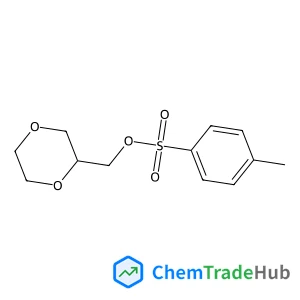
(S)-(1,4-Dioxan-2-yl)methyl 4-methylbenzenesulfonate
CAS Number:
917882-64-5
Molecular Formula:
C12H16O5S
![19-[Chloro(dideuterio)methyl]-19-deuterio-20,20-dideuteriooxyoctatriacontane-18,21-dione structure](https://static.chemtradehub.com/structs/124/1246818-85-8-6244.webp "19-[Chloro(dideuterio)methyl]-19-deuterio-20,20-dideuteriooxyoctatriacontane-18,21-dione structure")
19-[Chloro(dideuterio)methyl]-19-deuterio-20,20-dideuteriooxyoctatriacontane-18,21-dione
CAS Number:
1246818-85-8
Molecular Formula:
C39H75ClO4
Recommended Suppliers





Disclaimer
This page provides academic journal information for reference and research purposes only. We are not affiliated with any journal publishers and do not handle publication submissions. For publication-related inquiries, please contact the respective journal publishers directly.
If you notice any inaccuracies in the information displayed, please contact us at support@chemtradehub.com. We will promptly review and address your concerns.