


![Ethyl thieno[3,2-f]quinoline-2-carboxylate structure](https://static.chemtradehub.com/structs/299/29948-26-3-f62b.webp "Ethyl thieno[3,2-f]quinoline-2-carboxylate structure")
CO2 conversion to methanol on Cu(i) oxide nanolayers and clusters: an electronic structure insight into the reaction mechanism
Literature Information
Publication Date
2015-03-24
DOI
10.1039/C5CP01267H
Impact Factor
3.676
Authors
Ellie L. Uzunova, Nicola Seriani, Hans Mikosch
View Original
Abstract
The mechanism of carbon dioxide reduction to methanol on Cu(I) oxide nanolayers and clusters using water as the source of hydrogen was traced using density functional theory. The nature of the active sites is revealed, namely the role of surface copper dimers, which are present on the Cu2O(001) surface and in the nanoclusters of size Cu32O16 and Cu14O7. The major difference between metal catalysts and Cu2O is outlined: the CO2 molecule interacts strongly with the oxide and undergoes bending prior to hydrogenation. The first step of CO2 hydrogenation results in the formation of a stable carboxyl intermediate, –CO(OH), which in the following steps is converted to methanol via formic acid and formaldehyde intermediates. The consumption of hydrogen from water leaves surface peroxo- and hydroperoxo-species. The peroxides easily desorb molecular oxygen, while for hydroperoxides the reaction of oxygen evolution requires an activation energy of 130 kJ mol−1. The maxima in the absorption spectra correspond well with the required activation energies in the elementary steps.
Recommended Journals

Saudi Pharmaceutical Journal

New Journal of Chemistry

Chemical Communications

Organic Process Research & Development

Journal of Natural Medicines

Current Opinion in Solid State & Materials Science

Russian Journal of Organic Chemistry

Acta Materialia

Russian Journal of Bioorganic Chemistry

Journal of Peptide Science
Related Literature
Life in the light: nucleic acid photoproperties as a legacy of chemical evolution
Ashley A. Beckstead, Yuyuan Zhang, Mattanjah S. de Vries, Bern Kohler
2016-08-11
Paper
DOI: 10.1039/C6CP04230A
Probing protein adsorption on a nanoparticle surface using second harmonic light scattering
A. Das, A. Chakrabarti, P. K. Das
2016-08-03
Paper
DOI: 10.1039/C6CP02196D
The transport properties of silicon and carbon nanotubes at the atomic scale: a first-principles study
Shizheng Wen, Likai Yan, Caixia Wu, Chunmei Zhang, Min Zhang
2016-07-21
Paper
DOI: 10.1039/C6CP03393H
Impact of the Si/Al ratio on the selective capture of iodine compounds in silver-mordenite: a periodic DFT study
Siwar Chibani, Mouheb Chebbi, Sébastien Lebègue, Laurent Cantrel, Michael Badawi
2016-08-19
Paper
DOI: 10.1039/C6CP05015H
Hard magnetism in structurally engineered silica nanocomposite
Jeffrey I. Zink
2016-08-02
Paper
DOI: 10.1039/C6CP04843A
How do random superficial defects influence the electro-oxidation of glycerol on Pt(111) surfaces?
Pablo S. Fernández, Polina Tereshchuk, Camilo A. Angelucci, Janaina F. Gomes, Amanda C. Garcia, Cauê A. Martins, Giuseppe A. Camara, María E. Martins, Juarez L. F. Da Silva, Germano Tremiliosi-Filho
2016-08-16
Paper
DOI: 10.1039/C6CP04768H
Water adsorption and O-defect formation on Fe2O3(0001) surfaces
Roman Ovcharenko, Elena Voloshina, Joachim Sauer
2016-08-31
Paper
DOI: 10.1039/C6CP05313K
Theoretical insight into the wavelength-dependent photodissociation mechanism of nitric acid
Satoshi Maeda
2016-08-08
Paper
DOI: 10.1039/C6CP04713K
A strategy to achieve enhanced electromagnetic interference shielding at low concentration with a new generation of conductive carbon black in a chlorinated polyethylene elastomeric matrix
Subhadip Mondal, Sayan Ganguly, Mostafizur Rahaman, Ali Aldalbahi, Tapan K. Chaki, Dipak Khastgir, Narayan Ch. Das
2016-08-19
Paper
DOI: 10.1039/C6CP04274K
You might also like
Compound Q&A
Is 2-(2-chloroacetamido)-3-phenylpropanoic acid (CAS: 7765-11-9) safe?
2-(2-Chloroacetamido)-3-phenylpropanoic acid (CAS: 7765-11-9) is generally consi...
7765-11-92-(2-chloroacetamido...
Compound Q&A
Is 2-(Benzyloxy)-5-bromobenzoic acid (CAS: 62176-31-2) safe?
2-(Benzyloxy)-5-bromobenzoic acid can be handled safely if appropriate precautio...
62176-31-22-(Benzyloxy)-5-brom...
Compound Q&A
What is (4-Methyl-1,2,5-oxadiazol-3-yl)methanamine hydrochloride (CAS: 1159825-48-5)?
(4-Methyl-1,2,5-oxadiazol-3-yl)methanamine hydrochloride is a chemical compound ...
1159825-48-5(4-Methyl-1,2,5-oxad...
Compound Q&A
What is 2-(5-Hexylthiophen-2-yl)-4,4,5,5-tetramethyl-1,3,2-dioxaborolane (CAS: 917985-54-7)?
2-(5-Hexylthiophen-2-yl)-4,4,5,5-tetramethyl-1,3,2-dioxaborolane (CAS: 917985-54...
917985-54-72-(5-Hexylthiophen-2...
Compound Q&A
Are there alternatives to 4-(8-Methyl-9H-1,3-dioxolo[4,5-h][2,3]benzodiazepin-5-yl)benzenamine (CAS: 102771-26-6) in synthesis?
While 4-(8-Methyl-9H-1,3-dioxolo[4,5-h][2,3]benzodiazepin-5-yl)benzenamine (CAS:...
102771-26-64-(8-Methyl-9H-1,3-d...
Compound Q&A
What is the market or research trend for tert-butyl 3-hydroxy-4,5,7,8-tetrahydro-2H-pyrazolo[3,4-d]azepine-6-carboxylate (CAS: 851376-80-2)?
The market for tert-butyl 3-hydroxy-4,5,7,8-tetrahydro-2H-pyrazolo[3,4-d]azepine...
851376-80-2tert-butyl 3-hydroxy...
Compound Q&A
How should waste containing 3,5-Diamino-1H-pyrazole-4-carbonitrile (CAS: 6844-58-2) be handled?
Waste containing 3,5-Diamino-1H-pyrazole-4-carbonitrile (CAS: 6844-58-2) should ...
6844-58-23,5-Diamino-1H-pyraz...
Compound Q&A
How is (6-Fluoro-3-pyridinyl)boronic acid (CAS: 351019-18-6) typically synthesized?
(6-Fluoro-3-pyridinyl)boronic acid can be synthesized through the reaction of 6-...
351019-18-6(6-Fluoro-3-pyridiny...
Compound Q&A
What industries use Dibenzyl carbonimidoylbiscarbamate (CAS: 10065-79-9)?
Dibenzyl carbonimidoylbiscarbamate (CAS: 10065-79-9) finds applications in vario...
10065-79-9Dibenzyl carbonimido...
Compound Q&A
What is the market or research trend for (beta,beta,2,3,4,5,6-~2~H_7_)Phenylalanine (CAS: 74228-83-4)?
The market for (beta,beta,2,3,4,5,6-~2~H_7_)Phenylalanine (CAS: 74228-83-4) is g...
74228-83-4(beta,beta,2,3,4,5,6...
Source Journal
Physical Chemistry Chemical Physics

CiteScore:
5.5
Self-citation Rate:
10.3%
Articles per Year:
3036
Physical Chemistry Chemical Physics (PCCP) is an international journal co-owned by 19 physical chemistry and physics societies from around the world. This journal publishes original, cutting-edge research in physical chemistry, chemical physics and biophysical chemistry. To be suitable for publication in PCCP, articles must include significant innovation and/or insight into physical chemistry; this is the most important criterion that reviewers and Editors will judge against when evaluating submissions. The journal has a broad scope and welcomes contributions spanning experiment, theory, computation and data science. Topical coverage includes spectroscopy, dynamics, kinetics, statistical mechanics, thermodynamics, electrochemistry, catalysis, surface science, quantum mechanics, quantum computing and machine learning. Interdisciplinary research areas such as polymers and soft matter, materials, nanoscience, energy, surfaces/interfaces, and biophysical chemistry are welcomed if they demonstrate significant innovation and/or insight into physical chemistry. Joined experimental/theoretical studies are particularly appreciated when complementary and based on up-to-date approaches.
Recommended Compounds
![3-[4-(difluoromethoxy)phenyl]-2-({[(9H-fluoren-9-yl)methoxy]carbonyl}amino)propanoic acid structure](https://static.chemtradehub.com/structs/149/1496564-27-2-952e.webp "3-[4-(difluoromethoxy)phenyl]-2-({[(9H-fluoren-9-yl)methoxy]carbonyl}amino)propanoic acid structure")
3-[4-(difluoromethoxy)phenyl]-2-({[(9H-fluoren-9-yl)methoxy]carbonyl}amino)propanoic acid
CAS Number:
1496564-27-2
Molecular Formula:
C25H21F2NO5
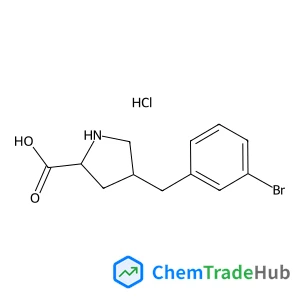
(2S,4R)-4-(3-Bromobenzyl)pyrrolidine-2-carboxylic acid hydrochloride
CAS Number:
1049734-10-2
Molecular Formula:
C12H15BrClNO2
Recommended Suppliers






Disclaimer
This page provides academic journal information for reference and research purposes only. We are not affiliated with any journal publishers and do not handle publication submissions. For publication-related inquiries, please contact the respective journal publishers directly.
If you notice any inaccuracies in the information displayed, please contact us at support@chemtradehub.com. We will promptly review and address your concerns.