












Investigation of the adsorption behaviour of acetone at the surface of ice. A grand canonical Monte Carlo simulation study
Literature Information
Publication Date
2008-09-08
DOI
10.1039/B808466A
Impact Factor
3.676
Authors
Paul N. M. Hoang, Sylvain Picaud
View Original
Abstract
The adsorption isotherm of acetone at the surface of Ih ice has been determined by a set of grand canonical Monte Carlo simulations at 200 K, by varying the chemical potential of acetone in the simulations. The obtained isotherm can be described by the Langmuir theory up to a certain relative pressure value (i.e., about 0.07); above which the isotherm increasingly deviates from the Langmuir form. This deviation mainly originates from the increasing importance of the lateral dipolar interactions. Further, above this pressure the adsorption sites are no longer equivalent: the adsorbed acetone molecules are aligned in three different ways. In one of these orientations the acetone molecule forms two, while in another one it forms one hydrogen bond with the surface waters, whereas in the third preferred orientation no hydrogen bonding occurs between the adsorbed molecule and the ice surface.
Related Literature
Influence of Mn co-doping on the magnetic properties of planar arrays of GaxFe4−xN nanocrystals in a GaN matrix
L. Del Bianco, F. Spizzo, Tian Li, R. Adhikari, A. Bonanni
2018-09-26
Paper
DOI: 10.1039/C8CP04475A
Ion–peptide interactions between alkali metal ions and a termini-protected dipeptide: modeling a portion of the selectivity filter in K+ channels
Shun-ichi Ishiuchi, Yuta Sasaki, Masaaki Fujii
2018-10-17
Paper
DOI: 10.1039/C8CP05839C
Computational investigation of gas detection and selectivity on TiS3 nanoflakes supported by experimental evidence
Masoud Aryanpour, Nassim Rafiefard, Seyed Hossein Hosseini-Shokouh, Somayeh Fardindoost
2018-09-11
Paper
DOI: 10.1039/C8CP05026K
On-the-fly kinetics of hydrogen abstraction from polycyclic aromatic hydrocarbons by methyl/ethyl radicals
Artur Ratkiewicz, An Le, Minh v. Duong, Thanh N. Truong, Lam K. Huynh
2018-08-22
Paper
DOI: 10.1039/C8CP03718C
Effect of the triazole ring in zinc porphyrin-fullerene dyads on the charge transfer processes in NiO-based devices
Vasilis Nikolaou, Fabian Plass, Aurélien Planchat, Asterios Charisiadis, Georgios Charalambidis, Panagiotis A. Angaridis, Fabrice Odobel, Athanassios G. Coutsolelos
2018-08-28
Paper
DOI: 10.1039/C8CP04060E
Effect of Si substitution in ferromagnetic Pr2Fe17: a magnetocaloric material with zero thermal expansion operative at high temperature
Shovan Dan, S. Mukherjee, Chandan Mazumdar, R. Ranganathan
2019-01-18
Paper
DOI: 10.1039/C8CP06222F
Non-touching plasma–liquid interaction – where is aqueous nitric oxide generated?
Helena Jablonowski, Ansgar Schmidt-Bleker, Klaus-Dieter Weltmann, Thomas von Woedtke, Kristian Wende
2018-09-28
Paper
DOI: 10.1039/C8CP02412J
Nucleation of pseudo hard-spheres and dumbbells at moderate metastability: appearance of A15 Frank–Kasper phase at intermediate elongations
Itziar Zubieta, Pablo Llombart, Carlos Vega, Eva G. Noya
2018-10-12
Paper
DOI: 10.1039/C8CP04964E
Emulsions stabilized with mixed SiO2 and Fe3O4 nanoparticles: mechanisms of stabilization and long-term stability
M. Koroleva, D. Bidanov, E. Yurtov
2018-12-12
Paper
DOI: 10.1039/C8CP05292A
You might also like
Compound Q&A
How is 3-(2-Bromoimidazo[2,1-b]thiazol-6-yl)propanoic acid hydrochloride (CAS: 1187830-80-3) typically synthesized?
3-(2-Bromoimidazo[2,1-b]thiazol-6-yl)propanoic acid hydrochloride is typically s...
1187830-80-33-(2-Bromoimidazo[2,...
Compound Q&A
How is 2-Isopropyl-1,3-dioxane-5-carboxylic acid (CAS: 116193-72-7) typically synthesized?
2-Isopropyl-1,3-dioxane-5-carboxylic acid is typically synthesized by the carbox...
116193-72-72-Isopropyl-1,3-diox...
Compound Q&A
What is Alisporivir (CAS: 254435-95-5)?
Alisporivir (CAS: 254435-95-5) is an antiviral medication used in the treatment ...
254435-95-5Alisporivir
Compound Q&A
What are the physical and chemical properties of [1,2,4]triazolo[3,4-a]phthalazine (CAS: 234-80-0)?
[1,2,4]triazolo[3,4-a]phthalazine (CAS: 234-80-0) is a crystalline compound with...
234-80-0[1,2,4]triazolo[3,4-...
Compound Q&A
What regulatory guidelines apply to (2S)-5-Hydroxy-2-(4-hydroxyphenyl)-4-oxo-3,4-dihydro-2H-chromen-7-yl methyl beta-D-glucopyranosiduronate (CAS: 1985597-72-5)?
Regulatory guidelines for (2S)-5-Hydroxy-2-(4-hydroxyphenyl)-4-oxo-3,4-dihydro-2...
1985597-72-5(2S)-5-Hydroxy-2-(4-...
Compound Q&A
Is 2,2-Difluorocyclohexanamine hydrochloride (CAS: 921602-83-7) safe?
2,2-Difluorocyclohexanamine hydrochloride is generally safe when handled under p...
921602-83-72,2-Difluorocyclohex...
Compound Q&A
What are the main uses of 3-Nitro-2-phenylthiophene (CAS: 18150-94-2)?
3-Nitro-2-phenylthiophene is primarily used in the synthesis of other organic co...
18150-94-23-Nitro-2-phenylthio...
Compound Q&A
What is 1-(Trifluoroacetyl)-4-piperidinecarbonitrile (CAS: 77940-79-5)?
1-(Trifluoroacetyl)-4-piperidinecarbonitrile (CAS: 77940-79-5) is a colorless to...
77940-79-51-(Trifluoroacetyl)-...
Compound Q&A
What is the market or research trend for 1,3,6,8-Tetranitro-9H-carbazole (CAS: 4543-33-3)?
Research and market trends for 1,3,6,8-Tetranitro-9H-carbazole (CAS: 4543-33-3) ...
4543-33-31,3,6,8-Tetranitro-9...
Compound Q&A
How should waste containing Dibenzo[b,d]thiophen-1-ylboronic acid (CAS: 1245943-60-5) be handled?
Waste containing Dibenzo[b,d]thiophen-1-ylboronic acid (CAS: 1245943-60-5) shoul...
1245943-60-5Dibenzo[b,d]thiophen...
Source Journal
Physical Chemistry Chemical Physics

CiteScore:
5.5
Self-citation Rate:
10.3%
Articles per Year:
3036
Physical Chemistry Chemical Physics (PCCP) is an international journal co-owned by 19 physical chemistry and physics societies from around the world. This journal publishes original, cutting-edge research in physical chemistry, chemical physics and biophysical chemistry. To be suitable for publication in PCCP, articles must include significant innovation and/or insight into physical chemistry; this is the most important criterion that reviewers and Editors will judge against when evaluating submissions. The journal has a broad scope and welcomes contributions spanning experiment, theory, computation and data science. Topical coverage includes spectroscopy, dynamics, kinetics, statistical mechanics, thermodynamics, electrochemistry, catalysis, surface science, quantum mechanics, quantum computing and machine learning. Interdisciplinary research areas such as polymers and soft matter, materials, nanoscience, energy, surfaces/interfaces, and biophysical chemistry are welcomed if they demonstrate significant innovation and/or insight into physical chemistry. Joined experimental/theoretical studies are particularly appreciated when complementary and based on up-to-date approaches.
Recommended Compounds
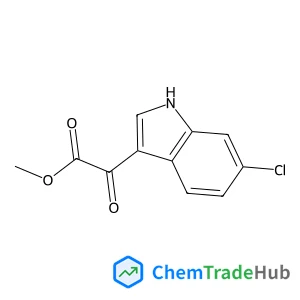

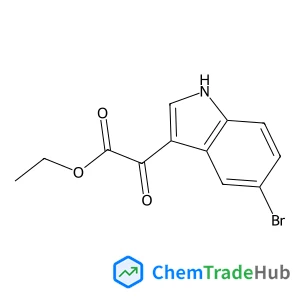
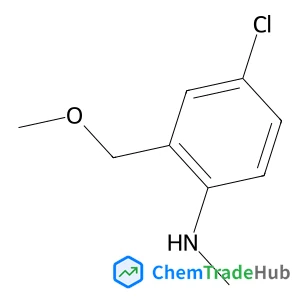
Recommended Suppliers




Disclaimer
This page provides academic journal information for reference and research purposes only. We are not affiliated with any journal publishers and do not handle publication submissions. For publication-related inquiries, please contact the respective journal publishers directly.
If you notice any inaccuracies in the information displayed, please contact us at support@chemtradehub.com. We will promptly review and address your concerns.