












Ion–peptide interactions between alkali metal ions and a termini-protected dipeptide: modeling a portion of the selectivity filter in K+ channels
Literature Information
Publication Date
2018-10-17
DOI
10.1039/C8CP05839C
Impact Factor
3.676
Authors
Shun-ichi Ishiuchi, Yuta Sasaki, Masaaki Fujii
View Original
Abstract
Potassium channels have the unique ability to allow the selective passage of potassium ions at near diffusion-free rates while inhibiting the passage of more abundant sodium ions. Local interactions between chemical functional groups and the ions are responsible for both selectivity and transport. As an initial step in characterizing these interactions, the structures of Na+ and K+ complexed to the Ac-Tyr-NHMe peptide have been determined from infrared laser spectroscopy and supporting ab initio calculations. Ac-Tyr-NHMe, a termini-protected peptide sequence, replicates the GYG portion of one of the four peptide chains comprising the selectivity filter of a K+ channel. This peptide contains two carbonyl groups, among the eight CO groups forming the S1 binding site of the selectivity filter. Three conformations have been identified for both ions by laser IR–IR double resonance methods. Two conformations have the ion bound to the two CO groups. The third conformation has, in addition, a cation–π interaction with the aromatic ring of tyrosine, i.e. tridentate binding. The relative contributions of the three conformers are approximately the same for K+Ac-Tyr-NHMe, while the tridentate conformer is preferred for Na+Ac-Tyr-NHMe. These differences will be discussed in the context of ion mobility and selectivity.
Related Literature
Comment on “Cumulant mapping as the basis of multi-dimensional spectrometry” by Leszek J. Frasinski, Phys. Chem. Chem. Phys., 2022, 24, 20776–20787
2023-11-22
Comment
DOI: 10.1039/D3CP02525J
Interrogating the nature of aggregates formed in a model azine based ESIPT coupled AIE active probe: stark differences in photodynamics in the solid state and aggregates in water
Arghyadeep Bhattacharyya, Akash Das, Nikhil Guchhait
2023-11-03
Paper
DOI: 10.1039/D3CP03603K
Computational study of the photophysical properties and electronic structure of iridium(iii) photosensitizer complexes with electron-withdrawing groups
Zhoujie Zhang, Mengping Huang, Na Shu, Hanyu Luo, Qiyan Cao, Bingbing Fan, Yu Han, Yong Wu
2023-11-15
Paper
DOI: 10.1039/D3CP04900K
Single-molecule scale quantification reveals interactions underlying protein–protein interface: from forces to non-covalent bonds
Heng Sun, Yichen Tian, Yuna Fu, Yongrong Lei, Yani Wang, Xinrui Yan, Jianhua Wang
2023-11-07
Paper
DOI: 10.1039/D3CP04351G
van der Waals induced ice growth on partially melted ice nuclei in mist and fog
M. Boström, I. Brevik, O. I. Malyi
2023-11-15
Paper
DOI: 10.1039/D3CP04157C
Density functional theory study of crown ether–magnesium complexes: from a solvated ion to an ion trap
Branislav Milovanović, Milena Petković
2023-11-27
Paper
DOI: 10.1039/D3CP03991A
You might also like
Compound Q&A
Are there alternatives to 1-(4-Chlorophenyl)-N-hydroxymethanimine (CAS: 3848-36-0) in synthesis?
When considering alternatives to 1-(4-Chlorophenyl)-N-hydroxymethanimine (CAS: 3...
3848-36-01-(4-Chlorophenyl)-N...
Compound Q&A
How should (1R,9S,10S,12S,14E,16S,19R,20R,21S,22R)-3,9,21-Trihydroxy-5,10,12,14,16,20,22-heptamethyl-23,24-dioxatetracyclo[17.3.1.1~6,9~.0~2,7~]tetracosa-2,5,7,14-tetraen-4-one (CAS: 183202-73-5) be stored?
This compound should be stored in a cool, dry place away from direct sunlight. I...
183202-73-5(1R,9S,10S,12S,14E,1...
Compound Q&A
How is 3-(4-Bromophenyl)-5-(2-fluorophenyl)-1,2,4-oxadiazole (CAS: 419553-16-5) typically synthesized?
3-(4-Bromophenyl)-5-(2-fluorophenyl)-1,2,4-oxadiazole is synthesized through a m...
419553-16-53-(4-Bromophenyl)-5-...
Compound Q&A
How is 5-Chloro-2-(4-chlorophenyl)-4-methyl-6-[3-(1-piperidinyl)propoxy]pyrimidine (CAS: 1639220-19-1) typically synthesized?
5-Chloro-2-(4-chlorophenyl)-4-methyl-6-[3-(1-piperidinyl)propoxy]pyrimidine (CAS...
1639220-19-15-Chloro-2-(4-chloro...
Compound Q&A
What industries use 2-Chloro-4-(difluoromethoxy)pyridine (CAS: 1206978-15-5)?
2-Chloro-4-(difluoromethoxy)pyridine is used in the pharmaceutical industry for ...
1206978-15-52-Chloro-4-(difluoro...
Compound Q&A
What regulatory guidelines apply to 3-Chloro-6-methylpyridazine (CAS: 1121-79-5)?
3-Chloro-6-methylpyridazine (CAS: 1121-79-5) is classified under the Globally Ha...
1121-79-53-Chloro-6-methylpyr...
Compound Q&A
Are there alternatives to Methyl 4,5-dimethyl-2-nitrobenzoate in synthesis?
Several alternatives can be used in the synthesis of Methyl 4,5-dimethyl-2-nitro...
90922-74-0Methyl 4,5-dimethyl-...
Compound Q&A
Are there alternatives to (2E,2'E)-3,3'-(1,4-Phenylene)bisacrylaldehyde in synthesis?
Alternatives to (2E,2'E)-3,3'-(1,4-Phenylene)bisacrylaldehyde include other acry...
63405-68-5(2E,2'E)-3,3'-(1,4-P...
Compound Q&A
What is 3-Amino-5-chloropyridin-2-ol hydrochloride (CAS: 1261906-29-9)?
3-Amino-5-chloropyridin-2-ol hydrochloride is an organic compound with the CAS n...
1261906-29-93-Amino-5-chloropyri...
Compound Q&A
What precautions should be taken when handling 6,7-Difluoro-2,3-dihydro-4H-chromen-4-one (CAS: 1092349-93-3)?
When handling 6,7-Difluoro-2,3-dihydro-4H-chromen-4-one, it is essential to wear...
1092349-93-36,7-Difluoro-2,3-dih...
Source Journal
Physical Chemistry Chemical Physics

CiteScore:
5.5
Self-citation Rate:
10.3%
Articles per Year:
3036
Physical Chemistry Chemical Physics (PCCP) is an international journal co-owned by 19 physical chemistry and physics societies from around the world. This journal publishes original, cutting-edge research in physical chemistry, chemical physics and biophysical chemistry. To be suitable for publication in PCCP, articles must include significant innovation and/or insight into physical chemistry; this is the most important criterion that reviewers and Editors will judge against when evaluating submissions. The journal has a broad scope and welcomes contributions spanning experiment, theory, computation and data science. Topical coverage includes spectroscopy, dynamics, kinetics, statistical mechanics, thermodynamics, electrochemistry, catalysis, surface science, quantum mechanics, quantum computing and machine learning. Interdisciplinary research areas such as polymers and soft matter, materials, nanoscience, energy, surfaces/interfaces, and biophysical chemistry are welcomed if they demonstrate significant innovation and/or insight into physical chemistry. Joined experimental/theoretical studies are particularly appreciated when complementary and based on up-to-date approaches.
Recommended Compounds
![4-[(3-Chloro-2-fluorophenyl)amino]-7-methoxy-6-quinazolinyl acetate structure](https://static.chemtradehub.com/structs/740/740081-22-5-f58f.webp "4-[(3-Chloro-2-fluorophenyl)amino]-7-methoxy-6-quinazolinyl acetate structure")
4-[(3-Chloro-2-fluorophenyl)amino]-7-methoxy-6-quinazolinyl acetate
CAS Number:
740081-22-5
Molecular Formula:
C17H13ClFN3O3
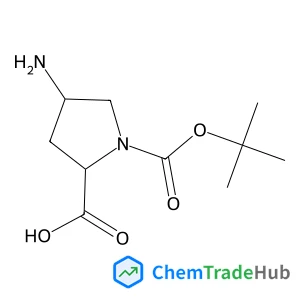
(2R,4R)-1-Boc-4-Aminopyrrolidine-2-carboxylic acid
CAS Number:
132622-98-1
Molecular Formula:
C10H18N2O4
Recommended Suppliers





Disclaimer
This page provides academic journal information for reference and research purposes only. We are not affiliated with any journal publishers and do not handle publication submissions. For publication-related inquiries, please contact the respective journal publishers directly.
If you notice any inaccuracies in the information displayed, please contact us at support@chemtradehub.com. We will promptly review and address your concerns.