













Structural studies of melting on the picosecond time scale
Literature Information
Publication Date
2008-09-23
DOI
10.1039/B807550F
Impact Factor
3.676
Authors
David van der Spoel, Filipe R. N. C. Maia, Carl Caleman
View Original
Abstract
Ultrafast structural studies of laser-induced melting have demonstrated that the solid–liquid phase transition can take place on a picosecond time scale in a variety of materials. Experimental studies using ångström wavelength X-rays from the sub-picosecond pulse source at Stanford (now retired) on non-thermal melting of semi-conductors, such as indium antimonide, employed the decay of a single Bragg-peak to measure the time component of the phase transition. These materials were found to start melting within one picosecond after the laser pulse. Recent computer simulations have described the thermal melting of ice induced by an infrared laser pulse. Here it was shown that melting can happen within a few picoseconds, somewhat slower than non-thermal melting in semi-conductors. These computer simulations are compatible with spectroscopy experiments on ice-melting, demonstrating that simulations form a very powerful complement to experiments targeting the process of phase-transitions. Here we present an overview of recent experimental and theoretical studies of melting, as well as new simulations of ice-melting where the effect of the size of the crystal on scattering is studied. Based on simulations of a near-macroscopic crystal, we predict the decay of the most intense Bragg peaks of ice following heating by laser pulse, by modeling the scattering from the melting sample in the simulations.
Related Literature
Role of sterics in phosphine-ligated gold clusters
Katherine A. Parrish, Mary King, Marshall R. Ligare, Grant E. Johnson, Heriberto Hernández
2018-09-20
Paper
DOI: 10.1039/C8CP04961K
Catalytic polymerization of naphthalene by HF/BF3 super acid: an ab initio density functional theory study
Po-Yu Yang, Hsing-Yin Chen, Chia-Lin Chang, Gao-Shee Leu, Che-Hsin Lin
2018-08-18
Paper
DOI: 10.1039/C8CP02777C
Effect of protein–protein interactions and solvent viscosity on the rotational diffusion of proteins in crowded environments
Grzegorz Nawrocki, Alp Karaboga
2018-12-12
Paper
DOI: 10.1039/C8CP06142D
Two-dimensional stable transition metal carbides (MnC and NbC) with prediction and novel functionalizations
Yina Huang, Baolin Wang, Qiangqiang Meng, Lele Fan, Qinfang Zhang
2018-09-10
Paper
DOI: 10.1039/C8CP04541K
Extending the perturbed matrix method beyond the dipolar approximation: comparison of different levels of theory
Laura Zanetti-Polzi, Sara Del Galdo, Isabella Daidone, Marco D'Abramo, Vincenzo Barone, Massimiliano Aschi, Andrea Amadei
2018-09-07
Paper
DOI: 10.1039/C8CP04190C
Effect of Si substitution in ferromagnetic Pr2Fe17: a magnetocaloric material with zero thermal expansion operative at high temperature
Shovan Dan, S. Mukherjee, Chandan Mazumdar, R. Ranganathan
2019-01-18
Paper
DOI: 10.1039/C8CP06222F
The prediction of far-infrared spectra for planetary nitrile ices using periodic density functional theory with comparison to thin film experiments
C. Ennis, D. R. T. Appadoo, E. G. Robertson
2018-09-07
Paper
DOI: 10.1039/C8CP04219E
Metalation and coordination reactions of 2H-meso-trans-di(p-cyanophenyl)porphyrin on Ag(111) with coadsorbed cobalt atoms
2018-09-14
Paper
DOI: 10.1039/C8CP05255G
Charge percolation in redox-active thin membrane hybrids of mesoporous silica and poly(viologens)
Simón Saint-André, Federico Albanese
2019-01-08
Paper
DOI: 10.1039/C8CP07192F
Non-covalent complexes of the peptide fragment Gly-Asn-Asn-Gln-Gln-Asn-Tyr in the gas-phase. Photodissociative cross-linking, Born–Oppenheimer molecular dynamics, and ab initio computational binding study
Shu R. Huang, Yang Liu, František Tureček
2019-01-08
Paper
DOI: 10.1039/C8CP06893C
You might also like
Compound Q&A
How is 3-(2-Bromoimidazo[2,1-b]thiazol-6-yl)propanoic acid hydrochloride (CAS: 1187830-80-3) typically synthesized?
3-(2-Bromoimidazo[2,1-b]thiazol-6-yl)propanoic acid hydrochloride is typically s...
1187830-80-33-(2-Bromoimidazo[2,...
Compound Q&A
How is 2-Isopropyl-1,3-dioxane-5-carboxylic acid (CAS: 116193-72-7) typically synthesized?
2-Isopropyl-1,3-dioxane-5-carboxylic acid is typically synthesized by the carbox...
116193-72-72-Isopropyl-1,3-diox...
Compound Q&A
What is Alisporivir (CAS: 254435-95-5)?
Alisporivir (CAS: 254435-95-5) is an antiviral medication used in the treatment ...
254435-95-5Alisporivir
Compound Q&A
What are the physical and chemical properties of [1,2,4]triazolo[3,4-a]phthalazine (CAS: 234-80-0)?
[1,2,4]triazolo[3,4-a]phthalazine (CAS: 234-80-0) is a crystalline compound with...
234-80-0[1,2,4]triazolo[3,4-...
Compound Q&A
What regulatory guidelines apply to (2S)-5-Hydroxy-2-(4-hydroxyphenyl)-4-oxo-3,4-dihydro-2H-chromen-7-yl methyl beta-D-glucopyranosiduronate (CAS: 1985597-72-5)?
Regulatory guidelines for (2S)-5-Hydroxy-2-(4-hydroxyphenyl)-4-oxo-3,4-dihydro-2...
1985597-72-5(2S)-5-Hydroxy-2-(4-...
Compound Q&A
Is 2,2-Difluorocyclohexanamine hydrochloride (CAS: 921602-83-7) safe?
2,2-Difluorocyclohexanamine hydrochloride is generally safe when handled under p...
921602-83-72,2-Difluorocyclohex...
Compound Q&A
What are the main uses of 3-Nitro-2-phenylthiophene (CAS: 18150-94-2)?
3-Nitro-2-phenylthiophene is primarily used in the synthesis of other organic co...
18150-94-23-Nitro-2-phenylthio...
Compound Q&A
What is 1-(Trifluoroacetyl)-4-piperidinecarbonitrile (CAS: 77940-79-5)?
1-(Trifluoroacetyl)-4-piperidinecarbonitrile (CAS: 77940-79-5) is a colorless to...
77940-79-51-(Trifluoroacetyl)-...
Compound Q&A
What is the market or research trend for 1,3,6,8-Tetranitro-9H-carbazole (CAS: 4543-33-3)?
Research and market trends for 1,3,6,8-Tetranitro-9H-carbazole (CAS: 4543-33-3) ...
4543-33-31,3,6,8-Tetranitro-9...
Compound Q&A
How should waste containing Dibenzo[b,d]thiophen-1-ylboronic acid (CAS: 1245943-60-5) be handled?
Waste containing Dibenzo[b,d]thiophen-1-ylboronic acid (CAS: 1245943-60-5) shoul...
1245943-60-5Dibenzo[b,d]thiophen...
Source Journal
Physical Chemistry Chemical Physics

CiteScore:
5.5
Self-citation Rate:
10.3%
Articles per Year:
3036
Physical Chemistry Chemical Physics (PCCP) is an international journal co-owned by 19 physical chemistry and physics societies from around the world. This journal publishes original, cutting-edge research in physical chemistry, chemical physics and biophysical chemistry. To be suitable for publication in PCCP, articles must include significant innovation and/or insight into physical chemistry; this is the most important criterion that reviewers and Editors will judge against when evaluating submissions. The journal has a broad scope and welcomes contributions spanning experiment, theory, computation and data science. Topical coverage includes spectroscopy, dynamics, kinetics, statistical mechanics, thermodynamics, electrochemistry, catalysis, surface science, quantum mechanics, quantum computing and machine learning. Interdisciplinary research areas such as polymers and soft matter, materials, nanoscience, energy, surfaces/interfaces, and biophysical chemistry are welcomed if they demonstrate significant innovation and/or insight into physical chemistry. Joined experimental/theoretical studies are particularly appreciated when complementary and based on up-to-date approaches.
Recommended Compounds
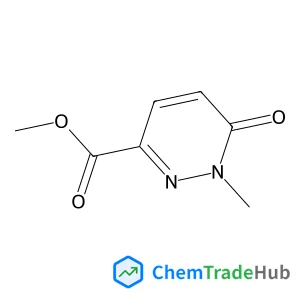
Methyl 1-methyl-6-oxo-1,6-dihydro-3-pyridazinecarboxylate
CAS Number:
74173-58-3
Molecular Formula:
C7H8N2O3
Recommended Suppliers





Disclaimer
This page provides academic journal information for reference and research purposes only. We are not affiliated with any journal publishers and do not handle publication submissions. For publication-related inquiries, please contact the respective journal publishers directly.
If you notice any inaccuracies in the information displayed, please contact us at support@chemtradehub.com. We will promptly review and address your concerns.