












Charge percolation in redox-active thin membrane hybrids of mesoporous silica and poly(viologens)
Literature Information
Publication Date
2019-01-08
DOI
10.1039/C8CP07192F
Impact Factor
3.676
Authors
Simón Saint-André, Federico Albanese
View Original
Abstract
This work reports the fabrication of redox-active films of oligomeric and molecular viologens and mesoporous silica via the infiltration method. Pore-ellipsometry and UV-vis confirm that low-molecular-weight poly(viologens) in solution are able to enter the mesoporous structure, in contrast to high-molecular weight polymers that adsorb only on top of the film. Cyclic voltammetry shows that viologens are able to reach the bottom of the pores and access the electrode/film interface. However, the number of viologen sites that can be accessed by cyclic voltammetry at 50 mV s−1 is only a tenth of the total viologen population determined by UV-vis and pore-ellipsometry. The effect is ascribed to the very small apparent diffusion coefficient for charge transport within the film (Dapp < 10−12 cm2 s−1). A theoretical model is put forward to describe charge transport via the electron-hopping mechanism for redox sites randomly adsorbed on the inner walls of the pores. Our model predicts that the threshold of charge percolation occurs for viologen surface coverages close to those observed in our experiments; therefore, the low fraction of electrochemically addressable viologens is ascribed to inefficient charge percolation via the electron-hopping mechanism.
Related Literature
Correction: Understanding the charge transfer dynamics of the Cu2WS4–CNT–FeOOH ternary composite for photo-electrochemical studies
Preeti Dagar, Nandan Ghorai, Manisha Bungla, Hirendra N. Ghosh
2023-11-27
Correction
DOI: 10.1039/D3CP90230G
XANES analysis of phosphate glasses melted with Tb4O7 and SnO: evaluating the impact of valence states on structural, thermal, and luminescent properties
José A. Jiménez, Dugan Hayes, Cali Antolini, Benjamin J. Reinhart
2023-11-28
Paper
DOI: 10.1039/D3CP04784A
Cryogenic fluorescence spectroscopy of oxazine ions isolated in vacuo
Christina Kjær, Emil Vogt, Jeppe Langeland, Nanna Falk Christensen, Thomas Toft Lindkvist, Henrik G. Kjaergaard, Steen Brøndsted Nielsen
2023-11-22
Paper
DOI: 10.1039/D3CP04615J
Elucidating TH301's influence on the torsion angle of CRY1 W399 using replica exchange with solute tempering (REST) molecular dynamics (MD) simulations
2023-11-21
Paper
DOI: 10.1039/D3CP04092E
Co-aggregation of α-synuclein with amyloid-β stabilizes β-sheet-rich oligomers and enhances the formation of β-barrels
Fengjuan Huang, Yuying Liu, Ying Wang, Jia Xu, Jiangfang Lian, Yu Zou, Chuang Wang, Feng Ding
2023-11-02
Paper
DOI: 10.1039/D3CP04138G
Osmolyte induced protein stabilization: modulation of associated water dynamics might be a key factor
Kuldeep Singh Negi, Nilimesh Das, Tanmoy Khan, Pratik Sen
2023-11-27
Paper
DOI: 10.1039/D3CP03357K
You might also like
Compound Q&A
Are there alternatives to 1-(4-Chlorophenyl)-N-hydroxymethanimine (CAS: 3848-36-0) in synthesis?
When considering alternatives to 1-(4-Chlorophenyl)-N-hydroxymethanimine (CAS: 3...
3848-36-01-(4-Chlorophenyl)-N...
Compound Q&A
How should (1R,9S,10S,12S,14E,16S,19R,20R,21S,22R)-3,9,21-Trihydroxy-5,10,12,14,16,20,22-heptamethyl-23,24-dioxatetracyclo[17.3.1.1~6,9~.0~2,7~]tetracosa-2,5,7,14-tetraen-4-one (CAS: 183202-73-5) be stored?
This compound should be stored in a cool, dry place away from direct sunlight. I...
183202-73-5(1R,9S,10S,12S,14E,1...
Compound Q&A
How is 3-(4-Bromophenyl)-5-(2-fluorophenyl)-1,2,4-oxadiazole (CAS: 419553-16-5) typically synthesized?
3-(4-Bromophenyl)-5-(2-fluorophenyl)-1,2,4-oxadiazole is synthesized through a m...
419553-16-53-(4-Bromophenyl)-5-...
Compound Q&A
How is 5-Chloro-2-(4-chlorophenyl)-4-methyl-6-[3-(1-piperidinyl)propoxy]pyrimidine (CAS: 1639220-19-1) typically synthesized?
5-Chloro-2-(4-chlorophenyl)-4-methyl-6-[3-(1-piperidinyl)propoxy]pyrimidine (CAS...
1639220-19-15-Chloro-2-(4-chloro...
Compound Q&A
What industries use 2-Chloro-4-(difluoromethoxy)pyridine (CAS: 1206978-15-5)?
2-Chloro-4-(difluoromethoxy)pyridine is used in the pharmaceutical industry for ...
1206978-15-52-Chloro-4-(difluoro...
Compound Q&A
What regulatory guidelines apply to 3-Chloro-6-methylpyridazine (CAS: 1121-79-5)?
3-Chloro-6-methylpyridazine (CAS: 1121-79-5) is classified under the Globally Ha...
1121-79-53-Chloro-6-methylpyr...
Compound Q&A
Are there alternatives to Methyl 4,5-dimethyl-2-nitrobenzoate in synthesis?
Several alternatives can be used in the synthesis of Methyl 4,5-dimethyl-2-nitro...
90922-74-0Methyl 4,5-dimethyl-...
Compound Q&A
Are there alternatives to (2E,2'E)-3,3'-(1,4-Phenylene)bisacrylaldehyde in synthesis?
Alternatives to (2E,2'E)-3,3'-(1,4-Phenylene)bisacrylaldehyde include other acry...
63405-68-5(2E,2'E)-3,3'-(1,4-P...
Compound Q&A
What is 3-Amino-5-chloropyridin-2-ol hydrochloride (CAS: 1261906-29-9)?
3-Amino-5-chloropyridin-2-ol hydrochloride is an organic compound with the CAS n...
1261906-29-93-Amino-5-chloropyri...
Compound Q&A
What precautions should be taken when handling 6,7-Difluoro-2,3-dihydro-4H-chromen-4-one (CAS: 1092349-93-3)?
When handling 6,7-Difluoro-2,3-dihydro-4H-chromen-4-one, it is essential to wear...
1092349-93-36,7-Difluoro-2,3-dih...
Source Journal
Physical Chemistry Chemical Physics

CiteScore:
5.5
Self-citation Rate:
10.3%
Articles per Year:
3036
Physical Chemistry Chemical Physics (PCCP) is an international journal co-owned by 19 physical chemistry and physics societies from around the world. This journal publishes original, cutting-edge research in physical chemistry, chemical physics and biophysical chemistry. To be suitable for publication in PCCP, articles must include significant innovation and/or insight into physical chemistry; this is the most important criterion that reviewers and Editors will judge against when evaluating submissions. The journal has a broad scope and welcomes contributions spanning experiment, theory, computation and data science. Topical coverage includes spectroscopy, dynamics, kinetics, statistical mechanics, thermodynamics, electrochemistry, catalysis, surface science, quantum mechanics, quantum computing and machine learning. Interdisciplinary research areas such as polymers and soft matter, materials, nanoscience, energy, surfaces/interfaces, and biophysical chemistry are welcomed if they demonstrate significant innovation and/or insight into physical chemistry. Joined experimental/theoretical studies are particularly appreciated when complementary and based on up-to-date approaches.
Recommended Compounds
![4-[(3-Chloro-2-fluorophenyl)amino]-7-methoxy-6-quinazolinyl acetate structure](https://static.chemtradehub.com/structs/740/740081-22-5-f58f.webp "4-[(3-Chloro-2-fluorophenyl)amino]-7-methoxy-6-quinazolinyl acetate structure")
4-[(3-Chloro-2-fluorophenyl)amino]-7-methoxy-6-quinazolinyl acetate
CAS Number:
740081-22-5
Molecular Formula:
C17H13ClFN3O3
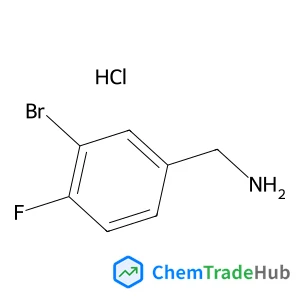
1-(3-Bromo-4-fluorophenyl)methanamine hydrochloride (1:1)
CAS Number:
202865-68-7
Molecular Formula:
C7H8BrClFN
Recommended Suppliers



Disclaimer
This page provides academic journal information for reference and research purposes only. We are not affiliated with any journal publishers and do not handle publication submissions. For publication-related inquiries, please contact the respective journal publishers directly.
If you notice any inaccuracies in the information displayed, please contact us at support@chemtradehub.com. We will promptly review and address your concerns.