












A new look at reactions of 2-butoxy and 1-butoxy radicals in the presence of oxygen
Literature Information
Publication Date
2008-07-28
DOI
10.1039/B806591H
Impact Factor
3.676
Authors
View Original
Abstract
Under atmospheric conditions, experiments show that 2-butoxy radicals in the presence of oxygen yield acetaldehyde and butanone such that the concentration ratio [acetaldehyde] [O2]/[butanone] shows a linear dependence on oxygen concentration [O2]. [Zabel et al., Phys. Chem. Chem. Phys., 2002, 4, 2579; Cox et al.Phys. Chem. Chem. Phys, 2005, 7, 3702.] A similar oxygen dependence was found by Cox et al. in the reactions of 1-butoxy radicals. These experiments imply a unimolecular rate constant that apparently depends on oxygen pressure. Previously this has been explained by postulating the presence of a small amount of excited radicals assumed to undergo ‘prompt’ dissociation. We propose an alternative interpretation based on the solution of the time-dependent master equation that does not require the putative presence of excited radicals. We do this by allowing the time to run until the so-called long-time steady-state, and then show that the oxygen dependence arises quite naturally if the transport matrix takes into account that in addition to the principal reaction channel (dissociation into acetaldehyde in the case of 2-butoxy and isomerization in the case of 1-butoxy), there is a small “leak” of alkoxy radicals due to the reaction with oxygen, and provided the calculation takes into account that in the cited experiments there is a continuous incoming flux of butoxy radicals.
Related Literature
Magnesia-stabilised zirconia solid electrolyte assisted electrochemical investigation of iron ions in a SiO2–CaO–MgO–Al2O3 molten slag at 1723 K
2017-05-25
Paper
DOI: 10.1039/C7CP01945A
Understanding iridium oxide nanoparticle surface sites by their interaction with catechol
Maxime Fournier, Dalvin D. Méndez-Hernández, Chengchen Guo, Thomas A. Moore, Ana L. Moore, Devens Gust, Jeffery L. Yarger
2017-05-24
Paper
DOI: 10.1039/C7CP01516J
Approximate quantum chemical methods for modelling carbohydrate conformation and aromatic interactions: β-cyclodextrin and its adsorption on a single-layer graphene sheet
Panichakorn Jaiyong, Richard A. Bryce
2017-06-02
Paper
DOI: 10.1039/C7CP02160G
Fano resonances in the photoinduced H-atom elimination dynamics in the πσ* states of pyrrole
Sergy Yu. Grebenshchikov, David Picconi
2017-05-24
Communication
DOI: 10.1039/C7CP01401E
Preparation and characterization of a calcium–phosphate–silicon coating on a Mg–Zn–Ca alloy via two-step micro-arc oxidation
Jinhe Dou, Yang Chen, Yiming Chi, Huancai Li, Guochao Gu, Chuanzhong Chen
2017-05-19
Paper
DOI: 10.1039/C7CP02672B
Mapping the ionic fingerprints of molecular monolayers
Joshua Lehr, Justin R. Weeks, Adriano Santos, Gustavo T. Feliciano, Melany I. G. Nicholson, Jason J. Davis, Paulo R. Bueno
2017-05-12
Paper
DOI: 10.1039/C7CP01500C
The effect of chemical ordering and lattice mismatch on structural transitions in phase segregating nanoalloys
Kevin Rossi, Francesca Baletto
2017-04-03
Paper
DOI: 10.1039/C7CP01397C
Umbrella sampling molecular dynamics simulations reveal concerted ion movement through G-quadruplex DNA channels
Parisa Akhshi, Gang Wu
2017-03-16
Paper
DOI: 10.1039/C7CP01028A
Synergistic effects of plasma–catalyst interactions for CH4 activation
Jongsik Kim, Jason C. Hicks
2017-04-28
Paper
DOI: 10.1039/C7CP01322A
Revisiting the definition of local hardness and hardness kernel
Carlos A. Polanco-Ramírez, Javier Carmona-Espíndola, José L. Gázquez, Paul W. Ayers
2017-03-31
Paper
DOI: 10.1039/C7CP00691H
You might also like
Compound Q&A
Are there alternatives to 1-(4-Chlorophenyl)-N-hydroxymethanimine (CAS: 3848-36-0) in synthesis?
When considering alternatives to 1-(4-Chlorophenyl)-N-hydroxymethanimine (CAS: 3...
3848-36-01-(4-Chlorophenyl)-N...
Compound Q&A
How should (1R,9S,10S,12S,14E,16S,19R,20R,21S,22R)-3,9,21-Trihydroxy-5,10,12,14,16,20,22-heptamethyl-23,24-dioxatetracyclo[17.3.1.1~6,9~.0~2,7~]tetracosa-2,5,7,14-tetraen-4-one (CAS: 183202-73-5) be stored?
This compound should be stored in a cool, dry place away from direct sunlight. I...
183202-73-5(1R,9S,10S,12S,14E,1...
Compound Q&A
How is 3-(4-Bromophenyl)-5-(2-fluorophenyl)-1,2,4-oxadiazole (CAS: 419553-16-5) typically synthesized?
3-(4-Bromophenyl)-5-(2-fluorophenyl)-1,2,4-oxadiazole is synthesized through a m...
419553-16-53-(4-Bromophenyl)-5-...
Compound Q&A
How is 5-Chloro-2-(4-chlorophenyl)-4-methyl-6-[3-(1-piperidinyl)propoxy]pyrimidine (CAS: 1639220-19-1) typically synthesized?
5-Chloro-2-(4-chlorophenyl)-4-methyl-6-[3-(1-piperidinyl)propoxy]pyrimidine (CAS...
1639220-19-15-Chloro-2-(4-chloro...
Compound Q&A
What industries use 2-Chloro-4-(difluoromethoxy)pyridine (CAS: 1206978-15-5)?
2-Chloro-4-(difluoromethoxy)pyridine is used in the pharmaceutical industry for ...
1206978-15-52-Chloro-4-(difluoro...
Compound Q&A
What regulatory guidelines apply to 3-Chloro-6-methylpyridazine (CAS: 1121-79-5)?
3-Chloro-6-methylpyridazine (CAS: 1121-79-5) is classified under the Globally Ha...
1121-79-53-Chloro-6-methylpyr...
Compound Q&A
Are there alternatives to Methyl 4,5-dimethyl-2-nitrobenzoate in synthesis?
Several alternatives can be used in the synthesis of Methyl 4,5-dimethyl-2-nitro...
90922-74-0Methyl 4,5-dimethyl-...
Compound Q&A
Are there alternatives to (2E,2'E)-3,3'-(1,4-Phenylene)bisacrylaldehyde in synthesis?
Alternatives to (2E,2'E)-3,3'-(1,4-Phenylene)bisacrylaldehyde include other acry...
63405-68-5(2E,2'E)-3,3'-(1,4-P...
Compound Q&A
What is 3-Amino-5-chloropyridin-2-ol hydrochloride (CAS: 1261906-29-9)?
3-Amino-5-chloropyridin-2-ol hydrochloride is an organic compound with the CAS n...
1261906-29-93-Amino-5-chloropyri...
Compound Q&A
What precautions should be taken when handling 6,7-Difluoro-2,3-dihydro-4H-chromen-4-one (CAS: 1092349-93-3)?
When handling 6,7-Difluoro-2,3-dihydro-4H-chromen-4-one, it is essential to wear...
1092349-93-36,7-Difluoro-2,3-dih...
Source Journal
Physical Chemistry Chemical Physics

CiteScore:
5.5
Self-citation Rate:
10.3%
Articles per Year:
3036
Physical Chemistry Chemical Physics (PCCP) is an international journal co-owned by 19 physical chemistry and physics societies from around the world. This journal publishes original, cutting-edge research in physical chemistry, chemical physics and biophysical chemistry. To be suitable for publication in PCCP, articles must include significant innovation and/or insight into physical chemistry; this is the most important criterion that reviewers and Editors will judge against when evaluating submissions. The journal has a broad scope and welcomes contributions spanning experiment, theory, computation and data science. Topical coverage includes spectroscopy, dynamics, kinetics, statistical mechanics, thermodynamics, electrochemistry, catalysis, surface science, quantum mechanics, quantum computing and machine learning. Interdisciplinary research areas such as polymers and soft matter, materials, nanoscience, energy, surfaces/interfaces, and biophysical chemistry are welcomed if they demonstrate significant innovation and/or insight into physical chemistry. Joined experimental/theoretical studies are particularly appreciated when complementary and based on up-to-date approaches.
Recommended Compounds
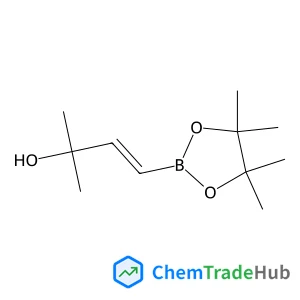
(E)-2-methyl-4-(4,4,5,5-tetramethyl-1,3,2-dioxaborolan-2-yl)but-3-en-2-ol
CAS Number:
581802-26-8
Molecular Formula:
C11H21BO3
![(2S)-2-{[(9H-Fluoren-9-ylmethoxy)carbonyl]amino}-4-(methylselanyl)butanoic acid structure](https://static.chemtradehub.com/structs/121/1217852-49-7-f252.webp "(2S)-2-{[(9H-Fluoren-9-ylmethoxy)carbonyl]amino}-4-(methylselanyl)butanoic acid structure")
(2S)-2-{[(9H-Fluoren-9-ylmethoxy)carbonyl]amino}-4-(methylselanyl)butanoic acid
CAS Number:
1217852-49-7
Molecular Formula:
C20H21NO4Se
Recommended Suppliers




Disclaimer
This page provides academic journal information for reference and research purposes only. We are not affiliated with any journal publishers and do not handle publication submissions. For publication-related inquiries, please contact the respective journal publishers directly.
If you notice any inaccuracies in the information displayed, please contact us at support@chemtradehub.com. We will promptly review and address your concerns.