


Synergistic effects of plasma–catalyst interactions for CH4 activation
Literature Information
Publication Date
2017-04-28
DOI
10.1039/C7CP01322A
Impact Factor
3.676
Authors
Jongsik Kim, Jason C. Hicks
View Original
Abstract
The elucidation of catalyst surface–plasma interactions is a challenging endeavor and therefore requires thorough and rigorous assessment of the reaction dynamics on the catalyst in the plasma environment. The first step in quantifying and defining catalyst–plasma interactions is a detailed kinetic study that can be used to verify appropriate reaction conditions for comparison and to discover any unexpected behavior of plasma-assisted reactions that might prevent direct comparison. In this paper, we provide a kinetic evaluation of CH4 activation in a dielectric barrier discharge plasma in order to quantify plasma–catalyst interactions via kinetic parameters. The dry reforming of CH4 with CO2 was studied as a model reaction using Ni supported on γ-Al2O3 at temperatures of 790–890 K under atmospheric pressure, where the partial pressures of CH4 (or CO2) were varied over a range of ≤25.3 kPa. Reaction performance was monitored by varying gas hourly space velocity, plasma power, bulk gas temperature, and reactant concentration. After correcting for gas-phase plasma reactions, a linear relationship was observed in the log of the measured rate constant with respect to reciprocal power (1/power). Although thermal catalysis displays typical Arrhenius behavior for this reaction, plasma-assisted catalysis occurs from a complex mixture of sources and shows non-Arrhenius behavior. However, an energy barrier was obtained from the relationship between the reaction rate constant and input power to exhibit ≤∼20 kJ mol−1 (compared to ∼70 kJ mol−1 for thermal catalysis). Of additional importance, the energy barriers measured during plasma-assisted catalysis were relatively consistent with respect to variations in total flow rates, types of diluent, or bulk reaction temperature. These experimental results suggest that plasma-generated vibrationally-excited CH4 favorably interacts with Ni sites at elevated temperatures, which helps reduce the energy barrier required to activate CH4 and enhance CH4 reforming rates.
Recommended Journals

Cellulose

Critical Reviews in Solid State and Materials Sciences

Bioorganic & Medicinal Chemistry

Journal of Chemical Sciences

Bioorganic & Medicinal Chemistry Letters

Journal of Asian Natural Products Research

Journal of the Indian Institute of Science

Atomization and Sprays

Topics in Catalysis

Medicinal Chemistry Research
Related Literature
Dihexadecyldimethylammonium hydroxide admicelles on silica for the preconcentration of selected phenols
Guan-Liang Chen, Shing-Yi Suen, Sarah Vied, Kali Pickering, Christopher Perrin, Eric D. Conte
2008-11-06
Paper
DOI: 10.1039/B814224F
High throughput screening arrays of rhodium and iridium complexes as catalysts for intramolecular hydroamination using parallel factor analysis‡
Diako Ebrahimi, Danielle F. Kennedy, Barbara A. Messerle, D. Brynn Hibbert
2008-03-13
Paper
DOI: 10.1039/B719501J
Wide range ammonia concentration analyzer utilizing a new principle of photoelectrochemical reaction at a nanoporous TiO2 photoanode
Takashi Suzuki, Hirohito Ueno, Junichi Nemoto, Yuki Fujii, Mikio Hoshino, Masao Kaneko
2009-05-28
Communication
DOI: 10.1039/B822512E
Gold nanoparticle-based immunoassay by using non-stripping chemiluminescence detection
Chun-Feng Duan, Yu-Qi Yu, Hua Cui
2008-07-28
Paper
DOI: 10.1039/B807163B
Targeting and detecting cancer cells using spontaneously formed multifunctional dendrimer-stabilized gold nanoparticles
Xiangyang Shi, Su He Wang, Mary E. Van Antwerp, Xisui Chen, James R. Baker, Jr
2009-04-17
Paper
DOI: 10.1039/B902199J
A new approach prevailing over chloride interference in the photoelectrochemical determination of chemical oxygen demand
Shanqing Zhang, Huijun Zhao
2008-10-03
Paper
DOI: 10.1039/B805095C
A planar waveguide optical sensor employing simple light coupling
Torsten Mayr, Tobias Abel, Barbara Enko, Sergey Borisov, Christian Konrad, Stefan Köstler, Bernhard Lamprecht, Stefan Sax, Emil J. W. List, Ingo Klimant
2009-05-13
Communication
DOI: 10.1039/B904536H
You might also like
Compound Q&A
Are there alternatives to 1-(4-Chlorophenyl)-N-hydroxymethanimine (CAS: 3848-36-0) in synthesis?
When considering alternatives to 1-(4-Chlorophenyl)-N-hydroxymethanimine (CAS: 3...
3848-36-01-(4-Chlorophenyl)-N...
Compound Q&A
How should (1R,9S,10S,12S,14E,16S,19R,20R,21S,22R)-3,9,21-Trihydroxy-5,10,12,14,16,20,22-heptamethyl-23,24-dioxatetracyclo[17.3.1.1~6,9~.0~2,7~]tetracosa-2,5,7,14-tetraen-4-one (CAS: 183202-73-5) be stored?
This compound should be stored in a cool, dry place away from direct sunlight. I...
183202-73-5(1R,9S,10S,12S,14E,1...
Compound Q&A
How is 3-(4-Bromophenyl)-5-(2-fluorophenyl)-1,2,4-oxadiazole (CAS: 419553-16-5) typically synthesized?
3-(4-Bromophenyl)-5-(2-fluorophenyl)-1,2,4-oxadiazole is synthesized through a m...
419553-16-53-(4-Bromophenyl)-5-...
Compound Q&A
How is 5-Chloro-2-(4-chlorophenyl)-4-methyl-6-[3-(1-piperidinyl)propoxy]pyrimidine (CAS: 1639220-19-1) typically synthesized?
5-Chloro-2-(4-chlorophenyl)-4-methyl-6-[3-(1-piperidinyl)propoxy]pyrimidine (CAS...
1639220-19-15-Chloro-2-(4-chloro...
Compound Q&A
What industries use 2-Chloro-4-(difluoromethoxy)pyridine (CAS: 1206978-15-5)?
2-Chloro-4-(difluoromethoxy)pyridine is used in the pharmaceutical industry for ...
1206978-15-52-Chloro-4-(difluoro...
Compound Q&A
What regulatory guidelines apply to 3-Chloro-6-methylpyridazine (CAS: 1121-79-5)?
3-Chloro-6-methylpyridazine (CAS: 1121-79-5) is classified under the Globally Ha...
1121-79-53-Chloro-6-methylpyr...
Compound Q&A
Are there alternatives to Methyl 4,5-dimethyl-2-nitrobenzoate in synthesis?
Several alternatives can be used in the synthesis of Methyl 4,5-dimethyl-2-nitro...
90922-74-0Methyl 4,5-dimethyl-...
Compound Q&A
Are there alternatives to (2E,2'E)-3,3'-(1,4-Phenylene)bisacrylaldehyde in synthesis?
Alternatives to (2E,2'E)-3,3'-(1,4-Phenylene)bisacrylaldehyde include other acry...
63405-68-5(2E,2'E)-3,3'-(1,4-P...
Compound Q&A
What is 3-Amino-5-chloropyridin-2-ol hydrochloride (CAS: 1261906-29-9)?
3-Amino-5-chloropyridin-2-ol hydrochloride is an organic compound with the CAS n...
1261906-29-93-Amino-5-chloropyri...
Compound Q&A
What precautions should be taken when handling 6,7-Difluoro-2,3-dihydro-4H-chromen-4-one (CAS: 1092349-93-3)?
When handling 6,7-Difluoro-2,3-dihydro-4H-chromen-4-one, it is essential to wear...
1092349-93-36,7-Difluoro-2,3-dih...
Source Journal
Physical Chemistry Chemical Physics

CiteScore:
5.5
Self-citation Rate:
10.3%
Articles per Year:
3036
Physical Chemistry Chemical Physics (PCCP) is an international journal co-owned by 19 physical chemistry and physics societies from around the world. This journal publishes original, cutting-edge research in physical chemistry, chemical physics and biophysical chemistry. To be suitable for publication in PCCP, articles must include significant innovation and/or insight into physical chemistry; this is the most important criterion that reviewers and Editors will judge against when evaluating submissions. The journal has a broad scope and welcomes contributions spanning experiment, theory, computation and data science. Topical coverage includes spectroscopy, dynamics, kinetics, statistical mechanics, thermodynamics, electrochemistry, catalysis, surface science, quantum mechanics, quantum computing and machine learning. Interdisciplinary research areas such as polymers and soft matter, materials, nanoscience, energy, surfaces/interfaces, and biophysical chemistry are welcomed if they demonstrate significant innovation and/or insight into physical chemistry. Joined experimental/theoretical studies are particularly appreciated when complementary and based on up-to-date approaches.
Recommended Compounds
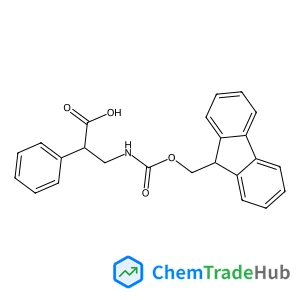
(S)-3-((((9H-Fluoren-9-yl)methoxy)carbonyl)amino)-2-phenylpropanoic acid
CAS Number:
1217663-60-9
Molecular Formula:
C24H21NO4
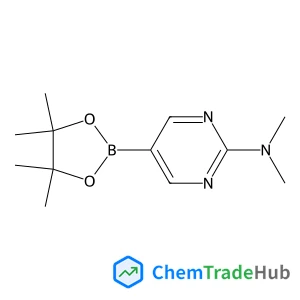
N,N-Dimethyl-5-(4,4,5,5-tetramethyl-1,3,2-dioxaborolan-2-yl)-2-pyrimidinamine
CAS Number:
1032759-30-0
Molecular Formula:
C12H20BN3O2
Recommended Suppliers







Disclaimer
This page provides academic journal information for reference and research purposes only. We are not affiliated with any journal publishers and do not handle publication submissions. For publication-related inquiries, please contact the respective journal publishers directly.
If you notice any inaccuracies in the information displayed, please contact us at support@chemtradehub.com. We will promptly review and address your concerns.