












Fano resonances in the photoinduced H-atom elimination dynamics in the πσ* states of pyrrole
Literature Information
Publication Date
2017-05-24
DOI
10.1039/C7CP01401E
Impact Factor
3.676
Authors
Sergy Yu. Grebenshchikov, David Picconi
View Original
Abstract
Fano resonances are predicted to be prominent features of the πσ* photochemistry of pyrrole. The Fano interference leads to distorted absorption bands and internally hot photofragments. The interference, studied using high level ab initio theory and quantum mechanics, is supported by two distinct dynamical scenarios controlled by two exit channel conical intersections between the πσ* states and the ground electronic state . For the lowest state 1A2(πσ*), the coupling at the conical intersection is weak, and the interfering dissociation pathways are diabatic; for the higher lying 1B1(πσ*) state, the coupling at the conical intersection is strong, and the interfering dissociation pathways are adiabatic. Both scenarios persist with increasing number of degrees of freedom included in the dynamic modelling. They are expected to be operative in the πσ* photochemistry of a broad class of model UV biochromophores.
Related Literature
Sustainable route to methyl-9-hydroxononanoate (polymer precursor) by oxidative cleavage of fatty acid methyl ester from rapeseed oil
Kévin Louis, Laurence Vivier, Jean-Marc Clacens, Markus Brandhorst, Jean-Luc Dubois, Karine De Oliveira Vigier, Yannick Pouilloux
2013-10-04
Communication
DOI: 10.1039/C3GC41491D
Signal loss in 1D magic-angle spinning exchange NMR (CODEX): radio-frequency limitations and intermediate motions
Christiane Hackel, Cornelius Franz, Anja Achilles, Kay Saalwächter, Detlef Reichert
2009-07-17
Paper
DOI: 10.1039/B906527J
Why can Dispolreg 007 control the nitroxide mediated polymerization of methacrylates?
Alexandre Simula, Fernando Ruipérez, Nicholas Ballard, José R. Leiza, José M. Asua
2018-11-15
Paper
DOI: 10.1039/C8PY00900G
Effect of pressure on ion transport in amorphous and semi-crystalline polymer electrolytes
Z. Stoeva, C. T. Imrie, M. D. Ingram
2002-11-29
Paper
DOI: 10.1039/B208552F
Interface thickness optimization of lead-free oxide multilayer capacitors for high-performance energy storage
Chunrui Ma, Xiaojie Lou
2017-12-22
Paper
DOI: 10.1039/C7TA10271B
The structure of chromophore-grafted amyloid-β12–28 dimers in the gas-phase: FRET-experiment guided modelling
2016-02-19
Paper
DOI: 10.1039/C6CP00263C
Practical metal- and additive-free methods for radical-mediated reduction and cyclization reactions
Hao Jiang, Jesper R. Bak, Francisco Javier López-Delgado, Karl Anker Jørgensen
2013-10-29
Paper
DOI: 10.1039/C3GC41520A
Oxidation responsive mono-cleavable amphiphilic di-block polymer micelles labeled with a single diselenide
2013-05-07
Paper
DOI: 10.1039/C3PY00406F
Stimuli-responsive perallyloxycucurbit[6]uril-based nanoparticles for selective drug delivery in melanoma cells
Qian Cheng, Shengke Li, Chen Sun, Ludan Yue, Ruibing Wang
2018-09-29
Research Article
DOI: 10.1039/C8QM00460A
Access to aliphatic protons as reporters in non-deuterated proteins by solid-state NMR
Suresh Kumar Vasa, Petra Rovó, Karin Giller, Stefan Becker, Rasmus Linser
2015-11-20
Paper
DOI: 10.1039/C5CP06601H
You might also like
Compound Q&A
Are there alternatives to 1-(4-Chlorophenyl)-N-hydroxymethanimine (CAS: 3848-36-0) in synthesis?
When considering alternatives to 1-(4-Chlorophenyl)-N-hydroxymethanimine (CAS: 3...
3848-36-01-(4-Chlorophenyl)-N...
Compound Q&A
How should (1R,9S,10S,12S,14E,16S,19R,20R,21S,22R)-3,9,21-Trihydroxy-5,10,12,14,16,20,22-heptamethyl-23,24-dioxatetracyclo[17.3.1.1~6,9~.0~2,7~]tetracosa-2,5,7,14-tetraen-4-one (CAS: 183202-73-5) be stored?
This compound should be stored in a cool, dry place away from direct sunlight. I...
183202-73-5(1R,9S,10S,12S,14E,1...
Compound Q&A
How is 3-(4-Bromophenyl)-5-(2-fluorophenyl)-1,2,4-oxadiazole (CAS: 419553-16-5) typically synthesized?
3-(4-Bromophenyl)-5-(2-fluorophenyl)-1,2,4-oxadiazole is synthesized through a m...
419553-16-53-(4-Bromophenyl)-5-...
Compound Q&A
How is 5-Chloro-2-(4-chlorophenyl)-4-methyl-6-[3-(1-piperidinyl)propoxy]pyrimidine (CAS: 1639220-19-1) typically synthesized?
5-Chloro-2-(4-chlorophenyl)-4-methyl-6-[3-(1-piperidinyl)propoxy]pyrimidine (CAS...
1639220-19-15-Chloro-2-(4-chloro...
Compound Q&A
What industries use 2-Chloro-4-(difluoromethoxy)pyridine (CAS: 1206978-15-5)?
2-Chloro-4-(difluoromethoxy)pyridine is used in the pharmaceutical industry for ...
1206978-15-52-Chloro-4-(difluoro...
Compound Q&A
What regulatory guidelines apply to 3-Chloro-6-methylpyridazine (CAS: 1121-79-5)?
3-Chloro-6-methylpyridazine (CAS: 1121-79-5) is classified under the Globally Ha...
1121-79-53-Chloro-6-methylpyr...
Compound Q&A
Are there alternatives to Methyl 4,5-dimethyl-2-nitrobenzoate in synthesis?
Several alternatives can be used in the synthesis of Methyl 4,5-dimethyl-2-nitro...
90922-74-0Methyl 4,5-dimethyl-...
Compound Q&A
Are there alternatives to (2E,2'E)-3,3'-(1,4-Phenylene)bisacrylaldehyde in synthesis?
Alternatives to (2E,2'E)-3,3'-(1,4-Phenylene)bisacrylaldehyde include other acry...
63405-68-5(2E,2'E)-3,3'-(1,4-P...
Compound Q&A
What is 3-Amino-5-chloropyridin-2-ol hydrochloride (CAS: 1261906-29-9)?
3-Amino-5-chloropyridin-2-ol hydrochloride is an organic compound with the CAS n...
1261906-29-93-Amino-5-chloropyri...
Compound Q&A
What precautions should be taken when handling 6,7-Difluoro-2,3-dihydro-4H-chromen-4-one (CAS: 1092349-93-3)?
When handling 6,7-Difluoro-2,3-dihydro-4H-chromen-4-one, it is essential to wear...
1092349-93-36,7-Difluoro-2,3-dih...
Source Journal
Physical Chemistry Chemical Physics

CiteScore:
5.5
Self-citation Rate:
10.3%
Articles per Year:
3036
Physical Chemistry Chemical Physics (PCCP) is an international journal co-owned by 19 physical chemistry and physics societies from around the world. This journal publishes original, cutting-edge research in physical chemistry, chemical physics and biophysical chemistry. To be suitable for publication in PCCP, articles must include significant innovation and/or insight into physical chemistry; this is the most important criterion that reviewers and Editors will judge against when evaluating submissions. The journal has a broad scope and welcomes contributions spanning experiment, theory, computation and data science. Topical coverage includes spectroscopy, dynamics, kinetics, statistical mechanics, thermodynamics, electrochemistry, catalysis, surface science, quantum mechanics, quantum computing and machine learning. Interdisciplinary research areas such as polymers and soft matter, materials, nanoscience, energy, surfaces/interfaces, and biophysical chemistry are welcomed if they demonstrate significant innovation and/or insight into physical chemistry. Joined experimental/theoretical studies are particularly appreciated when complementary and based on up-to-date approaches.
Recommended Compounds
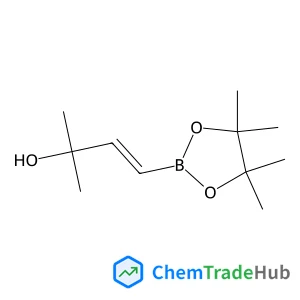
(E)-2-methyl-4-(4,4,5,5-tetramethyl-1,3,2-dioxaborolan-2-yl)but-3-en-2-ol
CAS Number:
581802-26-8
Molecular Formula:
C11H21BO3
![4-[(3-Chloro-2-fluorophenyl)amino]-7-methoxy-6-quinazolinyl acetate structure](https://static.chemtradehub.com/structs/740/740081-22-5-f58f.webp "4-[(3-Chloro-2-fluorophenyl)amino]-7-methoxy-6-quinazolinyl acetate structure")
4-[(3-Chloro-2-fluorophenyl)amino]-7-methoxy-6-quinazolinyl acetate
CAS Number:
740081-22-5
Molecular Formula:
C17H13ClFN3O3
Recommended Suppliers





Disclaimer
This page provides academic journal information for reference and research purposes only. We are not affiliated with any journal publishers and do not handle publication submissions. For publication-related inquiries, please contact the respective journal publishers directly.
If you notice any inaccuracies in the information displayed, please contact us at support@chemtradehub.com. We will promptly review and address your concerns.