



Preparation and characterization of a calcium–phosphate–silicon coating on a Mg–Zn–Ca alloy via two-step micro-arc oxidation
Literature Information
Publication Date
2017-05-19
DOI
10.1039/C7CP02672B
Impact Factor
3.676
Authors
Jinhe Dou, Yang Chen, Yiming Chi, Huancai Li, Guochao Gu, Chuanzhong Chen
View Original
Abstract
Magnesium alloys are the most promising implant materials due to their excellent biodegradability. However, their high degradation rate limits their practical application. In this study, we produced a calcium–phosphate (Ca–P) coating and a calcium–phosphate–silicon (Ca–P–Si) coating via one-step and two-step micro-arc oxidation processes, respectively. The microstructure and chemical composition of the MAO coatings were characterized using SEM, XRD and EDS. The degradation behaviors of the MAO coatings and the substrate were investigated using electrochemical techniques and immersion tests in simulated body fluid (SBF). The results show that the silicate was successfully incorporated into the Ca–P coating in the second MAO step, and this also increased the thickness of the coating. The Ca–P–Si coatings remarkably reduced the corrosion rate of the Mg alloy and Ca–P coating during 18 days of immersion in SBF. In addition, the bone-like apatite layer on the sample surface demonstrated the good biomineralization ability of the Ca–P–Si coating. Potentiodynamic polarization results showed that the MAO coating could clearly enhance the corrosion resistance of the Mg alloy. Moreover, we propose the growth mechanism of the MAO coating in the second step.
Recommended Journals

Main Group Chemistry

Herald of the Russian Academy of Sciences

Journal of Asian Natural Products Research

Bioorganic & Medicinal Chemistry Letters

Chinese Journal of Chemistry

Medicinal Chemistry Research

Bioorganic & Medicinal Chemistry

Topics in Catalysis

Polycyclic Aromatic Compounds

Atomization and Sprays
Related Literature
Agnanostructures assembled on magnetic particles for ready SERS-based detection of dissolved chemical species
Kwan Kim, Hee Jin Jang, Kuan Soo Shin
2008-10-21
Paper
DOI: 10.1039/B811425K
High throughput screening arrays of rhodium and iridium complexes as catalysts for intramolecular hydroamination using parallel factor analysis‡
Diako Ebrahimi, Danielle F. Kennedy, Barbara A. Messerle, D. Brynn Hibbert
2008-03-13
Paper
DOI: 10.1039/B719501J
Multifunctional magnetic bead-based electrochemical immunoassay for the detection ofaflatoxin B1 in food
Dianping Tang, Zhaoyang Zhong, Reinhard Niessner, Dietmar Knopp
2009-05-20
Paper
DOI: 10.1039/B902401H
Amperometric quantification based on serial dilution microfluidic systems
Monique Sigaud, Olivier Vittori, Naim Ouaini
2008-12-02
Paper
DOI: 10.1039/B811629F
Raman spectral imaging of single living cancer cells: a preliminary study
Florence Draux, Pierre Jeannesson, Abdelilah Beljebbar, Ali Tfayli, Nicolas Fourre, Michel Manfait, Josep Sulé-Suso, Ganesh D. Sockalingum
2008-12-02
Paper
DOI: 10.1039/B812610K
Dithizone nanofiber-coated membrane for filtration-enrichment and colorimetric detection of trace Hg(ii) ion
Toshishige M. Suzuki
2009-04-23
Paper
DOI: 10.1039/B816461D
Novel fluorescence enhancement IgE assay using a DNA aptamer
Jing-Lin He, Zai-Sheng Wu, Song-Bai Zhang, Guo-Li Shen, Ru-Qin Yu
2009-03-12
Paper
DOI: 10.1039/B812450G
Rapid and quantitative detection of the microbial spoilage in milk using Fourier transform infrared spectroscopy and chemometrics
Nicoletta Nicolaou, Royston Goodacre
2008-07-11
Paper
DOI: 10.1039/B804439B
You might also like
Compound Q&A
Are there alternatives to 1-(4-Chlorophenyl)-N-hydroxymethanimine (CAS: 3848-36-0) in synthesis?
When considering alternatives to 1-(4-Chlorophenyl)-N-hydroxymethanimine (CAS: 3...
3848-36-01-(4-Chlorophenyl)-N...
Compound Q&A
How should (1R,9S,10S,12S,14E,16S,19R,20R,21S,22R)-3,9,21-Trihydroxy-5,10,12,14,16,20,22-heptamethyl-23,24-dioxatetracyclo[17.3.1.1~6,9~.0~2,7~]tetracosa-2,5,7,14-tetraen-4-one (CAS: 183202-73-5) be stored?
This compound should be stored in a cool, dry place away from direct sunlight. I...
183202-73-5(1R,9S,10S,12S,14E,1...
Compound Q&A
How is 3-(4-Bromophenyl)-5-(2-fluorophenyl)-1,2,4-oxadiazole (CAS: 419553-16-5) typically synthesized?
3-(4-Bromophenyl)-5-(2-fluorophenyl)-1,2,4-oxadiazole is synthesized through a m...
419553-16-53-(4-Bromophenyl)-5-...
Compound Q&A
How is 5-Chloro-2-(4-chlorophenyl)-4-methyl-6-[3-(1-piperidinyl)propoxy]pyrimidine (CAS: 1639220-19-1) typically synthesized?
5-Chloro-2-(4-chlorophenyl)-4-methyl-6-[3-(1-piperidinyl)propoxy]pyrimidine (CAS...
1639220-19-15-Chloro-2-(4-chloro...
Compound Q&A
What industries use 2-Chloro-4-(difluoromethoxy)pyridine (CAS: 1206978-15-5)?
2-Chloro-4-(difluoromethoxy)pyridine is used in the pharmaceutical industry for ...
1206978-15-52-Chloro-4-(difluoro...
Compound Q&A
What regulatory guidelines apply to 3-Chloro-6-methylpyridazine (CAS: 1121-79-5)?
3-Chloro-6-methylpyridazine (CAS: 1121-79-5) is classified under the Globally Ha...
1121-79-53-Chloro-6-methylpyr...
Compound Q&A
Are there alternatives to Methyl 4,5-dimethyl-2-nitrobenzoate in synthesis?
Several alternatives can be used in the synthesis of Methyl 4,5-dimethyl-2-nitro...
90922-74-0Methyl 4,5-dimethyl-...
Compound Q&A
Are there alternatives to (2E,2'E)-3,3'-(1,4-Phenylene)bisacrylaldehyde in synthesis?
Alternatives to (2E,2'E)-3,3'-(1,4-Phenylene)bisacrylaldehyde include other acry...
63405-68-5(2E,2'E)-3,3'-(1,4-P...
Compound Q&A
What is 3-Amino-5-chloropyridin-2-ol hydrochloride (CAS: 1261906-29-9)?
3-Amino-5-chloropyridin-2-ol hydrochloride is an organic compound with the CAS n...
1261906-29-93-Amino-5-chloropyri...
Compound Q&A
What precautions should be taken when handling 6,7-Difluoro-2,3-dihydro-4H-chromen-4-one (CAS: 1092349-93-3)?
When handling 6,7-Difluoro-2,3-dihydro-4H-chromen-4-one, it is essential to wear...
1092349-93-36,7-Difluoro-2,3-dih...
Source Journal
Physical Chemistry Chemical Physics

CiteScore:
5.5
Self-citation Rate:
10.3%
Articles per Year:
3036
Physical Chemistry Chemical Physics (PCCP) is an international journal co-owned by 19 physical chemistry and physics societies from around the world. This journal publishes original, cutting-edge research in physical chemistry, chemical physics and biophysical chemistry. To be suitable for publication in PCCP, articles must include significant innovation and/or insight into physical chemistry; this is the most important criterion that reviewers and Editors will judge against when evaluating submissions. The journal has a broad scope and welcomes contributions spanning experiment, theory, computation and data science. Topical coverage includes spectroscopy, dynamics, kinetics, statistical mechanics, thermodynamics, electrochemistry, catalysis, surface science, quantum mechanics, quantum computing and machine learning. Interdisciplinary research areas such as polymers and soft matter, materials, nanoscience, energy, surfaces/interfaces, and biophysical chemistry are welcomed if they demonstrate significant innovation and/or insight into physical chemistry. Joined experimental/theoretical studies are particularly appreciated when complementary and based on up-to-date approaches.
Recommended Compounds
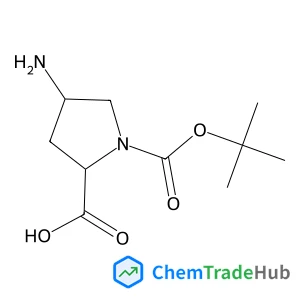
(2R,4R)-1-Boc-4-Aminopyrrolidine-2-carboxylic acid
CAS Number:
132622-98-1
Molecular Formula:
C10H18N2O4

(E)-2-methyl-4-(4,4,5,5-tetramethyl-1,3,2-dioxaborolan-2-yl)but-3-en-2-ol
CAS Number:
581802-26-8
Molecular Formula:
C11H21BO3

tert-Butyl 4-(2-(p-Tolylsulfonyl)hydrazono)piperidine-1-carboxylate
CAS Number:
1046478-89-0
Molecular Formula:
C17H25N3O4S
Recommended Suppliers




Disclaimer
This page provides academic journal information for reference and research purposes only. We are not affiliated with any journal publishers and do not handle publication submissions. For publication-related inquiries, please contact the respective journal publishers directly.
If you notice any inaccuracies in the information displayed, please contact us at support@chemtradehub.com. We will promptly review and address your concerns.