












Mapping the ionic fingerprints of molecular monolayers
Literature Information
Publication Date
2017-05-12
DOI
10.1039/C7CP01500C
Impact Factor
3.676
Authors
Joshua Lehr, Justin R. Weeks, Adriano Santos, Gustavo T. Feliciano, Melany I. G. Nicholson, Jason J. Davis, Paulo R. Bueno
View Original
Abstract
We have previously proposed, and experimentally resolved, an ionic charge relaxation model for redox inactive self-assembled monolayers (SAMs) on metallic electrodes in contact with a liquid electrolyte. Here we analyse, by capacitance spectroscopy, the resistance and capacitance terms presented by a range of thiolated molecular films. Molecular dynamics simulations support a SAM-specific energy barrier to solution-phase ions. Once surmounted, the entrapped ions support a film embedded ionic capacitance and non-faradaic relaxation, which can be assigned as a particular case of general electrochemical capacitance.
Recommended Journals
Related Literature
Spectral relative standard deviation: a practical benchmark in metabolomics
Helen M. Parsons, Drew R. Ekman, Timothy W. Collette
2008-12-02
Paper
DOI: 10.1039/B808986H
Agnanostructures assembled on magnetic particles for ready SERS-based detection of dissolved chemical species
Kwan Kim, Hee Jin Jang, Kuan Soo Shin
2008-10-21
Paper
DOI: 10.1039/B811425K
Optical nanosensors—smart tools in bioanalytics
Sergey M. Borisov, Ingo Klimant
2008-07-30
Highlight
DOI: 10.1039/B805432K
Sol–gel derived nano-structured zinc oxide film for sexually transmitted disease sensor
Anees A. Ansari, Renu Singh, G. Sumana, B. D. Malhotra
2009-03-06
Paper
DOI: 10.1039/B817562D
Hydroxylamine-amplified gold nanoparticles for the naked eye and chemiluminescent detection of sequence-specific DNA with notable potential for single-nucleotide polymorphism discrimination
Aiping Fan, Choiwan Lau, Jianzhong Lu
2008-12-17
Paper
DOI: 10.1039/B817047A
Imprinted polymers for chiral resolution of (±)-ephedrine. Part 2: probing pre-polymerisation equilibria in different solvents by NMR‡
Richard J. Ansell, Dongyao Wang, Janice K. L. Kuah
2008-09-03
Paper
DOI: 10.1039/B806376A
Self-encapsulation of oxidases as a basic approach to tune the upper detection limit of amperometric biosensors
Arunas Ramanavicius, Almira Ramanaviciene
2008-06-12
Paper
DOI: 10.1039/B801501E
Microchip-based integration of cell immobilization, electrophoresis, post-column derivatization, and fluorescence detection for monitoring the release of dopamine from PC 12 cells
Michelle W. Li, R. Scott Martin
2008-07-08
Paper
DOI: 10.1039/B807093H
You might also like
Compound Q&A
Are there alternatives to 1-(4-Chlorophenyl)-N-hydroxymethanimine (CAS: 3848-36-0) in synthesis?
When considering alternatives to 1-(4-Chlorophenyl)-N-hydroxymethanimine (CAS: 3...
3848-36-01-(4-Chlorophenyl)-N...
Compound Q&A
How should (1R,9S,10S,12S,14E,16S,19R,20R,21S,22R)-3,9,21-Trihydroxy-5,10,12,14,16,20,22-heptamethyl-23,24-dioxatetracyclo[17.3.1.1~6,9~.0~2,7~]tetracosa-2,5,7,14-tetraen-4-one (CAS: 183202-73-5) be stored?
This compound should be stored in a cool, dry place away from direct sunlight. I...
183202-73-5(1R,9S,10S,12S,14E,1...
Compound Q&A
How is 3-(4-Bromophenyl)-5-(2-fluorophenyl)-1,2,4-oxadiazole (CAS: 419553-16-5) typically synthesized?
3-(4-Bromophenyl)-5-(2-fluorophenyl)-1,2,4-oxadiazole is synthesized through a m...
419553-16-53-(4-Bromophenyl)-5-...
Compound Q&A
How is 5-Chloro-2-(4-chlorophenyl)-4-methyl-6-[3-(1-piperidinyl)propoxy]pyrimidine (CAS: 1639220-19-1) typically synthesized?
5-Chloro-2-(4-chlorophenyl)-4-methyl-6-[3-(1-piperidinyl)propoxy]pyrimidine (CAS...
1639220-19-15-Chloro-2-(4-chloro...
Compound Q&A
What industries use 2-Chloro-4-(difluoromethoxy)pyridine (CAS: 1206978-15-5)?
2-Chloro-4-(difluoromethoxy)pyridine is used in the pharmaceutical industry for ...
1206978-15-52-Chloro-4-(difluoro...
Compound Q&A
What regulatory guidelines apply to 3-Chloro-6-methylpyridazine (CAS: 1121-79-5)?
3-Chloro-6-methylpyridazine (CAS: 1121-79-5) is classified under the Globally Ha...
1121-79-53-Chloro-6-methylpyr...
Compound Q&A
Are there alternatives to Methyl 4,5-dimethyl-2-nitrobenzoate in synthesis?
Several alternatives can be used in the synthesis of Methyl 4,5-dimethyl-2-nitro...
90922-74-0Methyl 4,5-dimethyl-...
Compound Q&A
Are there alternatives to (2E,2'E)-3,3'-(1,4-Phenylene)bisacrylaldehyde in synthesis?
Alternatives to (2E,2'E)-3,3'-(1,4-Phenylene)bisacrylaldehyde include other acry...
63405-68-5(2E,2'E)-3,3'-(1,4-P...
Compound Q&A
What is 3-Amino-5-chloropyridin-2-ol hydrochloride (CAS: 1261906-29-9)?
3-Amino-5-chloropyridin-2-ol hydrochloride is an organic compound with the CAS n...
1261906-29-93-Amino-5-chloropyri...
Compound Q&A
What precautions should be taken when handling 6,7-Difluoro-2,3-dihydro-4H-chromen-4-one (CAS: 1092349-93-3)?
When handling 6,7-Difluoro-2,3-dihydro-4H-chromen-4-one, it is essential to wear...
1092349-93-36,7-Difluoro-2,3-dih...
Source Journal
Physical Chemistry Chemical Physics

CiteScore:
5.5
Self-citation Rate:
10.3%
Articles per Year:
3036
Physical Chemistry Chemical Physics (PCCP) is an international journal co-owned by 19 physical chemistry and physics societies from around the world. This journal publishes original, cutting-edge research in physical chemistry, chemical physics and biophysical chemistry. To be suitable for publication in PCCP, articles must include significant innovation and/or insight into physical chemistry; this is the most important criterion that reviewers and Editors will judge against when evaluating submissions. The journal has a broad scope and welcomes contributions spanning experiment, theory, computation and data science. Topical coverage includes spectroscopy, dynamics, kinetics, statistical mechanics, thermodynamics, electrochemistry, catalysis, surface science, quantum mechanics, quantum computing and machine learning. Interdisciplinary research areas such as polymers and soft matter, materials, nanoscience, energy, surfaces/interfaces, and biophysical chemistry are welcomed if they demonstrate significant innovation and/or insight into physical chemistry. Joined experimental/theoretical studies are particularly appreciated when complementary and based on up-to-date approaches.
Recommended Compounds
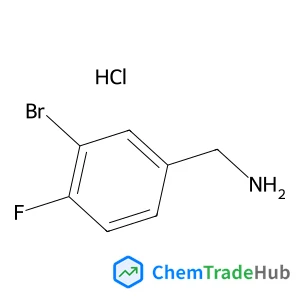
1-(3-Bromo-4-fluorophenyl)methanamine hydrochloride (1:1)
CAS Number:
202865-68-7
Molecular Formula:
C7H8BrClFN
Recommended Suppliers





Disclaimer
This page provides academic journal information for reference and research purposes only. We are not affiliated with any journal publishers and do not handle publication submissions. For publication-related inquiries, please contact the respective journal publishers directly.
If you notice any inaccuracies in the information displayed, please contact us at support@chemtradehub.com. We will promptly review and address your concerns.