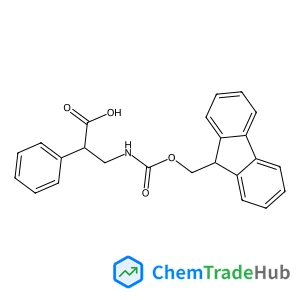
(S)-3-((((9H-Fluoren-9-yl)methoxy)carbonyl)amino)-2-phenylpropanoic acid
CAS Number:
1217663-60-9
Molecular Formula:
C24H21NO4
Kevin Rossi, Francesca Baletto
We elucidate the effect of lattice mismatch and chemical ordering on structural transitions in bimetallic nanoalloys of ∼1.5 nm. We show that collective screw dislocation motions happen in small mismatch shell@core systems while strongly mismatched ones favour incomplete outer shell rearrangements. Cooperative transitions can also become hindered when the chemical ordering breaks the geometrical symmetry. Escaping from an unfavourable morphological basin occurs first via re-arrangements of the geometry and then changes towards a better chemical pattern. We observe that the chemical re-ordering mechanisms are independent of system composition and stoichiometry but hinge on the initial and final chemical arrangements.

Main Group Chemistry

Journal of Asian Natural Products Research

Electroanalysis

Herald of the Russian Academy of Sciences

Critical Reviews in Solid State and Materials Sciences

Journal of the Indian Institute of Science

Polycyclic Aromatic Compounds

NDT & E International

Acta Metallurgica Sinica-English Letters

Atomization and Sprays
Toni Riveros, Grady Hanrahan, Sarah Muliadi, Jennifer Arceo, Frank A. Gomez
DOI: 10.1039/B909143B
Jay W. Grate, Marvin G. Warner, Richard M. Ozanich, Jr., Keith D. Miller, Heather A. Colburn, Brian Dockendorff, Kathryn C. Antolick, Norman C. Anheier Jr., Michael A. Lind, Jianlong Lou, James D. Marks, Cynthia J. Bruckner-Lea
DOI: 10.1039/B900794F
Qing Wang, Xiaohai Yang, Kemin Wang, Weihong Tan, Jun Gou
DOI: 10.1039/B803239D
Andrea Amantonico, Pawel L. Urban, Renato Zenobi
DOI: 10.1039/B907039G
Mehjabin Kathiwala, Andrews Obeng Affum, Jason Perry, Anna Brajter-Toth
DOI: 10.1039/B718125F
Richard P. Hall, Caroline M. Ogilvie, Emma Aarons, Suwan N. Jayasinghe
DOI: 10.1039/B806901H
Katlin Ivon Barrios Eguiluz, Giancarlo Richard Salazar-Banda, Maribel Elizabeth Funes-Huacca, Juliana Vieira Alberice, Emanuel Carrilho, Sergio Antonio Spinola Machado, Luis Alberto Avaca
DOI: 10.1039/B809080G
Atsushi Urakawa, Franz Trachsel, Philipp Rudolf von Rohr, Alfons Baiker
DOI: 10.1039/B808984C
Mingxia Gao, Wenjia Yu, Yang Zhang, Guoquan Yan, Chunhui Deng, Xiangmin Zhang
DOI: 10.1039/B803388A
When considering alternatives to 1-(4-Chlorophenyl)-N-hydroxymethanimine (CAS: 3...
This compound should be stored in a cool, dry place away from direct sunlight. I...
3-(4-Bromophenyl)-5-(2-fluorophenyl)-1,2,4-oxadiazole is synthesized through a m...
5-Chloro-2-(4-chlorophenyl)-4-methyl-6-[3-(1-piperidinyl)propoxy]pyrimidine (CAS...
2-Chloro-4-(difluoromethoxy)pyridine is used in the pharmaceutical industry for ...
3-Chloro-6-methylpyridazine (CAS: 1121-79-5) is classified under the Globally Ha...
Several alternatives can be used in the synthesis of Methyl 4,5-dimethyl-2-nitro...
Alternatives to (2E,2'E)-3,3'-(1,4-Phenylene)bisacrylaldehyde include other acry...
3-Amino-5-chloropyridin-2-ol hydrochloride is an organic compound with the CAS n...
When handling 6,7-Difluoro-2,3-dihydro-4H-chromen-4-one, it is essential to wear...

Physical Chemistry Chemical Physics (PCCP) is an international journal co-owned by 19 physical chemistry and physics societies from around the world. This journal publishes original, cutting-edge research in physical chemistry, chemical physics and biophysical chemistry. To be suitable for publication in PCCP, articles must include significant innovation and/or insight into physical chemistry; this is the most important criterion that reviewers and Editors will judge against when evaluating submissions. The journal has a broad scope and welcomes contributions spanning experiment, theory, computation and data science. Topical coverage includes spectroscopy, dynamics, kinetics, statistical mechanics, thermodynamics, electrochemistry, catalysis, surface science, quantum mechanics, quantum computing and machine learning. Interdisciplinary research areas such as polymers and soft matter, materials, nanoscience, energy, surfaces/interfaces, and biophysical chemistry are welcomed if they demonstrate significant innovation and/or insight into physical chemistry. Joined experimental/theoretical studies are particularly appreciated when complementary and based on up-to-date approaches.
![6-Bromo-2,3-dihydro-1H-pyrido[2,3-b][1,4]oxazine structure](https://static.chemtradehub.com/structs/120/1203499-17-5-b4d1.webp "6-Bromo-2,3-dihydro-1H-pyrido[2,3-b][1,4]oxazine structure")