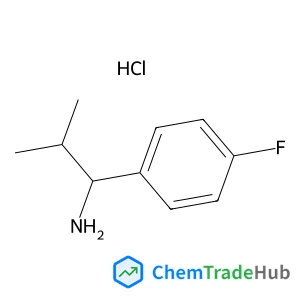
(1R)-1-(4-Fluorophenyl)-2-methyl-1-propanamine hydrochloride (1:1)
CAS Number:
1213329-40-8
Molecular Formula:
C10H15ClFN
Frédéric Castet, Laurent Ducasse, Jean-Luc Pozzo, Vincent Rodriguez
Time-dependent Hartree–Fock and Møller–Plesset second-order calculations have been used to unravel the relationships between structure and first hyperpolarizability in spiropyran/merocyanine couples and therefore to design efficient second-order nonlinear optical switching compounds. Large first hyperpolarizabilities for the merocyanine form as well as large contrasts of first hyperpolarizability have been obtained when, on the same species, (i) substituents at R1 and R2 positions on the phenolate ring of the merocyanine form are strong acceptor and donor substituents, respectively, (ii) the ethylenic bridge is substituted by donor groups, (iii) the other aromatic part of the system is benzimidazolo rather than indolino or benzothiazolo, and (iv) strong donor substituents are placed on the benzimidazolo moiety.
Susith R. Galle Kankanamge, Daniel G. Kuroda
DOI: 10.1039/C8CP06869K
Gustavo Cuba-Supanta, Rafael Gutierrez, Justo Rojas-Tapia
DOI: 10.1039/C8CP05592K
Akram Mirehi, Ebrahim Heidari-Semiromi
DOI: 10.1039/C8CP05041D
Petar M. Radjenovic, Laurence J. Hardwick
DOI: 10.1039/C8CP04652B
Po-Yu Yang, Hsing-Yin Chen, Chia-Lin Chang, Gao-Shee Leu, Che-Hsin Lin
DOI: 10.1039/C8CP02777C
Suman Kalyan Pradhan, Biswajit Dalal, Ankita Sarkar, Subodh Kumar De
DOI: 10.1039/C8CP07140C
Šárka Pokorná, Martin Hof, Mariana Amaro
DOI: 10.1039/C8CP06064A
Helena Jablonowski, Ansgar Schmidt-Bleker, Klaus-Dieter Weltmann, Thomas von Woedtke, Kristian Wende
DOI: 10.1039/C8CP02412J
M. Koroleva, D. Bidanov, E. Yurtov
DOI: 10.1039/C8CP05292A
Anton J. Stasyuk
DOI: 10.1039/C8CP03764G
3-(2-Bromoimidazo[2,1-b]thiazol-6-yl)propanoic acid hydrochloride is typically s...
2-Isopropyl-1,3-dioxane-5-carboxylic acid is typically synthesized by the carbox...
Alisporivir (CAS: 254435-95-5) is an antiviral medication used in the treatment ...
[1,2,4]triazolo[3,4-a]phthalazine (CAS: 234-80-0) is a crystalline compound with...
Regulatory guidelines for (2S)-5-Hydroxy-2-(4-hydroxyphenyl)-4-oxo-3,4-dihydro-2...
2,2-Difluorocyclohexanamine hydrochloride is generally safe when handled under p...
3-Nitro-2-phenylthiophene is primarily used in the synthesis of other organic co...
1-(Trifluoroacetyl)-4-piperidinecarbonitrile (CAS: 77940-79-5) is a colorless to...
Research and market trends for 1,3,6,8-Tetranitro-9H-carbazole (CAS: 4543-33-3) ...
Waste containing Dibenzo[b,d]thiophen-1-ylboronic acid (CAS: 1245943-60-5) shoul...

Physical Chemistry Chemical Physics (PCCP) is an international journal co-owned by 19 physical chemistry and physics societies from around the world. This journal publishes original, cutting-edge research in physical chemistry, chemical physics and biophysical chemistry. To be suitable for publication in PCCP, articles must include significant innovation and/or insight into physical chemistry; this is the most important criterion that reviewers and Editors will judge against when evaluating submissions. The journal has a broad scope and welcomes contributions spanning experiment, theory, computation and data science. Topical coverage includes spectroscopy, dynamics, kinetics, statistical mechanics, thermodynamics, electrochemistry, catalysis, surface science, quantum mechanics, quantum computing and machine learning. Interdisciplinary research areas such as polymers and soft matter, materials, nanoscience, energy, surfaces/interfaces, and biophysical chemistry are welcomed if they demonstrate significant innovation and/or insight into physical chemistry. Joined experimental/theoretical studies are particularly appreciated when complementary and based on up-to-date approaches.