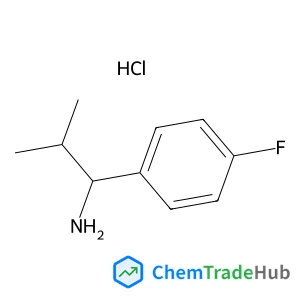
(1R)-1-(4-Fluorophenyl)-2-methyl-1-propanamine hydrochloride (1:1)
CAS Number:
1213329-40-8
Molecular Formula:
C10H15ClFN
Subhankar Sardar, Amit Kumar Paul, Padmabati Mondal, Biplab Sarkar, Satrajit Adhikari
We are investigating the molecular dynamics of the butatriene cation after excitation from the ground state (X2B2g) to the first excited electronic state (A2B2u) by using the time-dependent discrete variable representation (TDDVR) method. The investigation is being carried out with a realistic 18-mode model Hamiltonian consisting of all the vibrational degrees of freedom of the butatriene molecule. First, we perform the simulation on a basic five mode model, and then by including additional thirteen modes as bath on the basic model. This sequential inclusion of bath modes demonstrates the effect of so called weak modes on the subsystem, where the calculations of energy and population transfer from the basic model to the bath quantify the same effect. The spectral profile obtained by using the TDDVR approach shows reasonably good agreement with the results calculated by the quantum mechanical approach/experimental measurement. It appears that the TDDVR approach for those large systems where quantum mechanical description is needed in a restricted region, is a good compromise between accuracy and speed.
Marcelo Lopes Pereira Junior, Rafael Timóteo de Sousa Júnior, Geraldo Magela e Silva
DOI: 10.1039/C8CP06915H
Fu Ding, Lin-Wang Wang
DOI: 10.1039/C8CP01803K
Petar M. Radjenovic, Laurence J. Hardwick
DOI: 10.1039/C8CP04652B
Laura Zanetti-Polzi, Sara Del Galdo, Isabella Daidone, Marco D'Abramo, Vincenzo Barone, Massimiliano Aschi, Andrea Amadei
DOI: 10.1039/C8CP04190C
Yafei Luo, Zhongzhu Chen, Jianping Hu, Zhigang Xu, Qingxi Meng, Dianyong Tang
DOI: 10.1039/C8CP06804F
Ángel José Pérez-Jiménez, Juan-Carlos Sancho-García
DOI: 10.1039/C8CP06727A
Martin Thämer, R. Kramer Campen, Martin Wolf
DOI: 10.1039/C8CP04239J
Song Li, Jyh-Pin Chou, Jie Wei, Huaizhong Xing, Alice Hu
DOI: 10.1039/C8CP03508C
3-(2-Bromoimidazo[2,1-b]thiazol-6-yl)propanoic acid hydrochloride is typically s...
2-Isopropyl-1,3-dioxane-5-carboxylic acid is typically synthesized by the carbox...
Alisporivir (CAS: 254435-95-5) is an antiviral medication used in the treatment ...
[1,2,4]triazolo[3,4-a]phthalazine (CAS: 234-80-0) is a crystalline compound with...
Regulatory guidelines for (2S)-5-Hydroxy-2-(4-hydroxyphenyl)-4-oxo-3,4-dihydro-2...
2,2-Difluorocyclohexanamine hydrochloride is generally safe when handled under p...
3-Nitro-2-phenylthiophene is primarily used in the synthesis of other organic co...
1-(Trifluoroacetyl)-4-piperidinecarbonitrile (CAS: 77940-79-5) is a colorless to...
Research and market trends for 1,3,6,8-Tetranitro-9H-carbazole (CAS: 4543-33-3) ...
Waste containing Dibenzo[b,d]thiophen-1-ylboronic acid (CAS: 1245943-60-5) shoul...

Physical Chemistry Chemical Physics (PCCP) is an international journal co-owned by 19 physical chemistry and physics societies from around the world. This journal publishes original, cutting-edge research in physical chemistry, chemical physics and biophysical chemistry. To be suitable for publication in PCCP, articles must include significant innovation and/or insight into physical chemistry; this is the most important criterion that reviewers and Editors will judge against when evaluating submissions. The journal has a broad scope and welcomes contributions spanning experiment, theory, computation and data science. Topical coverage includes spectroscopy, dynamics, kinetics, statistical mechanics, thermodynamics, electrochemistry, catalysis, surface science, quantum mechanics, quantum computing and machine learning. Interdisciplinary research areas such as polymers and soft matter, materials, nanoscience, energy, surfaces/interfaces, and biophysical chemistry are welcomed if they demonstrate significant innovation and/or insight into physical chemistry. Joined experimental/theoretical studies are particularly appreciated when complementary and based on up-to-date approaches.