













Small substituent groups as geometric controllers for tridentate platinum(ii) complexes to effectively suppress non-radiative decay processes
Literature Information
Publication Date
2019-01-09
DOI
10.1039/C8CP06804F
Impact Factor
3.676
Authors
Yafei Luo, Zhongzhu Chen, Jianping Hu, Zhigang Xu, Qingxi Meng, Dianyong Tang
View Original
Abstract
For phosphorescent emitters, the rigidity of the geometry is a crucial indicator, which can directly determine the non-radiative decay rate. In this article, density functional theory (DFT) calculations were performed to investigate the influence of the small substituent groups on the rigidities of tridentate Pt(II) complexes in detail. The calculated results indicate that the small substituent groups can serve as geometric controllers to suppress the structural distortion on going from the ground state (S0) to the lowest-lying triplet excited state (T1) (Jahn–Teller distortion). For instance, when electron-donating substituent groups, including –NH2, –N(CH3)2 and –OCH3, were employed, the rigidities of the corresponding Pt(II) complexes can be effectively enhanced because the highest occupied molecular orbital (HOMO)–HOMO−1 energy gaps could be increased. Different from the electron-donating substituent groups, electron-withdrawing substituent groups, i.e., –NO2 and –COCH3, can cause a negligible change in HOMO and HOMO−1 energies during the S0 → T1 transition process, and therefore, for Pt-NO2 and Pt-COCH3, no Jahn–Teller distortion occurs. According to the calculated results, the rigidities of tridentate Pt(II) complexes could be raised via tuning the energies of the frontier molecular orbital (FMO) with the help of small substituent groups.
Recommended Journals
Related Literature
Low energy electron catalyst: the electronic origin of catalytic strategies‡
Daly Davis, Y. Sajeev
2016-09-12
Communication
DOI: 10.1039/C6CP05480C
125Te NMR provides evidence of autoassociation of organo-ditellurides in solution
P. J. W. Elder, I. Vargas-Baca
2016-10-13
Paper
DOI: 10.1039/C6CP05892B
Regulating ancillary ligands of Ru(ii) complexes with square-planar quadridentate ligands for more efficient sensitizers in dye-sensitized solar cells: insights from theoretical investigations
Teng-Fei Lu, Wei Li, Jie Chen, Fu-Quan Bai, Jian Wang, Ling-Jun He, Hong-Xing Zhang
2016-09-08
Paper
DOI: 10.1039/C6CP05649K
Transition state geometry of driven chemical reactions on time-dependent double-well potentials
Andrej Junginger, Galen T. Craven, Thomas Bartsch, R. M. Benito, Rigoberto Hernandez
2016-06-06
Paper
DOI: 10.1039/C6CP02519F
Getting excited: challenges in quantum-classical studies of excitons in polymeric systems
Behnaz Bagheri, Björn Baumeier, Mikko Karttunen
2016-07-18
Paper
DOI: 10.1039/C6CP02944B
Effects of extending the π-conjugation of the acetylide ligand on the photophysics and reverse saturable absorption of Pt(ii) bipyridine bisacetylide complexes
Taotao Lu, Chengzhe Wang, Levi Lystrom, Chengkui Pei, Svetlana Kilina, Wenfang Sun
2016-09-19
Paper
DOI: 10.1039/C6CP02628A
Insights into the effect of CO2 absorption on the ionic mobility of ionic liquids
Shubhankar Bhattacharyya, Faiz Ullah Shah
2016-09-15
Paper
DOI: 10.1039/C6CP05804C
Crystal structure, luminescence properties, energy transfer and thermal properties of a novel color-tunable, white light-emitting phosphor Ca9−x−yCe(PO4)7:xEu2+,yMn2+
Chao Wang, Panlai Li, Zhijun Wang, Yuansheng Sun, Jinge Cheng, Zhenling Li, Miaomiao Tian, Zhiping Yang
2016-09-20
Paper
DOI: 10.1039/C6CP05490K
Correction: Facile solvothermal synthesis of a high-efficiency CNNs/Ag/AgCl plasmonic photocatalyst
Youliang Wang, Mingzhu Xia, Kebin Li, Xinlin Shen, Tahir Muhmood, Fengyun Wang
2016-10-18
Correction
DOI: 10.1039/C6CP90250B
Correction: Theory of solid effect and cross effect dynamic nuclear polarization with half-integer high-spin metal polarizing agents in rotating solids
2016-10-13
Correction
DOI: 10.1039/C6CP90249A
You might also like
Compound Q&A
Are there alternatives to 1-(4-Chlorophenyl)-N-hydroxymethanimine (CAS: 3848-36-0) in synthesis?
When considering alternatives to 1-(4-Chlorophenyl)-N-hydroxymethanimine (CAS: 3...
3848-36-01-(4-Chlorophenyl)-N...
Compound Q&A
How should (1R,9S,10S,12S,14E,16S,19R,20R,21S,22R)-3,9,21-Trihydroxy-5,10,12,14,16,20,22-heptamethyl-23,24-dioxatetracyclo[17.3.1.1~6,9~.0~2,7~]tetracosa-2,5,7,14-tetraen-4-one (CAS: 183202-73-5) be stored?
This compound should be stored in a cool, dry place away from direct sunlight. I...
183202-73-5(1R,9S,10S,12S,14E,1...
Compound Q&A
How is 3-(4-Bromophenyl)-5-(2-fluorophenyl)-1,2,4-oxadiazole (CAS: 419553-16-5) typically synthesized?
3-(4-Bromophenyl)-5-(2-fluorophenyl)-1,2,4-oxadiazole is synthesized through a m...
419553-16-53-(4-Bromophenyl)-5-...
Compound Q&A
How is 5-Chloro-2-(4-chlorophenyl)-4-methyl-6-[3-(1-piperidinyl)propoxy]pyrimidine (CAS: 1639220-19-1) typically synthesized?
5-Chloro-2-(4-chlorophenyl)-4-methyl-6-[3-(1-piperidinyl)propoxy]pyrimidine (CAS...
1639220-19-15-Chloro-2-(4-chloro...
Compound Q&A
What industries use 2-Chloro-4-(difluoromethoxy)pyridine (CAS: 1206978-15-5)?
2-Chloro-4-(difluoromethoxy)pyridine is used in the pharmaceutical industry for ...
1206978-15-52-Chloro-4-(difluoro...
Compound Q&A
What regulatory guidelines apply to 3-Chloro-6-methylpyridazine (CAS: 1121-79-5)?
3-Chloro-6-methylpyridazine (CAS: 1121-79-5) is classified under the Globally Ha...
1121-79-53-Chloro-6-methylpyr...
Compound Q&A
Are there alternatives to Methyl 4,5-dimethyl-2-nitrobenzoate in synthesis?
Several alternatives can be used in the synthesis of Methyl 4,5-dimethyl-2-nitro...
90922-74-0Methyl 4,5-dimethyl-...
Compound Q&A
Are there alternatives to (2E,2'E)-3,3'-(1,4-Phenylene)bisacrylaldehyde in synthesis?
Alternatives to (2E,2'E)-3,3'-(1,4-Phenylene)bisacrylaldehyde include other acry...
63405-68-5(2E,2'E)-3,3'-(1,4-P...
Compound Q&A
What is 3-Amino-5-chloropyridin-2-ol hydrochloride (CAS: 1261906-29-9)?
3-Amino-5-chloropyridin-2-ol hydrochloride is an organic compound with the CAS n...
1261906-29-93-Amino-5-chloropyri...
Compound Q&A
What precautions should be taken when handling 6,7-Difluoro-2,3-dihydro-4H-chromen-4-one (CAS: 1092349-93-3)?
When handling 6,7-Difluoro-2,3-dihydro-4H-chromen-4-one, it is essential to wear...
1092349-93-36,7-Difluoro-2,3-dih...
Source Journal
Physical Chemistry Chemical Physics

CiteScore:
5.5
Self-citation Rate:
10.3%
Articles per Year:
3036
Physical Chemistry Chemical Physics (PCCP) is an international journal co-owned by 19 physical chemistry and physics societies from around the world. This journal publishes original, cutting-edge research in physical chemistry, chemical physics and biophysical chemistry. To be suitable for publication in PCCP, articles must include significant innovation and/or insight into physical chemistry; this is the most important criterion that reviewers and Editors will judge against when evaluating submissions. The journal has a broad scope and welcomes contributions spanning experiment, theory, computation and data science. Topical coverage includes spectroscopy, dynamics, kinetics, statistical mechanics, thermodynamics, electrochemistry, catalysis, surface science, quantum mechanics, quantum computing and machine learning. Interdisciplinary research areas such as polymers and soft matter, materials, nanoscience, energy, surfaces/interfaces, and biophysical chemistry are welcomed if they demonstrate significant innovation and/or insight into physical chemistry. Joined experimental/theoretical studies are particularly appreciated when complementary and based on up-to-date approaches.
Recommended Compounds
![6-Bromo-2,3-dihydro-1H-pyrido[2,3-b][1,4]oxazine structure](https://static.chemtradehub.com/structs/120/1203499-17-5-b4d1.webp "6-Bromo-2,3-dihydro-1H-pyrido[2,3-b][1,4]oxazine structure")
6-Bromo-2,3-dihydro-1H-pyrido[2,3-b][1,4]oxazine
CAS Number:
1203499-17-5
Molecular Formula:
C7H7BrN2O
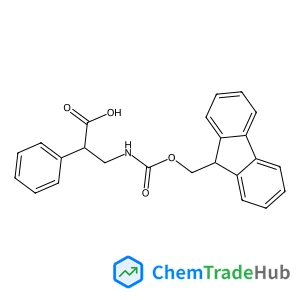
(S)-3-((((9H-Fluoren-9-yl)methoxy)carbonyl)amino)-2-phenylpropanoic acid
CAS Number:
1217663-60-9
Molecular Formula:
C24H21NO4
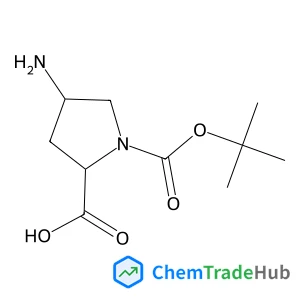
(2R,4R)-1-Boc-4-Aminopyrrolidine-2-carboxylic acid
CAS Number:
132622-98-1
Molecular Formula:
C10H18N2O4
Recommended Suppliers




Disclaimer
This page provides academic journal information for reference and research purposes only. We are not affiliated with any journal publishers and do not handle publication submissions. For publication-related inquiries, please contact the respective journal publishers directly.
If you notice any inaccuracies in the information displayed, please contact us at support@chemtradehub.com. We will promptly review and address your concerns.