












Correlation between the band positions of (SrTiO3)1−x·(LaTiO2N)x solid solutions and photocatalytic properties under visible light irradiation
Literature Information
Publication Date
2008-09-25
DOI
10.1039/B803996H
Impact Factor
3.676
Authors
Lifei Liu, Xinyi Chen
View Original
Abstract
N-doped SrTiO3 and (SrTiO3)1−x·(LaTiO2N)x samples were prepared by the thermal ammonolysis method. The photocatalytic activities of the samples were investigated in a water suspension system. Aqueous methanol solution (50 mL CH3OH + 220 mL H2O) for H2 evolution and aqueous silver nitrate solution (270 mL, 0.01 mol L−1) for O2 evolution were used as sacrificial reagents. The oxynitrides showed photocatalytic activities under visible light irradiation. The maximum rates of photocatalytic hydrogen and oxygen evolution under visible light irradiation (λ > 420 nm) were 10 and 8 μmol h−1, respectively. The samples were characterized by X-ray diffractometry, UV-Vis spectrophotometry, Fourier transform infrared spectrometry, and laser Raman spectroscopy. The unit cell edge length of (SrTiO3)1−x·(LaTiO2N)x increased linearly and their band gaps reduced from 3.18 to 2.04 eV with increasing x from 0 to 0.30. Moreover, the calculation results of (SrTiO3)0.75·(LaTiO2N)0.25 by density functional theory suggested that the band gap narrowing of the solid solutions came from the hybridization of N2p and O2p orbital. The band positions of the solid solutions were further investigated by Mott-Schottky and the onset potential method. The results suggested that the conduction band of the solid solution was lowered, which led to decrement of the hydrogen evolution rate.
Related Literature
Detecting weak signals from interfaces by high accuracy phase-resolved SFG spectroscopy
Martin Thämer, R. Kramer Campen, Martin Wolf
2018-09-28
Paper
DOI: 10.1039/C8CP04239J
Molecular dynamics study on the role of solvation water in the adsorption of hyperactive AFP to the ice surface
2018-09-27
Paper
DOI: 10.1039/C8CP05027A
Small substituent groups as geometric controllers for tridentate platinum(ii) complexes to effectively suppress non-radiative decay processes
Yafei Luo, Zhongzhu Chen, Jianping Hu, Zhigang Xu, Qingxi Meng, Dianyong Tang
2019-01-09
Paper
DOI: 10.1039/C8CP06804F
Non-nuclear attractors in small charged lithium clusters, Limq (m = 2–5, q = ±1), with QTAIM and the Ehrenfest force partitioning
Alireza Azizi, Roya Momen, Tianlv Xu, Steven R. Kirk, Samantha Jenkins
2018-09-13
Paper
DOI: 10.1039/C8CP05214J
Microscopic origin of pressure-induced phase-transitions in urea: a detailed investigation through first principles calculations
B. Moses Abraham, B. Adivaiah
2018-11-30
Paper
DOI: 10.1039/C8CP04827D
In proteins, the structural responses of a position to mutation rely on the Goldilocks principle: not too many links, not too few
Laëtitia Bourgeat, Laurent Vuillon
2018-09-27
Paper
DOI: 10.1039/C8CP04530E
A simple model for calculating atomic charges in molecules
Anton J. Stasyuk
2018-08-25
Paper
DOI: 10.1039/C8CP03764G
A computational study on the tunability of woven covalent organic frameworks for photocatalysis
Li Yang, Ziye Wu, Jun Jiang, Guozhen Zhang
2018-08-20
Paper
DOI: 10.1039/C8CP04373F
Effects of the interplay between electron–electron interaction and intrinsic spin–orbit interaction on the indirect RKKY coupling in graphene nanoflakes
Akram Mirehi, Ebrahim Heidari-Semiromi
2018-12-21
Paper
DOI: 10.1039/C8CP05041D
You might also like
Compound Q&A
How is 3-(2-Bromoimidazo[2,1-b]thiazol-6-yl)propanoic acid hydrochloride (CAS: 1187830-80-3) typically synthesized?
3-(2-Bromoimidazo[2,1-b]thiazol-6-yl)propanoic acid hydrochloride is typically s...
1187830-80-33-(2-Bromoimidazo[2,...
Compound Q&A
How is 2-Isopropyl-1,3-dioxane-5-carboxylic acid (CAS: 116193-72-7) typically synthesized?
2-Isopropyl-1,3-dioxane-5-carboxylic acid is typically synthesized by the carbox...
116193-72-72-Isopropyl-1,3-diox...
Compound Q&A
What is Alisporivir (CAS: 254435-95-5)?
Alisporivir (CAS: 254435-95-5) is an antiviral medication used in the treatment ...
254435-95-5Alisporivir
Compound Q&A
What are the physical and chemical properties of [1,2,4]triazolo[3,4-a]phthalazine (CAS: 234-80-0)?
[1,2,4]triazolo[3,4-a]phthalazine (CAS: 234-80-0) is a crystalline compound with...
234-80-0[1,2,4]triazolo[3,4-...
Compound Q&A
What regulatory guidelines apply to (2S)-5-Hydroxy-2-(4-hydroxyphenyl)-4-oxo-3,4-dihydro-2H-chromen-7-yl methyl beta-D-glucopyranosiduronate (CAS: 1985597-72-5)?
Regulatory guidelines for (2S)-5-Hydroxy-2-(4-hydroxyphenyl)-4-oxo-3,4-dihydro-2...
1985597-72-5(2S)-5-Hydroxy-2-(4-...
Compound Q&A
Is 2,2-Difluorocyclohexanamine hydrochloride (CAS: 921602-83-7) safe?
2,2-Difluorocyclohexanamine hydrochloride is generally safe when handled under p...
921602-83-72,2-Difluorocyclohex...
Compound Q&A
What are the main uses of 3-Nitro-2-phenylthiophene (CAS: 18150-94-2)?
3-Nitro-2-phenylthiophene is primarily used in the synthesis of other organic co...
18150-94-23-Nitro-2-phenylthio...
Compound Q&A
What is 1-(Trifluoroacetyl)-4-piperidinecarbonitrile (CAS: 77940-79-5)?
1-(Trifluoroacetyl)-4-piperidinecarbonitrile (CAS: 77940-79-5) is a colorless to...
77940-79-51-(Trifluoroacetyl)-...
Compound Q&A
What is the market or research trend for 1,3,6,8-Tetranitro-9H-carbazole (CAS: 4543-33-3)?
Research and market trends for 1,3,6,8-Tetranitro-9H-carbazole (CAS: 4543-33-3) ...
4543-33-31,3,6,8-Tetranitro-9...
Compound Q&A
How should waste containing Dibenzo[b,d]thiophen-1-ylboronic acid (CAS: 1245943-60-5) be handled?
Waste containing Dibenzo[b,d]thiophen-1-ylboronic acid (CAS: 1245943-60-5) shoul...
1245943-60-5Dibenzo[b,d]thiophen...
Source Journal
Physical Chemistry Chemical Physics

CiteScore:
5.5
Self-citation Rate:
10.3%
Articles per Year:
3036
Physical Chemistry Chemical Physics (PCCP) is an international journal co-owned by 19 physical chemistry and physics societies from around the world. This journal publishes original, cutting-edge research in physical chemistry, chemical physics and biophysical chemistry. To be suitable for publication in PCCP, articles must include significant innovation and/or insight into physical chemistry; this is the most important criterion that reviewers and Editors will judge against when evaluating submissions. The journal has a broad scope and welcomes contributions spanning experiment, theory, computation and data science. Topical coverage includes spectroscopy, dynamics, kinetics, statistical mechanics, thermodynamics, electrochemistry, catalysis, surface science, quantum mechanics, quantum computing and machine learning. Interdisciplinary research areas such as polymers and soft matter, materials, nanoscience, energy, surfaces/interfaces, and biophysical chemistry are welcomed if they demonstrate significant innovation and/or insight into physical chemistry. Joined experimental/theoretical studies are particularly appreciated when complementary and based on up-to-date approaches.
Recommended Compounds
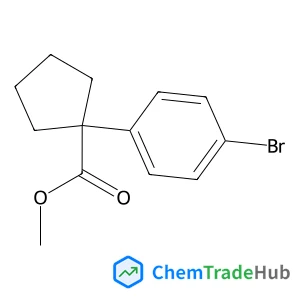
Methyl 1-(4-bromophenyl)cyclopentanecarboxylate
CAS Number:
1236357-64-4
Molecular Formula:
C13H15BrO2
Recommended Suppliers





Disclaimer
This page provides academic journal information for reference and research purposes only. We are not affiliated with any journal publishers and do not handle publication submissions. For publication-related inquiries, please contact the respective journal publishers directly.
If you notice any inaccuracies in the information displayed, please contact us at support@chemtradehub.com. We will promptly review and address your concerns.