


Non-nuclear attractors in small charged lithium clusters, Limq (m = 2–5, q = ±1), with QTAIM and the Ehrenfest force partitioning
Literature Information
Publication Date
2018-09-13
DOI
10.1039/C8CP05214J
Impact Factor
3.676
Authors
Alireza Azizi, Roya Momen, Tianlv Xu, Steven R. Kirk, Samantha Jenkins
View Original
Abstract
In this investigation we explore the function and existence of the non-nuclear attractor (NNA) for a series of small charged lithium clusters Limq (m = 2–5, q = ±1) using QTAIM and the Ehrenfest force F(r) partitioning schemes. The NNAs were found to be present in all of the Limq (m = 2–5, q = ±1) clusters for QTAIM, in contrast none were found for F(r). We discovered that the anionic and cationic lithium dimers are limiting cases for minimal and maximal impact of the NNA related to the relative sparseness of total charge density ρ(r) distributions respectively. Evidence is found that the NNA in the anionic dimer is in the process of being annihilated by two neighboring BCPs. We provide a measure of the size of the NNA and find for Limq (m = 2–5, q = ±1) that larger NNAs correlate with increased Li–Li separations. The NNA was determined to be a persistent feature by varying the Li separations for the cationic and anionic dimers. Very large Li separations failed to induce an NNA in the F(r) anionic dimer and therefore we conclude that F(r) is unable to detect NNAs. The metallicity ξ(rb) was also used to measure the sparseness of the distribution of ρ(r) and significant metallic character, on the basis of ξ(rb) > 1, was present for QTAIM but not for F(r), providing further evidence that F(r) cannot detect NNAs. Advantages of the use of Ehrenfest force F(r) partitioning scheme are discussed that include the design of nano-devices through tuning of the Ehrenfest potential VF(ṙb) by the application of external forces such as a constant electric or strain field.
Recommended Journals

Russian Journal of Organic Chemistry

Drug Discovery Today

Journal of Natural Medicines

Saudi Pharmaceutical Journal

Russian Chemical Bulletin

Russian Journal of Bioorganic Chemistry

Russian Journal of General Chemistry

Current Opinion in Colloid & Interface Science

Acta Materialia

Journal of Saudi Chemical Society
Related Literature
Single-molecule scale quantification reveals interactions underlying protein–protein interface: from forces to non-covalent bonds
Heng Sun, Yichen Tian, Yuna Fu, Yongrong Lei, Yani Wang, Xinrui Yan, Jianhua Wang
2023-11-07
Paper
DOI: 10.1039/D3CP04351G
A white light emitting single halochromic hydrazine bridged bis(3-pyrrolyl BODIPY) fluorophore
Kanhu Charan Behera, Mangalampalli Ravikanth
2023-11-15
Paper
DOI: 10.1039/D3CP04234K
Carbon-doped boron nitride nanosheets as an efficient metal-free catalyst for the selective oxidation of H2S
Ganchang Lei, Sihui Qi, Haiyan Li, Yinjiang Xue, Xiaohai Zheng, Shiping Wang, Yanning Cao, Yingying Zhan
2023-11-15
Communication
DOI: 10.1039/D3CP04495E
Microwave digestion procedures for environmental matrices . Critical Review
Paper
DOI: 10.1039/A800776D
Blue shifts in helium-surface bound-state resonances and quantum effects in cosine-law scattering
Luke Staszewski, Nadav Avidor
2023-11-15
Paper
DOI: 10.1039/D3CP02291A
Computational study of the photophysical properties and electronic structure of iridium(iii) photosensitizer complexes with electron-withdrawing groups
Zhoujie Zhang, Mengping Huang, Na Shu, Hanyu Luo, Qiyan Cao, Bingbing Fan, Yu Han, Yong Wu
2023-11-15
Paper
DOI: 10.1039/D3CP04900K
Transitional structure of {0001} twin in a deformed p-type (Bi,Sb)2Te3 alloy: a direct experimental basis for understanding the twinning mechanism
Wenbin Guo, Yi Cao, Songbin Li
2023-11-24
Paper
DOI: 10.1039/D3CP04846B
Relativistic coupled-cluster calculations of RaOH pertinent to spectroscopic detection and laser cooling
Chaoqun Zhang, Phelan Yu, Chandler J. Conn, Nicholas R. Hutzler, Lan Cheng
2023-11-24
Paper
DOI: 10.1039/D3CP04040B
You might also like
Compound Q&A
Are there alternatives to 1-(4-Chlorophenyl)-N-hydroxymethanimine (CAS: 3848-36-0) in synthesis?
When considering alternatives to 1-(4-Chlorophenyl)-N-hydroxymethanimine (CAS: 3...
3848-36-01-(4-Chlorophenyl)-N...
Compound Q&A
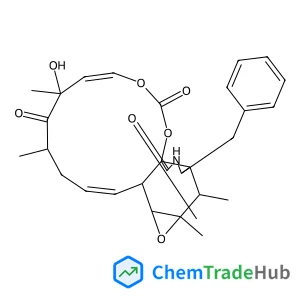
How should (1R,9S,10S,12S,14E,16S,19R,20R,21S,22R)-3,9,21-Trihydroxy-5,10,12,14,16,20,22-heptamethyl-23,24-dioxatetracyclo[17.3.1.1~6,9~.0~2,7~]tetracosa-2,5,7,14-tetraen-4-one (CAS: 183202-73-5) be stored?
This compound should be stored in a cool, dry place away from direct sunlight. I...
183202-73-5(1R,9S,10S,12S,14E,1...
Compound Q&A
How is 3-(4-Bromophenyl)-5-(2-fluorophenyl)-1,2,4-oxadiazole (CAS: 419553-16-5) typically synthesized?
3-(4-Bromophenyl)-5-(2-fluorophenyl)-1,2,4-oxadiazole is synthesized through a m...
419553-16-53-(4-Bromophenyl)-5-...
Compound Q&A
How is 5-Chloro-2-(4-chlorophenyl)-4-methyl-6-[3-(1-piperidinyl)propoxy]pyrimidine (CAS: 1639220-19-1) typically synthesized?
5-Chloro-2-(4-chlorophenyl)-4-methyl-6-[3-(1-piperidinyl)propoxy]pyrimidine (CAS...
1639220-19-15-Chloro-2-(4-chloro...
Compound Q&A
What industries use 2-Chloro-4-(difluoromethoxy)pyridine (CAS: 1206978-15-5)?
2-Chloro-4-(difluoromethoxy)pyridine is used in the pharmaceutical industry for ...
1206978-15-52-Chloro-4-(difluoro...
Compound Q&A
What regulatory guidelines apply to 3-Chloro-6-methylpyridazine (CAS: 1121-79-5)?
3-Chloro-6-methylpyridazine (CAS: 1121-79-5) is classified under the Globally Ha...
1121-79-53-Chloro-6-methylpyr...
Compound Q&A
Are there alternatives to Methyl 4,5-dimethyl-2-nitrobenzoate in synthesis?
Several alternatives can be used in the synthesis of Methyl 4,5-dimethyl-2-nitro...
90922-74-0Methyl 4,5-dimethyl-...
Compound Q&A
Are there alternatives to (2E,2'E)-3,3'-(1,4-Phenylene)bisacrylaldehyde in synthesis?
Alternatives to (2E,2'E)-3,3'-(1,4-Phenylene)bisacrylaldehyde include other acry...
63405-68-5(2E,2'E)-3,3'-(1,4-P...
Compound Q&A
What is 3-Amino-5-chloropyridin-2-ol hydrochloride (CAS: 1261906-29-9)?
3-Amino-5-chloropyridin-2-ol hydrochloride is an organic compound with the CAS n...
1261906-29-93-Amino-5-chloropyri...
Compound Q&A
What precautions should be taken when handling 6,7-Difluoro-2,3-dihydro-4H-chromen-4-one (CAS: 1092349-93-3)?
When handling 6,7-Difluoro-2,3-dihydro-4H-chromen-4-one, it is essential to wear...
1092349-93-36,7-Difluoro-2,3-dih...
Source Journal
Physical Chemistry Chemical Physics

CiteScore:
5.5
Self-citation Rate:
10.3%
Articles per Year:
3036
Physical Chemistry Chemical Physics (PCCP) is an international journal co-owned by 19 physical chemistry and physics societies from around the world. This journal publishes original, cutting-edge research in physical chemistry, chemical physics and biophysical chemistry. To be suitable for publication in PCCP, articles must include significant innovation and/or insight into physical chemistry; this is the most important criterion that reviewers and Editors will judge against when evaluating submissions. The journal has a broad scope and welcomes contributions spanning experiment, theory, computation and data science. Topical coverage includes spectroscopy, dynamics, kinetics, statistical mechanics, thermodynamics, electrochemistry, catalysis, surface science, quantum mechanics, quantum computing and machine learning. Interdisciplinary research areas such as polymers and soft matter, materials, nanoscience, energy, surfaces/interfaces, and biophysical chemistry are welcomed if they demonstrate significant innovation and/or insight into physical chemistry. Joined experimental/theoretical studies are particularly appreciated when complementary and based on up-to-date approaches.
Recommended Compounds
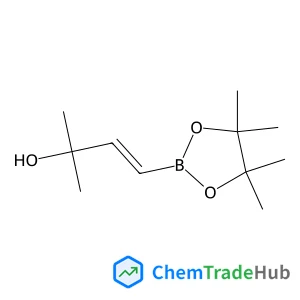
(E)-2-methyl-4-(4,4,5,5-tetramethyl-1,3,2-dioxaborolan-2-yl)but-3-en-2-ol
CAS Number:
581802-26-8
Molecular Formula:
C11H21BO3
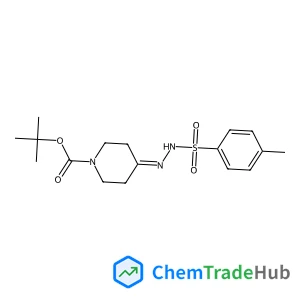
tert-Butyl 4-(2-(p-Tolylsulfonyl)hydrazono)piperidine-1-carboxylate
CAS Number:
1046478-89-0
Molecular Formula:
C17H25N3O4S
Recommended Suppliers




Disclaimer
This page provides academic journal information for reference and research purposes only. We are not affiliated with any journal publishers and do not handle publication submissions. For publication-related inquiries, please contact the respective journal publishers directly.
If you notice any inaccuracies in the information displayed, please contact us at support@chemtradehub.com. We will promptly review and address your concerns.