












Simple linear asymmetrical complexes of silver(i): NC–Ag–NH3 and Br–Ag–NH3
Literature Information
Publication Date
2008-05-14
DOI
10.1039/B803500H
Impact Factor
6.222
Authors
Ann M. Chippindale, Laura E. Head, Simon J. Hibble
View Original
Abstract
The compounds Ag(CN)(NH3) and Ag(Br)(NH3) are remarkable in that they form solids containing the simple molecular units NC–Ag–NH3 and Br–Ag–NH3, rather than extended solids, and are the first examples of simple linear asymmetric complexes of silver(I).
Recommended Journals
Related Literature
A new mechanism for the low dielectric property of POSS nanocomposites: the key role of interfacial effect
Yuan Yuan, Yawen Huang, Hongtao Yu, Junxiao Yang
2017-05-11
Paper
DOI: 10.1039/C7CP02678A
Silicon doped boron clusters: how to make stable ribbons?
Long Van Duong
2017-05-19
Communication
DOI: 10.1039/C7CP01740E
Approximate quantum chemical methods for modelling carbohydrate conformation and aromatic interactions: β-cyclodextrin and its adsorption on a single-layer graphene sheet
Panichakorn Jaiyong, Richard A. Bryce
2017-06-02
Paper
DOI: 10.1039/C7CP02160G
The role of acid–base equilibria in formal hydrogen transfer reactions: tryptophan radical repair by uric acid as a paradigmatic case
Leonardo Muñoz-Rugeles, Annia Galano, Juan Raúl Alvarez-Idaboy
2017-05-16
Paper
DOI: 10.1039/C7CP01557G
The role of the long-range tail of the potential in O2 + N2 collisional inelastic vibrational energy transfers
Ernesto Garcia, Fernando Pirani, Antonio Laganà, Carles Martí
2017-03-29
Paper
DOI: 10.1039/C7CP01340J
Determinants of the host–guest interactions between α-, β- and γ-cyclodextrins and group IA, IIA and IIIA metal cations: a DFT/PCM study
S. E. Angelova, V. K. Nikolova, T. M. Dudev
2017-05-16
Paper
DOI: 10.1039/C7CP01253E
Atomic-scale observation of pressure-dependent reduction dynamics of W18O49 nanowires using environmental TEM
Zhengfei Zhang, Liping Sheng, Lu Chen, Ze Zhang, Yong Wang
2017-05-30
Communication
DOI: 10.1039/C7CP03071A
Kinetics of the electrochemically-assisted deposition of sol–gel films
Liang Liu, Alain Walcarius
2017-05-16
Paper
DOI: 10.1039/C7CP01775H
Ultrafast permeation of seawater pervaporation using single-layered C2N via strain engineering
Zhongqiao Hu, Jun Wei
2017-06-08
Paper
DOI: 10.1039/C7CP01542A
You might also like
Compound Q&A
Are there alternatives to 1-(4-Chlorophenyl)-N-hydroxymethanimine (CAS: 3848-36-0) in synthesis?
When considering alternatives to 1-(4-Chlorophenyl)-N-hydroxymethanimine (CAS: 3...
3848-36-01-(4-Chlorophenyl)-N...
Compound Q&A
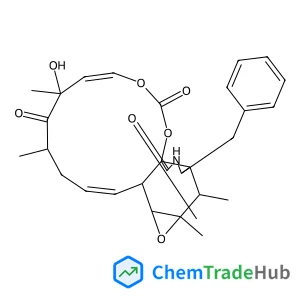
How should (1R,9S,10S,12S,14E,16S,19R,20R,21S,22R)-3,9,21-Trihydroxy-5,10,12,14,16,20,22-heptamethyl-23,24-dioxatetracyclo[17.3.1.1~6,9~.0~2,7~]tetracosa-2,5,7,14-tetraen-4-one (CAS: 183202-73-5) be stored?
This compound should be stored in a cool, dry place away from direct sunlight. I...
183202-73-5(1R,9S,10S,12S,14E,1...
Compound Q&A
How is 3-(4-Bromophenyl)-5-(2-fluorophenyl)-1,2,4-oxadiazole (CAS: 419553-16-5) typically synthesized?
3-(4-Bromophenyl)-5-(2-fluorophenyl)-1,2,4-oxadiazole is synthesized through a m...
419553-16-53-(4-Bromophenyl)-5-...
Compound Q&A
How is 5-Chloro-2-(4-chlorophenyl)-4-methyl-6-[3-(1-piperidinyl)propoxy]pyrimidine (CAS: 1639220-19-1) typically synthesized?
5-Chloro-2-(4-chlorophenyl)-4-methyl-6-[3-(1-piperidinyl)propoxy]pyrimidine (CAS...
1639220-19-15-Chloro-2-(4-chloro...
Compound Q&A
What industries use 2-Chloro-4-(difluoromethoxy)pyridine (CAS: 1206978-15-5)?
2-Chloro-4-(difluoromethoxy)pyridine is used in the pharmaceutical industry for ...
1206978-15-52-Chloro-4-(difluoro...
Compound Q&A
What regulatory guidelines apply to 3-Chloro-6-methylpyridazine (CAS: 1121-79-5)?
3-Chloro-6-methylpyridazine (CAS: 1121-79-5) is classified under the Globally Ha...
1121-79-53-Chloro-6-methylpyr...
Compound Q&A
Are there alternatives to Methyl 4,5-dimethyl-2-nitrobenzoate in synthesis?
Several alternatives can be used in the synthesis of Methyl 4,5-dimethyl-2-nitro...
90922-74-0Methyl 4,5-dimethyl-...
Compound Q&A
Are there alternatives to (2E,2'E)-3,3'-(1,4-Phenylene)bisacrylaldehyde in synthesis?
Alternatives to (2E,2'E)-3,3'-(1,4-Phenylene)bisacrylaldehyde include other acry...
63405-68-5(2E,2'E)-3,3'-(1,4-P...
Compound Q&A
What is 3-Amino-5-chloropyridin-2-ol hydrochloride (CAS: 1261906-29-9)?
3-Amino-5-chloropyridin-2-ol hydrochloride is an organic compound with the CAS n...
1261906-29-93-Amino-5-chloropyri...
Compound Q&A
What precautions should be taken when handling 6,7-Difluoro-2,3-dihydro-4H-chromen-4-one (CAS: 1092349-93-3)?
When handling 6,7-Difluoro-2,3-dihydro-4H-chromen-4-one, it is essential to wear...
1092349-93-36,7-Difluoro-2,3-dih...
Source Journal
Chemical Communications

CiteScore:
8.6
Self-citation Rate:
4.7%
Articles per Year:
2458
ChemComm publishes urgent research which is of outstanding significance and interest to experts in the field, while also appealing to the journal’s broad chemistry readership. Our communication format is ideally suited to short, urgent studies that are of such importance that they require accelerated publication. Our scope covers all topics in chemistry, and research at the interface of chemistry and other disciplines (such as materials science, nanoscience, physics, engineering and biology) where there is a significant novelty in the chemistry aspects. Major topic areas covered include: Analytical Chemistry Catalysis Chemical Biology and medicinal chemistry Computational Chemistry and Machine Learning Energy and sustainable chemistry Environmental Chemistry Green Chemistry Inorganic Chemistry Materials Chemistry Nanoscience Organic Chemistry Physical Chemistry Polymer Chemistry Supramolecular Chemistry
Recommended Compounds
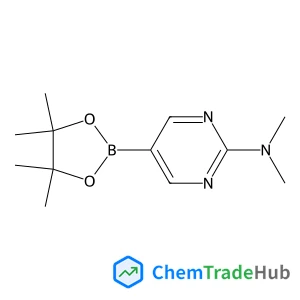
N,N-Dimethyl-5-(4,4,5,5-tetramethyl-1,3,2-dioxaborolan-2-yl)-2-pyrimidinamine
CAS Number:
1032759-30-0
Molecular Formula:
C12H20BN3O2
![[4-(Isobutyrylamino)phenyl]boronic acid structure](https://static.chemtradehub.com/structs/874/874219-50-8-6ab5.webp "[4-(Isobutyrylamino)phenyl]boronic acid structure")
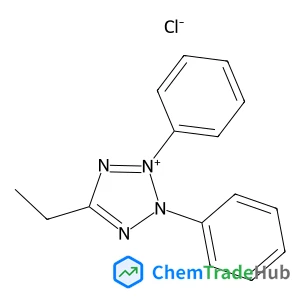
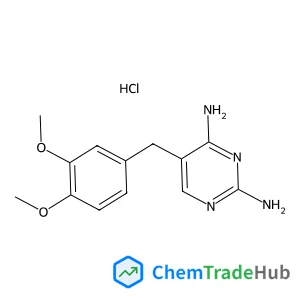
5-(3,4-Dimethoxybenzyl)-2,4-pyrimidinediamine hydrochloride (1:1)
CAS Number:
2507-23-5
Molecular Formula:
C13H17ClN4O2
Recommended Suppliers





Disclaimer
This page provides academic journal information for reference and research purposes only. We are not affiliated with any journal publishers and do not handle publication submissions. For publication-related inquiries, please contact the respective journal publishers directly.
If you notice any inaccuracies in the information displayed, please contact us at support@chemtradehub.com. We will promptly review and address your concerns.