


A new mechanism for the low dielectric property of POSS nanocomposites: the key role of interfacial effect
Literature Information
Publication Date
2017-05-11
DOI
10.1039/C7CP02678A
Impact Factor
3.676
Authors
Yuan Yuan, Yawen Huang, Hongtao Yu, Junxiao Yang
View Original
Abstract
The low dielectric constant (ε) of polyhedral oligomeric silsesquioxanes (POSS) was generally attributed to its porous structure. In this work, we propose a new mechanism for the low ε of the POSS-based nanocomposites from the interfacial effect point of view. The investigation on a typical nanocomposite, polystyrene/POSS, found that POSS molecules take crystallization to form crystalline nanoplatelets (PCPs) in PS. Correspondingly, the dielectric constant can be reduced to around 2.30. A detailed investigation excluded the possible influence of the chain stacking and chain mobility of the polymers on ε. It was demonstrated, for the first time, that the ε shows a high correlation with interface area which is reflected by a rigid amorphous fraction (RAF), thus revealing the key role of the interfacial effect on reducing the low dielectric constant.
Recommended Journals

Journal of Natural Medicines

Nature Medicine

Russian Journal of Coordination Chemistry

Saudi Pharmaceutical Journal

Current Opinion in Solid State & Materials Science

Journal of Saudi Chemical Society

Russian Journal of Applied Chemistry

Russian Journal of General Chemistry

Crystallography Reports

Drug Discovery Today
Related Literature
Use of poly(methyl methacrylate) with an unsaturated chain end as a macroinitiator precursor in organocatalyzed living radical block polymerization
Jun Jie Chang, Longqiang Xiao, Chen-Gang Wang, Hiroshi Niino, Shunsuke Chatani, Atsushi Goto
2018-09-05
Paper
DOI: 10.1039/C8PY01066H
A DFT study of furan hydrogenation and ring opening on Pd(111)
Shengguang Wang, Vassili Vorotnikov, Dionisios G. Vlachos
2013-08-20
Paper
DOI: 10.1039/C3GC41183D
Self-assembled hybrid tinphosphonate nanoparticles with bimodal porosity: an insight towards the efficient and selective catalytic process for the synthesis of bioactive 1,4-dihydropyridines under solvent-free conditions
Malay Pramanik, Asim Bhaumik
2013-07-12
Paper
DOI: 10.1039/C3TA12476B
Access to aliphatic protons as reporters in non-deuterated proteins by solid-state NMR
Suresh Kumar Vasa, Petra Rovó, Karin Giller, Stefan Becker, Rasmus Linser
2015-11-20
Paper
DOI: 10.1039/C5CP06601H
Fibrous polyaniline@manganese oxide nanocomposites as supercapacitor electrode materials and cathode catalysts for improved power production in microbial fuel cells
Sajid Ali Ansari, Nazish Parveen, Thi Hiep Han, Mohammad Omaish Ansari, Moo Hwan Cho
2016-03-11
Paper
DOI: 10.1039/C6CP00159A
O vacancy formation in (Pr/Gd)BaCo2O5.5 and the role of antisite defects
Salawu Omotayo Akande, Udo Schwingenschlögl
2017-04-20
Paper
DOI: 10.1039/C7CP01942D
Dual sulfonated poly(arylene ether ketone) membrane grafted with 15-crown-5-ether for enhanced proton conductivity and anti-oxidation stability
Dinh Cong Tinh Vo, Minh Dat Thinh Nguyen, Dukjoon Kim
2019-04-16
Paper
DOI: 10.1039/C9ME00009G
Highly selective CO2 separation membranes through tunable poly(4-vinylphenolate)–CO2 interactions
Markus Hammann, Dante Castillo, Christian Anger, Bernhard Rieger
2014-08-11
Paper
DOI: 10.1039/C4TA03696D
In situ confocal microscopic observation on inhibiting the dendrite formation of a-CNx/Li electrode
Yi-jun Zhang, Wen-qi Bai, Xiu-li Wang, Xin-hui Xia, Chang-dong Gu, Jiang-ping Tu
2016-09-12
Paper
DOI: 10.1039/C6TA06612G
You might also like
Compound Q&A
Are there alternatives to 1-(4-Chlorophenyl)-N-hydroxymethanimine (CAS: 3848-36-0) in synthesis?
When considering alternatives to 1-(4-Chlorophenyl)-N-hydroxymethanimine (CAS: 3...
3848-36-01-(4-Chlorophenyl)-N...
Compound Q&A
How should (1R,9S,10S,12S,14E,16S,19R,20R,21S,22R)-3,9,21-Trihydroxy-5,10,12,14,16,20,22-heptamethyl-23,24-dioxatetracyclo[17.3.1.1~6,9~.0~2,7~]tetracosa-2,5,7,14-tetraen-4-one (CAS: 183202-73-5) be stored?
This compound should be stored in a cool, dry place away from direct sunlight. I...
183202-73-5(1R,9S,10S,12S,14E,1...
Compound Q&A
How is 3-(4-Bromophenyl)-5-(2-fluorophenyl)-1,2,4-oxadiazole (CAS: 419553-16-5) typically synthesized?
3-(4-Bromophenyl)-5-(2-fluorophenyl)-1,2,4-oxadiazole is synthesized through a m...
419553-16-53-(4-Bromophenyl)-5-...
Compound Q&A
How is 5-Chloro-2-(4-chlorophenyl)-4-methyl-6-[3-(1-piperidinyl)propoxy]pyrimidine (CAS: 1639220-19-1) typically synthesized?
5-Chloro-2-(4-chlorophenyl)-4-methyl-6-[3-(1-piperidinyl)propoxy]pyrimidine (CAS...
1639220-19-15-Chloro-2-(4-chloro...
Compound Q&A
What industries use 2-Chloro-4-(difluoromethoxy)pyridine (CAS: 1206978-15-5)?
2-Chloro-4-(difluoromethoxy)pyridine is used in the pharmaceutical industry for ...
1206978-15-52-Chloro-4-(difluoro...
Compound Q&A
What regulatory guidelines apply to 3-Chloro-6-methylpyridazine (CAS: 1121-79-5)?
3-Chloro-6-methylpyridazine (CAS: 1121-79-5) is classified under the Globally Ha...
1121-79-53-Chloro-6-methylpyr...
Compound Q&A
Are there alternatives to Methyl 4,5-dimethyl-2-nitrobenzoate in synthesis?
Several alternatives can be used in the synthesis of Methyl 4,5-dimethyl-2-nitro...
90922-74-0Methyl 4,5-dimethyl-...
Compound Q&A
Are there alternatives to (2E,2'E)-3,3'-(1,4-Phenylene)bisacrylaldehyde in synthesis?
Alternatives to (2E,2'E)-3,3'-(1,4-Phenylene)bisacrylaldehyde include other acry...
63405-68-5(2E,2'E)-3,3'-(1,4-P...
Compound Q&A
What is 3-Amino-5-chloropyridin-2-ol hydrochloride (CAS: 1261906-29-9)?
3-Amino-5-chloropyridin-2-ol hydrochloride is an organic compound with the CAS n...
1261906-29-93-Amino-5-chloropyri...
Compound Q&A
What precautions should be taken when handling 6,7-Difluoro-2,3-dihydro-4H-chromen-4-one (CAS: 1092349-93-3)?
When handling 6,7-Difluoro-2,3-dihydro-4H-chromen-4-one, it is essential to wear...
1092349-93-36,7-Difluoro-2,3-dih...
Source Journal
Physical Chemistry Chemical Physics

CiteScore:
5.5
Self-citation Rate:
10.3%
Articles per Year:
3036
Physical Chemistry Chemical Physics (PCCP) is an international journal co-owned by 19 physical chemistry and physics societies from around the world. This journal publishes original, cutting-edge research in physical chemistry, chemical physics and biophysical chemistry. To be suitable for publication in PCCP, articles must include significant innovation and/or insight into physical chemistry; this is the most important criterion that reviewers and Editors will judge against when evaluating submissions. The journal has a broad scope and welcomes contributions spanning experiment, theory, computation and data science. Topical coverage includes spectroscopy, dynamics, kinetics, statistical mechanics, thermodynamics, electrochemistry, catalysis, surface science, quantum mechanics, quantum computing and machine learning. Interdisciplinary research areas such as polymers and soft matter, materials, nanoscience, energy, surfaces/interfaces, and biophysical chemistry are welcomed if they demonstrate significant innovation and/or insight into physical chemistry. Joined experimental/theoretical studies are particularly appreciated when complementary and based on up-to-date approaches.
Recommended Compounds
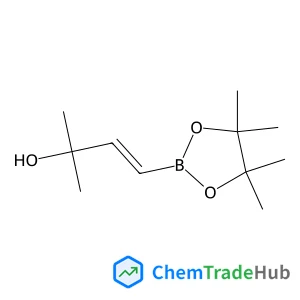
(E)-2-methyl-4-(4,4,5,5-tetramethyl-1,3,2-dioxaborolan-2-yl)but-3-en-2-ol
CAS Number:
581802-26-8
Molecular Formula:
C11H21BO3
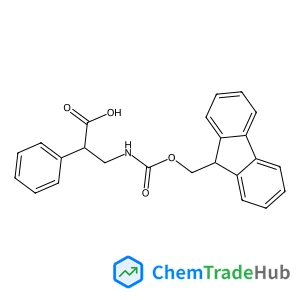
(S)-3-((((9H-Fluoren-9-yl)methoxy)carbonyl)amino)-2-phenylpropanoic acid
CAS Number:
1217663-60-9
Molecular Formula:
C24H21NO4
Recommended Suppliers







Disclaimer
This page provides academic journal information for reference and research purposes only. We are not affiliated with any journal publishers and do not handle publication submissions. For publication-related inquiries, please contact the respective journal publishers directly.
If you notice any inaccuracies in the information displayed, please contact us at support@chemtradehub.com. We will promptly review and address your concerns.